WHALE SEASON BEGINS DEC 15 • EARLY BOOKING OPEN
Seabirds & island wildlife
Fregata minor · ʻIwa
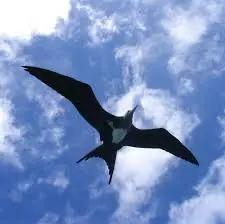
Look above the ocean for a long-winged bird with a deeply forked tail. The ʻiwa, or great frigatebird, is a seabird whose aerial life is as interesting as the reef below. A good view of its shape helps distinguish it from boobies, shearwaters and other coastal birds.
Seabird
Fregata minor
Angular wings; forked tail
Marine prey including fish and squid
Great frigatebirds have very long wings, a deeply forked tail and a hooked bill. Adult males are dark and may display an inflated red throat pouch during courtship. Females have a contrasting pale breast. Age and sex affect the plumage, so the complete silhouette is a useful starting point. [1]
ʻIwa can take food from other birds, but they also capture prey themselves. Their aerial feeding includes fish and squid near the surface. This behavior differs from a booby plunging into the water or a shearwater flying low over the waves. [1]
Great frigatebirds breed in colonies. The distribution of breeding sites is not the same as where a soaring bird may be seen on an ocean trip. A bird crossing overhead does not indicate that a nest is close by, and this visitor guide does not disclose sensitive nest coordinates. [1]
Choose a stable position before looking up with binoculars or a camera. A wide frame showing both wings and the tail is more useful for identification than a tight image of a distant head. Keep your attention on the crew and vessel movement; there is no need to follow a bird beyond a safe viewing position.
Was the tail forked? Was it gliding high or repeatedly diving? Did the underside look pale or dark? Those details help narrow the possibilities. The linked booby, shearwater and tern guides provide comparisons rather than simply calling every large dark bird an ʻiwa.
No. The red courtship pouch is an adult-male feature, not a characteristic displayed by every bird.
The listed ocean tours are not nesting-colony visits.
No. Seabirds are natural observations, not scheduled performances.
Research sources checked November 16, 2026. Wildlife timing, appearance and sightings vary. This guide is not a live sighting report.
Ocean adventures from Kihei, Maui
Snorkeling · Molokini · Whale Watching · Sunset Cruises
© Maui Snorkel Charters. Routes and wildlife encounters vary with ocean conditions.
We use necessary cookies to run this site and provide the services you request. With your permission, we also use statistics cookies to understand visits and optional services such as maps and videos. You can accept, reject optional cookies, or change your choices at any time.