Maui Snorkel Charters
Maui Ocean Temperature by Month: What Snorkelers Can Expect
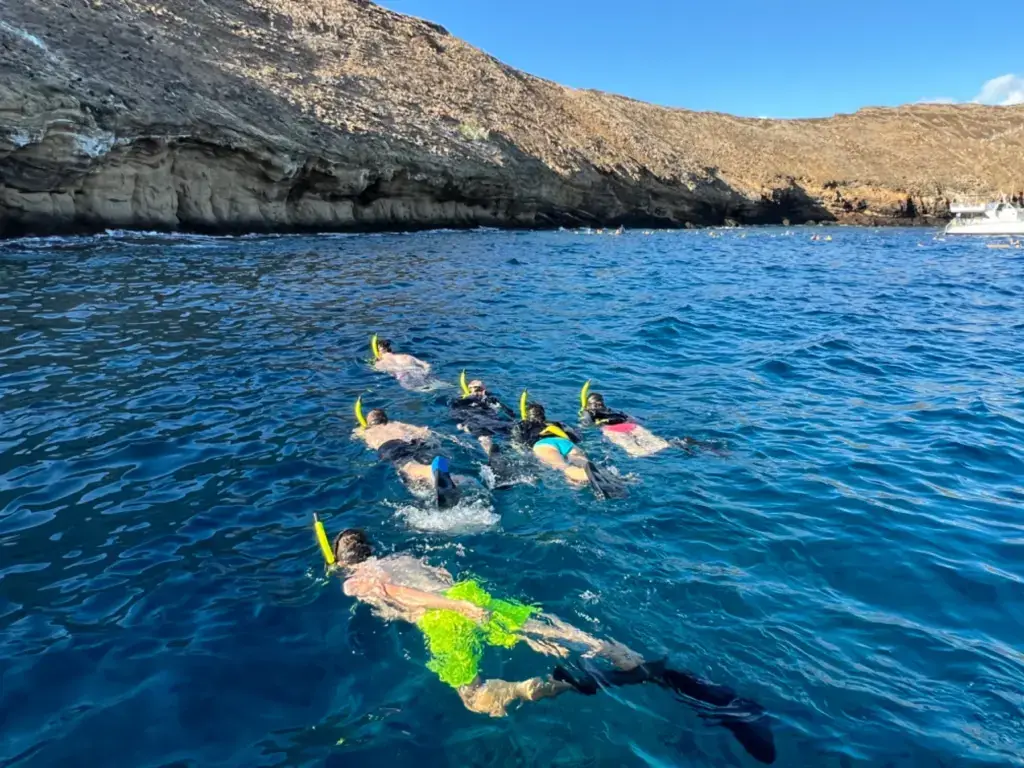
Maui offers warm-water snorkeling throughout the year, with a little extra comfort planning in the cooler months. For a measured seasonal reference, NOAA’s monthly averages at Kahului Harbor range from 75.4°F to 80.7°F (24.1°C to 27.1°C). That north-shore station gives a useful picture of Maui’s seasonal pattern; it is not a forecast for Molokini, Turtle Town or your particular snorkeling stop. View NOAA’s coastal water-temperature averages.
Pack for your own comfort, choose a morning that fits your plans, and let our crew help you understand the day’s conditions. Earlier tours offer the best chance of calmer water before daytime winds build. As we say, “The wind doesn’t sleep in.” Our guide to Maui wind patterns and early tours explains why we start early and how conditions can vary.
Maui ocean temperature by month
The table below uses NOAA’s published monthly water-temperature averages for Kahului Harbor, Maui. It is a seasonal packing reference, not a current reading or a promise about water temperature at a beach or offshore reef. South Maui and Molokini can differ from this north-shore harbor. Celsius values are calculated from NOAA’s Fahrenheit figures and rounded to one decimal place.
| Month | Average °F | Average °C |
|---|---|---|
| January | 76.1 | 24.5 |
| February | 75.4 | 24.1 |
| March | 75.7 | 24.3 |
| April | 76.4 | 24.7 |
| May | 77.8 | 25.4 |
| June | 78.8 | 26.0 |
| July | 79.6 | 26.4 |
| August | 80.3 | 26.8 |
| September | 80.7 | 27.1 |
| October | 80.0 | 26.7 |
| November | 78.3 | 25.7 |
| December | 76.6 | 24.8 |
Source: NOAA NCEI, Kahului Harbor monthly averages. February is the coolest month and September the warmest in this particular reference series. Individual days can be warmer or cooler, and water temperature changes much less abruptly than wind or surface conditions.
What should you wear for snorkeling in Maui?
Swimwear is a practical starting point. A well-fitting rash guard adds coverage, and a towel or dry layer is helpful when you return to the boat. If you tend to feel cold, consider a thin neoprene top and ask us about the equipment appropriate for your tour before you travel. Longer water sessions, cloud cover and a breeze can affect how comfortable you feel even when the water temperature sounds warm.
Your gear should let you focus on the experience. Check the mask fit, make sure the fins feel secure, and ask the crew to explain any equipment you have not used before. Tell us about your swimming experience and any concerns so we can help you choose an appropriate trip. Snorkeling flotation can support an experienced swimmer and conserve energy; it does not replace swimming ability or the crew’s assessment of conditions. Hawaii Ocean Safety’s snorkeling guidance explains equipment preparation and swimming readiness.
Plan to take a break or leave the water if you feel cold, tired or uncomfortable. A shorter enjoyable snorkel is a better memory than staying in after you have had enough.
Why we recommend an early snorkeling tour
Warm water is only one part of a great day. A comfortable boat ride, good visibility and an unhurried start matter too. Hawaii Ocean Safety identifies morning hours as generally favorable for snorkeling. Our early departures are designed to make the most of that opportunity, with the captain choosing the day’s route and stops according to the actual forecast and ocean conditions. Read Hawaii Ocean Safety’s morning advice.
For the best chance of calmer water, choose one of our earlier tours. Morning does not guarantee calm seas, and a sheltered departure point cannot describe every offshore stop. Our team looks at the full picture so you can focus on enjoying your time on the water. Learn how Maui’s winds influence the day, then compare our morning snorkeling tours.
How to use the forecast without overthinking your vacation
A monthly temperature table helps with packing. The latest local forecast helps with the day’s route. Read any advisory’s location and start and end times: an advisory beginning in the afternoon does not automatically describe an earlier morning departure. Its timing is useful context, and the captain still evaluates wind, swell, currents and conditions along the whole route.
The National Weather Service’s Hawaiian marine forecasts provide coastal forecasts, surf information and marine messages. Our Maui snorkeling conditions report brings useful planning information together. For tour-specific questions, contact our team; we are happy to help you understand what the information means for your plans.
If you are also planning a shore snorkel, check posted signs and speak with a lifeguard where one is present. Choose conditions that fit everyone in your group, snorkel with a buddy and keep a comfortable exit in mind. High surf, strong currents, shorebreak and poor visibility can make another location or activity the better choice. Those practical checks help keep the day enjoyable. Hawaii Ocean Safety’s snorkeling checklist is a useful reference.
Maui ocean-temperature questions
Is Maui’s ocean warm enough to snorkel in winter?
Maui’s water remains warm compared with many mainland coastal destinations. NOAA’s Kahului Harbor reference averages are about 75–77°F in December through March. How comfortable that feels depends on you, your clothing and how long you stay in. Bring an extra dry layer and consider a thin neoprene top if you chill easily.
When is the ocean around Maui warmest?
In NOAA’s Kahului Harbor monthly series, September has the highest average at 80.7°F, followed by August at 80.3°F and October at 80.0°F. These station averages show the seasonal pattern and should not be treated as a temperature forecast for a specific snorkeling site.
Where can I find a current Maui water-temperature reading?
PacIOOS’s Pauwela buoy page provides water-temperature observations off Maui’s north shore. Check the observation time and location. A buoy reading is useful context, but it does not describe every reef, beach or part of the island.
Does warmer water mean calmer snorkeling?
Water temperature and surface conditions are different. Warmer water can coincide with wind or swell, while a cooler morning can be a lovely time to explore. Choose your clothing for comfort and let the day’s wind, swell, visibility and your swimming readiness guide the activity.
Which tour gives me the best chance of calm water?
We recommend our earlier tours for the best chance of calmer water before daytime winds develop. Explore our early Molokini tour or compare the morning options. If you are deciding between tours, call 808-270-8776 and tell us what would make the day special for your group.