
Humpback whales migrate to Maui’s waters every winter, and watching them breach and play is an unforgettable experience. We at Maui Snorkel Charters know that timing your Maui whale watching excursions right makes all the difference.
This guide covers when whales arrive, what you’ll see on the water, and how to pick the perfect tour for your adventure.
When Whales Arrive in Maui
The Migration Timeline
Humpback whales start showing up in Maui’s waters around mid-November, but the real action doesn’t kick off until January. Roughly 12,000 humpback whales pass through the Maui area annually as part of their migration from Alaska. Peak season runs from January through March when you’ll see the most consistent activity.
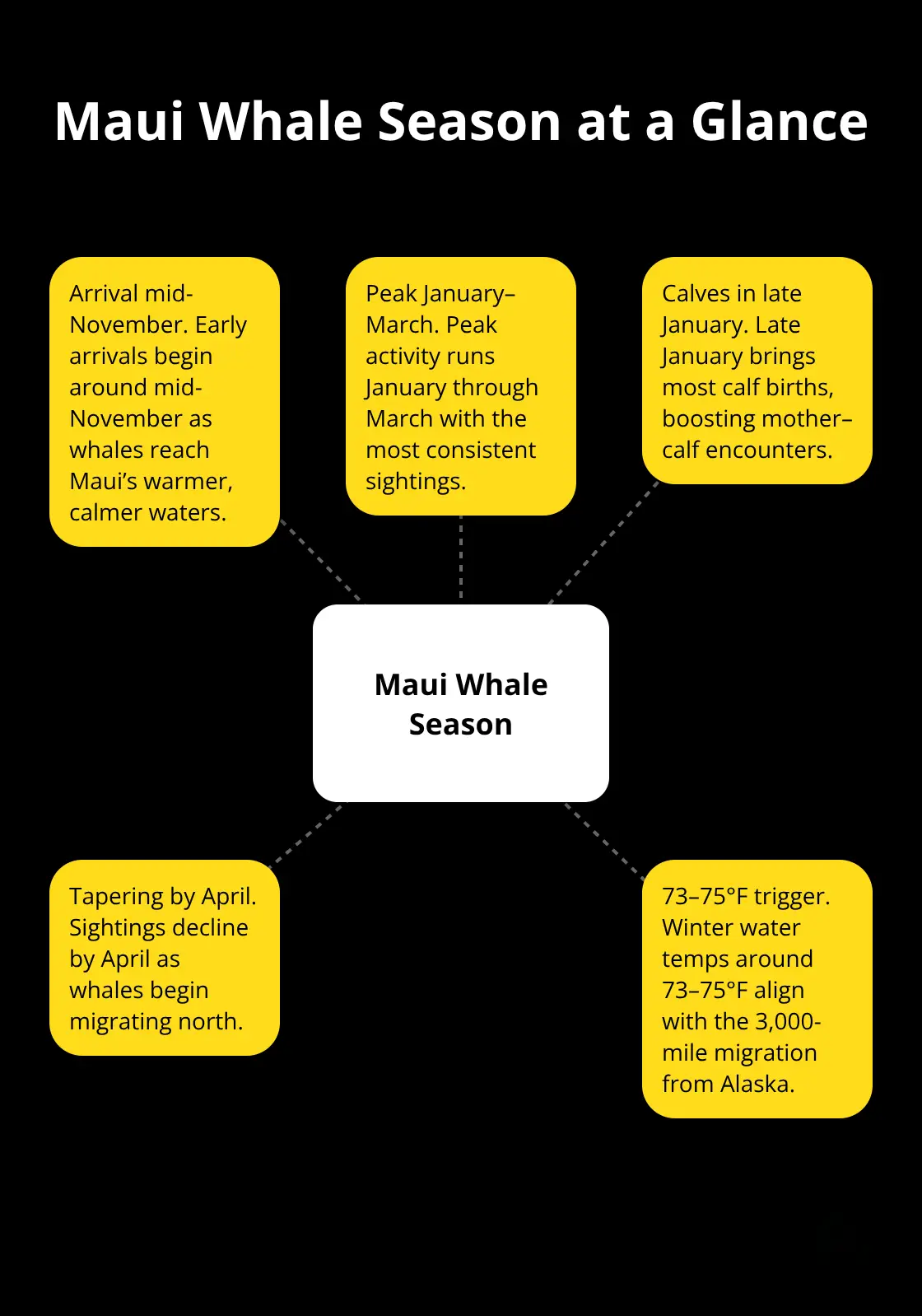
Water temperatures in the Auʻau Channel drop to around 73–75 degrees Fahrenheit during winter months, which is exactly what triggers the whales’ arrival from their feeding grounds 3,000 miles away in Alaska.
Peak Sightings and Calf Season
The Hawaiian Islands Humpback Whale National Marine Sanctuary confirms that while whale presence can stretch from November into April, January and February are your golden months for sightings because mothers and calves actively feed and play in the shallow channel off west Maui. Late January is particularly special because that’s when most calves are born, so you’ll have excellent chances of seeing mother-and-calf pairs swimming together. February and March still deliver strong sightings, but activity starts declining noticeably by April as whales begin their return journey north.
Water Conditions and Positioning
Water conditions matter more than most people realize-rougher seas in December can actually push whales into calmer areas of the channel, which sometimes means better viewing opportunities from specific locations. If you’re flexible with your travel dates, try booking your tour between mid-January and mid-March to maximize your probability of multiple whale encounters on a single trip. Afternoon tours sometimes benefit from morning reports about where whales are congregating, giving captains an advantage in positioning the boat for closer encounters. The Humpback Whale Sanctuary Visitor Center in Kihei tracks real-time sighting data throughout the season, so checking their latest reports before booking helps you time your excursion perfectly.
Planning Your Ideal Whale Watch Window
The timing of your Maui whale watching excursion directly affects what you’ll experience on the water. Understanding these seasonal patterns and water conditions sets you up to choose the right tour operator and boat type for your adventure.
What You’ll Actually See on a Maui Whale Watch
Whale Behaviors That Steal the Show
Humpback whales put on a show when conditions align, and knowing what behaviors to watch for transforms a good tour into an incredible one. Breaches-where a whale launches its entire body out of the water-happens most frequently in January and February when mothers teach calves to breach, and you’ll spot these explosive movements from considerable distances across the channel. Tail slaps and pectoral fin waves signal playful behavior or communication between whales.
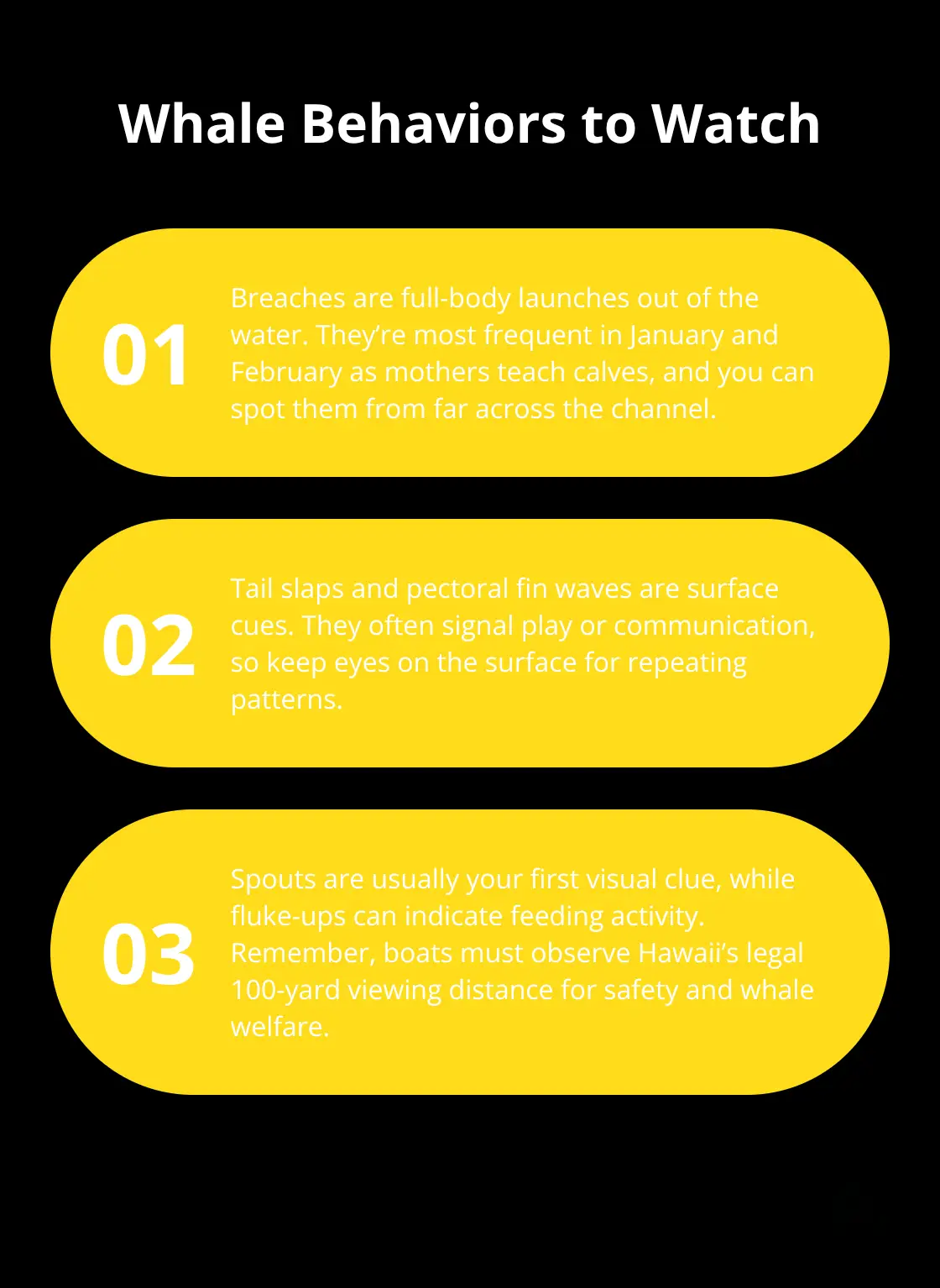
The Hawaiian Islands Humpback Whale National Marine Sanctuary notes that fluke-ups indicate feeding, while spouts (the misty blows from blowholes) mark your first visual clue that whales are nearby. Most tours encounter multiple whales per trip during peak season, and experienced captains position boats to anticipate movements rather than chase them, which increases your odds of close encounters within Hawaii’s legal 100-yard viewing distance.
Marine Life Beyond the Whales
Spinner dolphins frequently appear alongside humpbacks in the Auʻau Channel, adding another wildlife dimension to your experience. These dolphins are smaller and more active than whales, often swimming in pods and performing aerial spins that make them unmistakable. The combination of whale and dolphin sightings on a single tour creates memories that last far longer than either encounter alone.
Safety Rules and Boat Positioning
Hawaii state law prohibits approaching closer than 100 yards, but if a whale voluntarily comes within that distance, your boat must hold position until it departs-this is a genuine thrill when it happens. Larger catamarans with 80+ passengers offer steadier platforms for photography and better stability in rougher seas, while smaller boats carrying 10–15 people get closer to the action and provide more intimate viewing but ride choppier. Dress in layers because open-water conditions are windy and temperatures drop noticeably, and polarized sunglasses cut water glare so you can spot underwater whale activity as they pass beneath the boat. Bring strong sun protection since reflection off the water intensifies UV exposure even on cloudy days.
Timing Your Tour for Maximum Impact
Morning tours departing around 7 a.m. cover more ground to locate whales, while afternoon trips benefit from morning sighting reports that captains use to position the boat strategically. Your choice of departure time directly affects which whales you encounter and how close you get to them. The next section covers how to select the right boat and tour operator for your specific needs and preferences.
Choosing the Right Whale Watching Experience
Boat Size Shapes Your Entire Experience
Boat size is the single biggest factor determining your comfort versus proximity to whales, and there’s no middle ground here. Large catamarans carrying 80 or more passengers deliver smoother rides with onboard bathrooms, snacks, and beverages, making them ideal if rough seas or seasickness concerns you. Smaller boats holding 10–15 people get noticeably closer to whale activity and provide a more intimate experience, but they bounce considerably in chop and offer minimal amenities. Most Maui operators run three tours daily, and afternoon trips often benefit from morning sighting reports that captains use to position the boat strategically, so don’t assume an early departure automatically beats a later one.
Tour Duration and What You’ll Pay
Tour duration typically ranges from 1.5 to 3 hours, with shorter trips starting around $90 and longer combined experiences (whale watching plus snorkeling) running $150–$250 per person. Pricing correlates directly with inclusions: budget operators provide the boat and whales, while mid-range and premium tours add marine biologist narration, hydrophones to hear whale songs underwater, breakfast items, or snorkeling opportunities in the Auʻau Channel. Your departure location matters more than most travelers realize because driving an hour before sunrise defeats the purpose of a relaxing vacation.
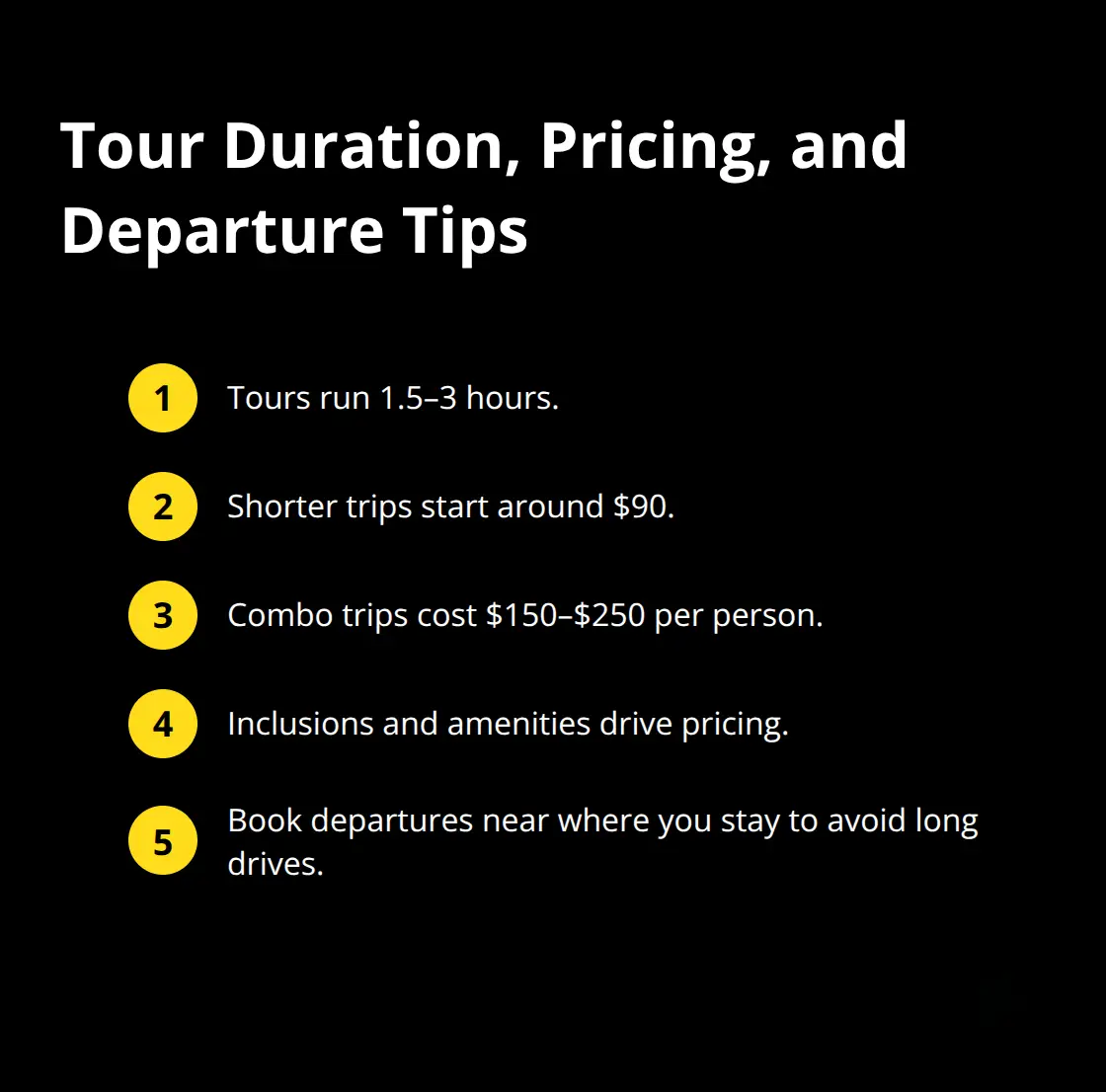
Tours departing from Lahaina, Maʻalaea, and Kihei harbors all access the same whale-rich Auʻau Channel, so try booking based on where you’re staying to minimize pre-tour travel time.
Budget-Friendly Alternatives
If budget constraints limit your options, shore-based watching at spots like McGregor Point Lookout or Makena Beach Park costs nothing and delivers legitimate sightings during peak season. Bring polarized sunglasses regardless of boat size because they cut water glare and let you spot whale activity beneath the surface as they pass the boat. These glasses transform what you see and make the entire experience more rewarding.
Selecting Operators with Strong Ethics
Operators emphasizing responsible whale viewing and crew education tend to provide richer experiences than those simply chasing sightings, so prioritize tour companies known for ethical positioning practices and knowledgeable guides. The Hawaiian Islands Humpback Whale National Marine Sanctuary maintains an approved vendor list through Whale Trust, offering a vetted starting point for comparing options before you book your excursion. Operators with marine biologists on staff elevate the educational value considerably, turning casual observation into genuine learning about whale behavior and migration patterns.
Final Thoughts
Maui’s whale watching season peaks between mid-January and mid-March when mothers and calves fill the shallow Auʻau Channel off west Maui, delivering multiple whale encounters per tour. You’ll witness breaching, tail slaps, and spinner dolphins alongside humpbacks during these months, with water temperatures and migration patterns creating predictable activity windows. Your choice of tour operator and boat type determines whether you prioritize comfort or proximity to whales-large catamarans offer smoother rides with onboard amenities, while smaller boats get noticeably closer to whale activity and provide intimate encounters.
Tour duration ranges from 1.5 to 3 hours, with pricing starting around $90 for basic tours and extending to $250 for combined experiences that include snorkeling or marine biologist narration. Departure location matters significantly because tours from Lahaina, Maʻalaea, and Kihei all access the same whale-rich waters, so booking near where you’re staying minimizes pre-tour travel time. If budget constraints concern you, shore-based watching at McGregor Point Lookout or Makena Beach Park delivers legitimate sightings at no cost.
Bring polarized sunglasses, dress in layers, and apply strong sun protection because open-water conditions are windy and UV reflection intensifies off the water. Book your Maui whale watching excursions with us to experience these gentle giants in their natural habitat during the season when they migrate through Hawaiian waters. Regardless of which option you choose, your adventure awaits.
Call 808-270-8776