
Every January through March, humpback whales migrate to Maui’s warm waters, creating one of Hawaii’s most spectacular natural events. We at Maui Snorkel Charters know that witnessing these magnificent creatures up close is an experience that stays with you forever.
Whether you’re planning your first Maui whale watching trip or you’re a seasoned ocean enthusiast, this guide covers everything you need to know to make the most of your adventure.
When to Book Your Whale Watching Trip
Peak Season Timing
January through March stands as the absolute best window for whale watching in Maui, and frankly, January to mid-March outperforms the shoulder months. North Pacific humpback whales arrive in Hawaii’s warm waters to breed, give birth, and nurse their young, and this three-month window captures peak breeding activity. January brings the highest whale density with males actively competing for mates, which produces more breaches, tail slaps, and surface activity that creates unforgettable viewing. February marks peak calving season when mothers with newborn calves appear most frequently, and calves often practice breaching near their mothers-a behavior that photographs beautifully and occurs throughout the day. March typically delivers the best overall combination of quantity and quality sightings before whales begin their migration back to Alaska in April.
Why Maui’s Waters Attract Humpbacks
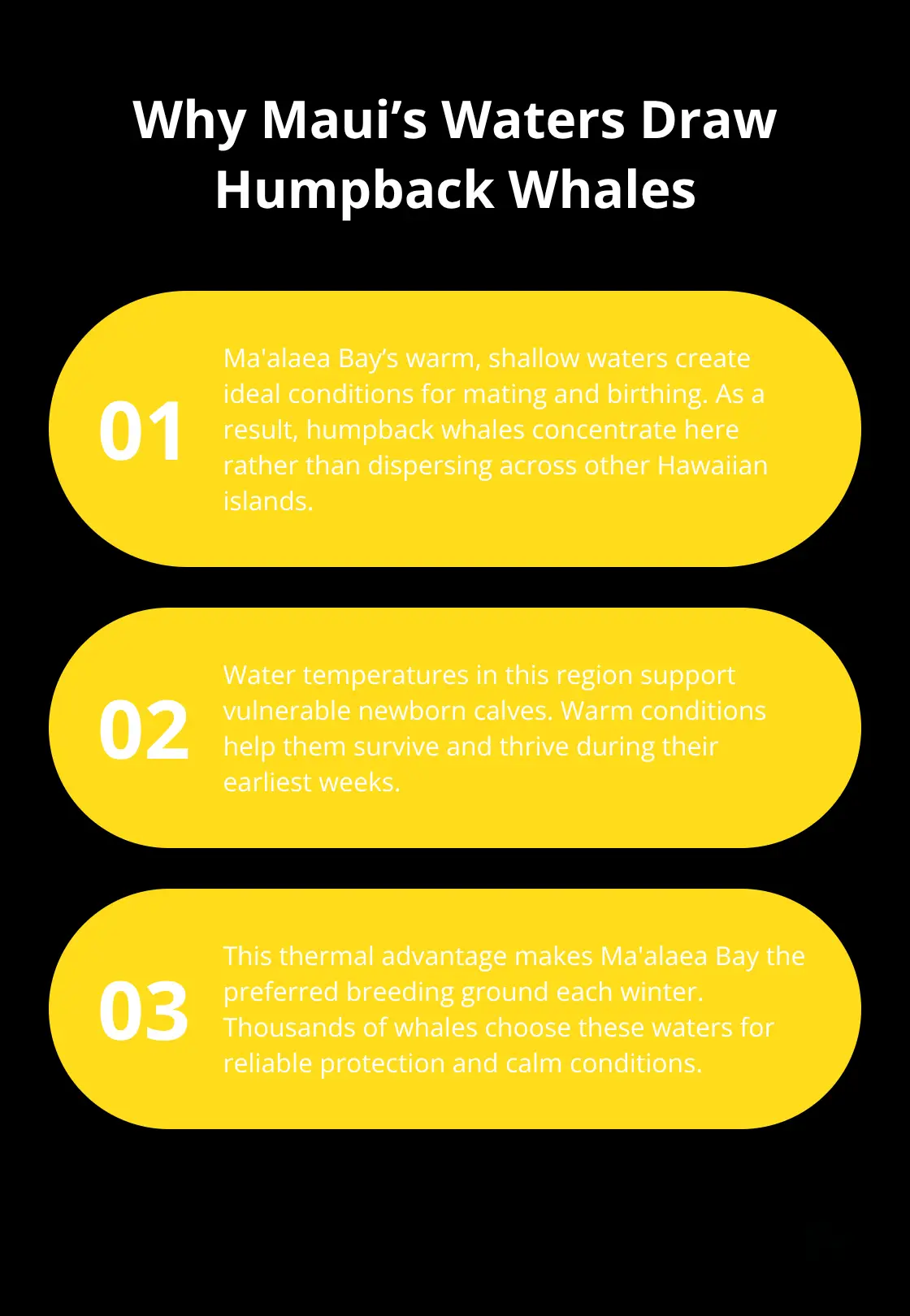
Maui’s warm, shallow Ma’alaea Bay creates ideal conditions for mating and birthing, which is why humpback whales concentrate here rather than spreading across other Hawaiian islands. Water temperatures in this region support newborn calves, which need warm conditions to survive and thrive. This thermal advantage makes Ma’alaea Bay the preferred breeding ground for thousands of whales each winter.
Best Times of Day for Sightings
Early morning departures between 7 and 10 AM offer calmer seas and better visibility, which increases your chances of spotting multiple whales during a single tour. Afternoon trips from 3 to 6 PM work equally well, often catching renewed whale activity as golden-hour light transforms the ocean. If you book a morning tour, you’ll benefit from flatter water conditions; if you prefer afternoon viewing, expect magical lighting but potentially more wind.
The Sweet Spot for Planning
Mid-January through mid-March represents the ideal window for planning your trip-whale sightings are nearly guaranteed during this period, with most operators reporting sightings on the vast majority of daily trips. This concentrated timeframe offers the highest probability of memorable encounters with mothers, calves, and active males. With so many whales present and conditions favoring visibility, your next step involves selecting the right vessel type and tour operator for your specific preferences and comfort level.
What to Pack for Whale Watching Success
Dress for Ocean Conditions, Not Shore Weather
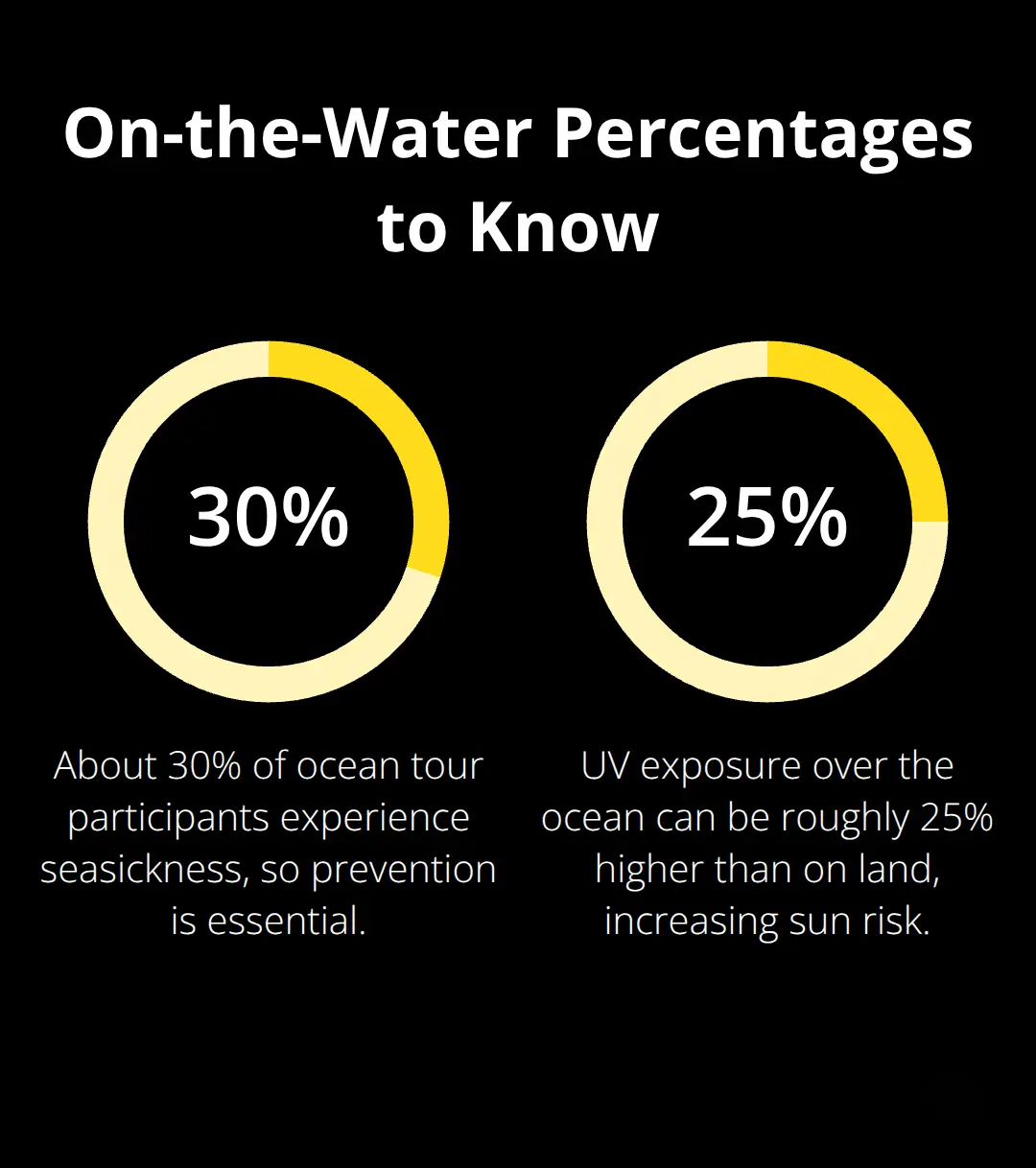
Maui’s air temperature in January through March hovers around 75°F, but ocean spray and wind chill drop the effective temperature lower. You need a light jacket or sweater that you can remove if the sun warms the deck, and a hat with a secure chin strap since wind gusts accelerate near the water. Sunscreen rated SPF 30 or higher becomes non-negotiable-the sun reflects off the ocean surface and intensifies UV exposure by roughly 25 percent compared to land-based activities. Apply it 15 minutes before boarding and reapply every two hours, especially after contact with salt spray. Sunglasses with polarized lenses cut water glare significantly and protect your eyes during long viewing sessions.
Moisture-wicking clothing outperforms cotton, since salt water and humidity create uncomfortable clinging fabric that stays damp throughout your tour. Closed-toe water shoes or sandals grip wet boat decks better than flip-flops and reduce slip hazards when you move around the vessel.
Combat Seasickness Before It Starts
Seasickness affects roughly 30 percent of ocean tour participants, so prevention beats treatment every time. Take Dramamine or a comparable motion-sickness medication 30 to 60 minutes before departure-most whale watch operators sell tablets onboard for around five dollars, but purchasing beforehand ensures you have the correct dosage. Focus your eyes on the horizon rather than the boat’s movement; this technique helps your inner ear recalibrate to the motion. Eat a light breakfast containing carbohydrates and protein before your tour; skipping food entirely or eating heavy meals both increase nausea risk.
Stay hydrated with water rather than alcohol or caffeine, which dehydrate your body and worsen symptoms.
Capture Whales with the Right Camera Gear
Whales often surface 50 to 100 feet from the boat, so you need a camera with a strong zoom lens or quality smartphone with digital zoom capabilities. A waterproof camera bag protects your gear from salt spray, and a polarizing filter reduces water glare in photos. Avoid using flash, which startles whales and violates responsible viewing practices. Pack extra batteries or a portable charger since cold ocean air drains battery life faster than normal, and you won’t want to miss a breach because your camera died mid-tour.
Prepare Your Body and Mind
Hydration matters more than most people realize on the water. Drink water consistently throughout your tour rather than waiting until thirst strikes, since the ocean environment masks dehydration symptoms. Wear layers that you can adjust as conditions change-the sun may feel intense one moment, then clouds and wind shift the temperature rapidly. Your comfort directly impacts how much you enjoy the experience, so take these preparations seriously rather than treating them as optional suggestions.
With your gear sorted and your body prepared for ocean conditions, the next step involves understanding the rules that protect these magnificent whales and ensure responsible viewing practices that benefit both you and the animals you came to witness.
Whale Watching Etiquette and Marine Life Protection
Federal law mandates a minimum 100-yard distance from humpback whales, which translates to roughly the length of a football field. The Marine Mammal Protection Act enforces this rule strictly, and violations carry fines up to $20,000 per incident. Tour operators with established wildlife guidelines maintain this distance automatically, but you should understand why it matters. Whales under stress exhibit behavioral changes like altered dive patterns and reduced feeding, which impacts their ability to build energy reserves before the grueling 3,000-mile migration back to Alaska in April. Mothers protecting newborn calves become particularly defensive when boats approach too closely, and a protective mother can injure herself or her calf while fleeing.
Federal Regulations and Distance Requirements
The Marine Mammal Protection Act sets the 100-yard minimum, and reputable operators position their vessels strategically so whales swim toward the boat rather than pursuing them. This approach respects natural whale movement patterns and keeps animals calm. Hydrophones included on most quality tours let you hear whale songs from a safe distance, delivering an intimate experience without crowding the animals.
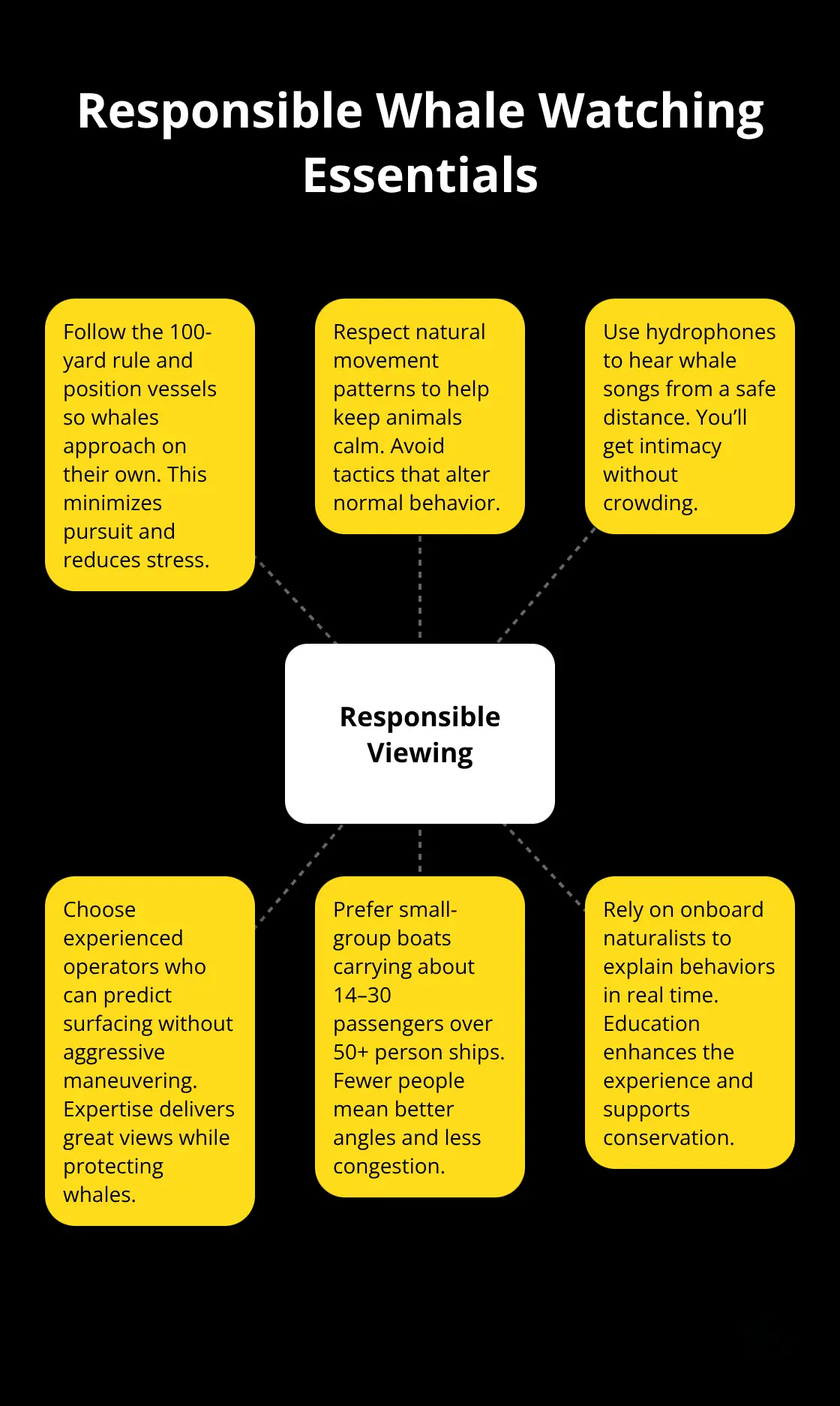
Naturalists aboard explain what you’re observing in real time, transforming surface behavior into educational moments.
How Responsible Operators Protect Whales
Operators with 20+ years in business like Captain Steve’s understand whale behavior patterns deeply enough to predict where pods will surface next, positioning boats for optimal viewing without aggressive maneuvering. Smaller vessels carrying 14 to 30 passengers achieve better sightings than massive ships carrying 50+ people, since fewer bodies mean less deck congestion and better individual viewing angles. When you book with an operator emphasizing responsible practices, you’re choosing an experience that benefits both you and the whales.
Why This Protection Matters Long Term
Humpback whale populations rebounded from near extinction in the 1960s, growing to over 25,000 today-a conservation success story directly tied to protection laws and responsible whale watching practices. Continued population growth depends on minimizing stress factors during critical breeding and calving seasons. When whales rest undisturbed in warm Hawaiian waters, they conserve energy essential for reproducing and raising healthy calves. Your choice to support operators following marine mammal guidelines directly contributes to keeping these populations stable for future generations.
Final Thoughts
Watching a humpback whale breach just meters from your boat transforms how you see the ocean forever. That moment when a 40-ton animal launches itself skyward, water cascading off its body, stays with you long after you return to shore. We at Maui Snorkel Charters understand this magic because we’ve witnessed it countless times, and we’ve seen how these encounters change people’s perspectives on marine conservation and natural wonder.
Planning your Maui whale watching trips requires balancing timing, preparation, and selecting an operator that respects both your comfort and the whales’ wellbeing. Mid-January through mid-March gives you the highest probability of unforgettable sightings, with peak activity concentrated in January and February. Pack layers, bring motion-sickness prevention, and select a camera with zoom capabilities so you capture the moments that matter.
Book with an operator committed to the 100-yard distance requirement and responsible viewing practices that keep these magnificent animals healthy and thriving. We at Maui Snorkel Charters offer Pacific Humpback Whale watches during the winter season, combining our expertise in small-group marine adventures with the same commitment to quality and safety that defines our year-round snorkel tours. Start your whale watching adventure with us and join thousands of visitors who’ve discovered why Maui’s winter waters host one of Earth’s greatest natural spectacles.
Call 808-270-8776