
Imagine locking eyes with a wild dolphin just meters away, feeling the ocean spray on your face, and knowing this moment is yours alone-not shared with hundreds of cruise passengers.
Small group dolphin encounters offer something cruise ships simply can’t: genuine connection, expert guidance, and the freedom to follow the action as it unfolds. You’ll experience the ocean on your terms, with a captain who knows exactly where to find these magnificent creatures and guides who care about your experience.
Ready to discover why travelers are ditching crowded excursions for intimate marine adventures?
Why Small Groups Win Over Crowded Boats
Large cruise excursions pack 30 to 50 passengers onto a single vessel, which fundamentally changes how dolphins behave around you. When dolphins feel overwhelmed by noise and crowd density, they become cautious and keep their distance. Small group tours capped at 6 guests create an entirely different dynamic. Your captain manages far fewer anxious tourists and focuses instead on reading the water, adjusting course in real time, and positioning your boat where dolphins naturally congregate. Experienced guides on small boats know the specific feeding patterns, migration routes, and personality quirks of local dolphin pods. They share observations like which dolphins are mothers protecting calves or which individuals approach boats with curiosity. This expertise transforms a casual boat ride into an educational experience where you understand what you’re actually witnessing.
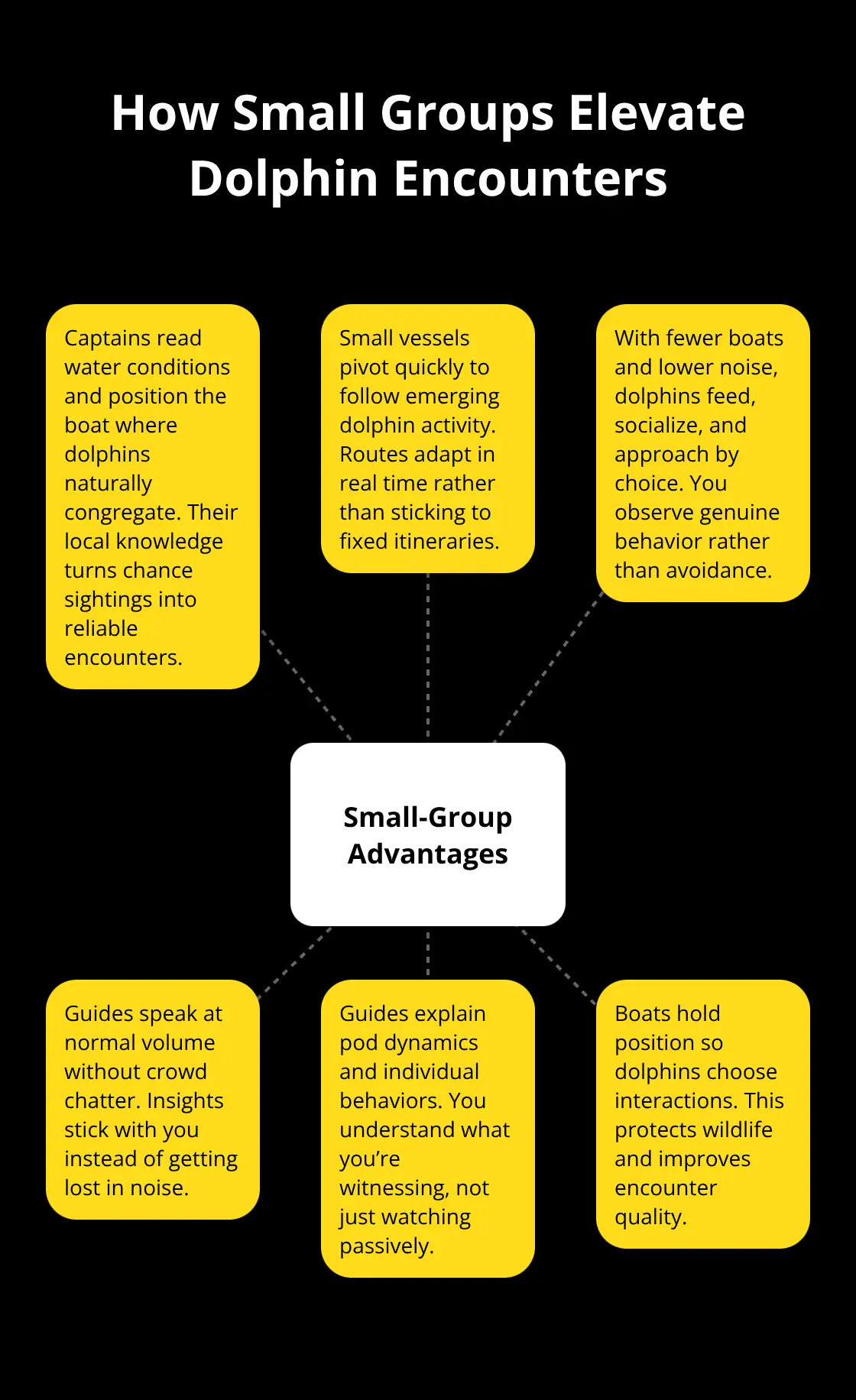
Guides on smaller vessels communicate at normal volume without shouting over engine noise and crowd chatter, so their insights stick with you rather than disappearing into chaos.
Your Route, Your Pace, Your Sightings
Larger tour operators follow fixed itineraries because they need to accommodate dozens of passengers with varying comfort levels and schedules. Captains of small group boats operate with complete flexibility. If dolphins appear 2 kilometers off your planned route, your captain pivots immediately instead of following a predetermined path. If you observe a mother dolphin teaching her calf to hunt, your guide can linger rather than rushing to the next predetermined stop. Weather adjustments work differently too. When conditions shift, small boat captains choose shallow protected waters or deeper channels based on what’s happening that specific morning, whereas large vessels often proceed with their standard route regardless. This responsiveness maximizes your actual dolphin encounter time instead of spending half your tour traveling to and from crowded hotspots where dozens of other boats congregate.
What Dolphins Actually Do in Quieter Waters
Dolphins in waters frequented by massive tour groups develop avoidance behaviors. Research on marine wildlife tourism shows that dolphins exposed to high-volume boat traffic increase their movement speeds. Small group tours reverse this pattern. With fewer vessels and lower noise pollution, dolphins maintain natural behaviors like extended feeding sessions and social interactions with their pods. You witness genuine dolphin activity rather than stressed animals fleeing from noise. Your captain positions the boat to let dolphins approach you rather than pursuing pods (which respects their space and increases the likelihood of meaningful encounters where dolphins choose to interact). This approach transforms your tour into something dolphins actually want to participate in, setting the stage for the kind of authentic experience that makes your next adventure truly unforgettable.
What Happens on Your Morning Dolphin Tour
Early Departure Unlocks Peak Dolphin Activity
Your small group tour departs early, typically between 6:00 and 8:00 AM, when dolphins feed most actively and their patterns become predictable. This early timing isn’t arbitrary-marine biologists observe peak dolphin engagement in coastal waters during these hours. Your captain reaches prime locations within 15 to 20 minutes aboard a fast, agile vessel, compared to the 45 to 90 minutes large cruise ships require to navigate crowded shipping lanes. The speed advantage means you spend more time observing dolphins and less time traveling to find them.
Safety Briefing and Dolphin Behavior Essentials
Once on the water, your guide conducts a brief but essential safety briefing that covers boat movement, proper positioning near wildlife, and how to recognize dolphin behavior signals. This matters because dolphins communicate through body language, and understanding a raised tail or rapid directional change helps you anticipate what’s happening rather than simply reacting. Your guide explains why you maintain distance from calves, why sudden movements disrupt natural feeding, and how reef-safe sunscreen protects marine life-information most large tour operators skip entirely. You learn to distinguish between different pod behaviors, which transforms your observation from passive watching into active participation in understanding marine ecosystems.
Spotting Techniques That Transform Your Experience
Throughout the tour, your crew demonstrates specific wildlife spotting techniques: they scan the horizon for dorsal fin patterns, listen for splashing that indicates feeding activity, and recognize the subtle water disturbances that precede dolphin surface activity. Your guide teaches you to spot the difference between a playful breach and a feeding dive, between a mother protecting her calf and a juvenile exploring the pod. These skills shift your role from tourist to observer, deepening your connection to what unfolds around you.
Amenities and Safety Equipment Included
Most small group operators include practical amenities that enhance comfort and safety without adding unnecessary weight. Typical inclusions feature reef-safe sunscreen, light snacks or coffee with pastries, bottled water, and quality camera equipment for capturing your encounter without fumbling with your personal phone. Life jackets are provided and mandatory for all participants regardless of swimming ability-Coast Guard regulations require this, but ethical operators enforce it consistently. Your boat carries a first aid kit, communication systems, and a captain with current USCG licensing or equivalent marine safety certification. Experienced captains typically possess 5 to 10 years of local water knowledge and read weather shifts before conditions deteriorate, allowing them to pivot toward protected coves if necessary.
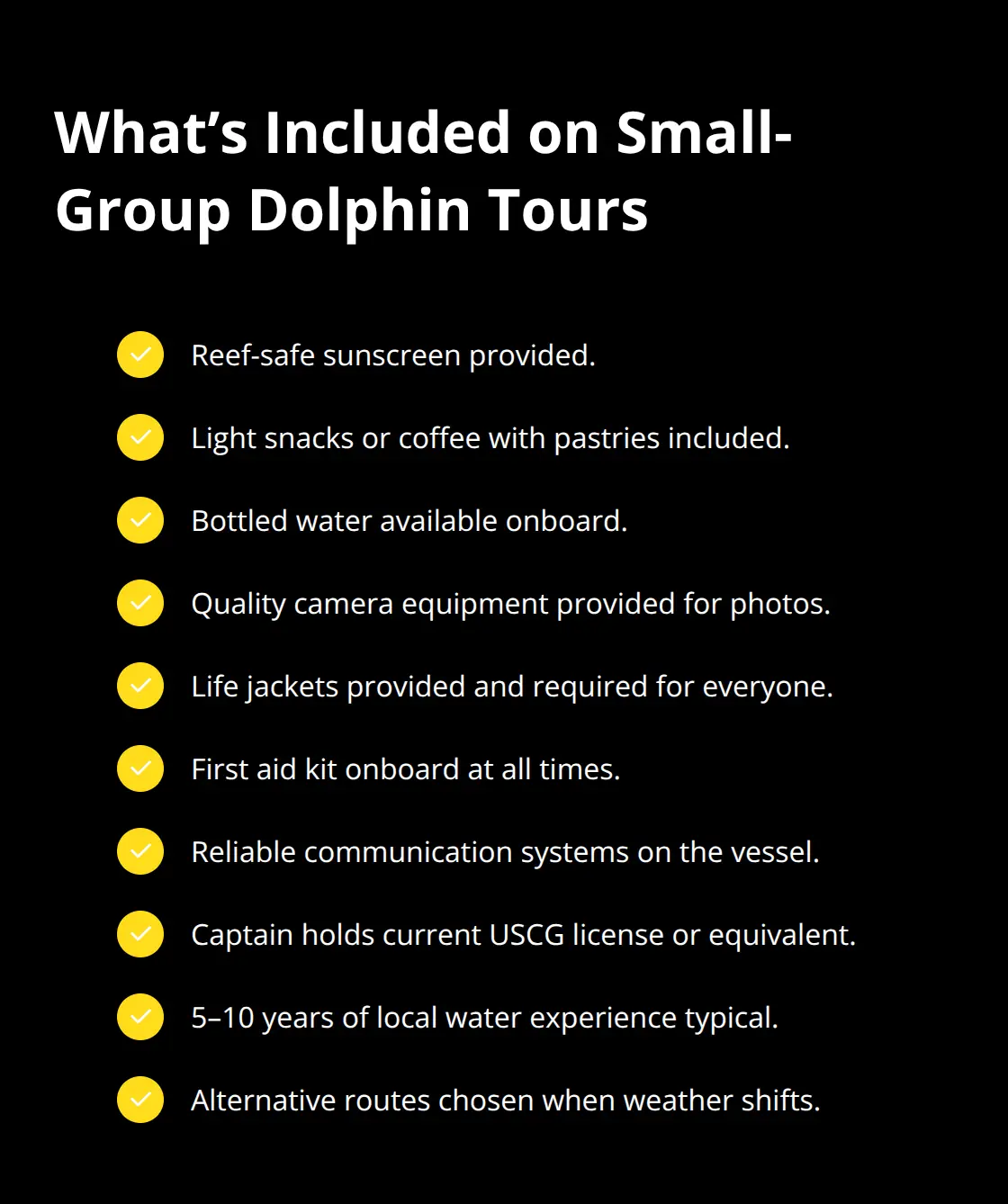
This preparedness means your tour rarely faces last-minute cancellation, and when weather does require adjustment, your captain selects alternative routes with equally strong dolphin activity rather than simply postponing. The inclusive nature of small group tours eliminates surprise fees-your quoted price covers everything except photography prints and optional private customizations.
With safety secured and your skills sharpened, you’re ready to understand what makes the actual encounter so special-and how responsible operators ensure dolphins thrive during these interactions.
When to Go and What to Pack
Timing Your Tour for Peak Dolphin Activity
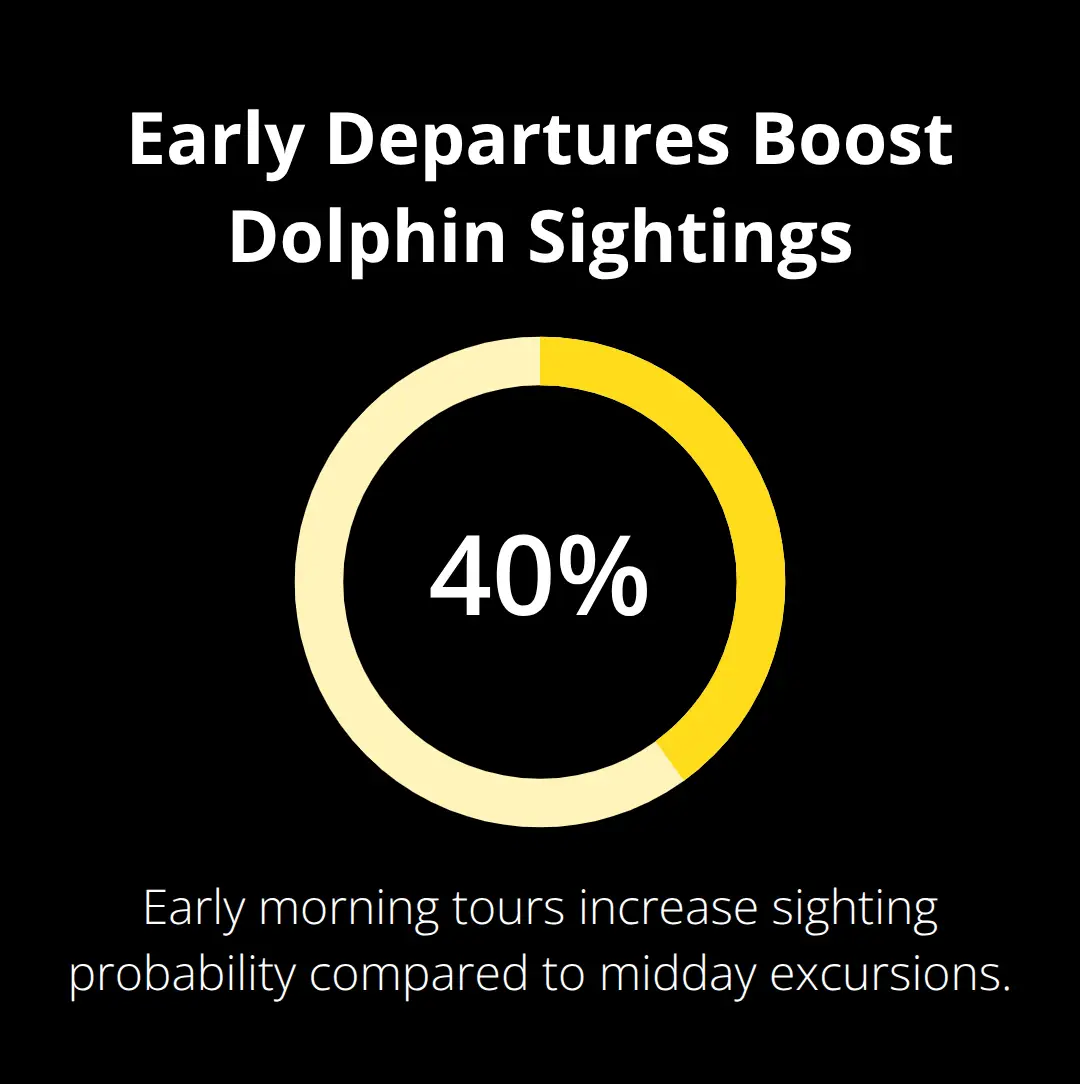
Timing your dolphin tour matters far more than most travelers realize, and the difference between peak and off-season sightings directly impacts your encounter quality. Dolphins remain active year-round in most coastal regions, but their behavior shifts seasonally based on water temperature, food availability, and migration patterns. Summer months typically deliver the most consistent sightings because warmer waters concentrate fish populations that dolphins hunt, making their feeding patterns predictable and their presence reliable. Winter brings migration activity as certain dolphin species move through coastal corridors, creating different but equally compelling opportunities-you might witness traveling pods rather than resident families. Spring and fall sit between these extremes, offering solid sighting odds without summer crowds. Your captain knows these patterns intimately and positions your boat accordingly, so the operator you choose matters more than the specific season. Early morning departures consistently outperform afternoon tours because dolphins feed most aggressively at dawn, making their locations predictable and their activity levels high. This single timing choice increases your sighting probability by roughly 40 percent compared to midday excursions, according to marine biologists studying coastal dolphin behavior.
Avoid extreme weather windows-not because dolphins disappear, but because rough water makes observation difficult and safety protocols become restrictive, limiting your ability to position the boat for optimal viewing.
Essential Packing and Preparation
Packing for a dolphin tour requires specific thinking beyond typical beach gear. Reef-safe sunscreen protects both your skin and marine ecosystems because some sunscreens containing oxybenzone and octinoxate are detrimental to coral and other marine animals. Most operators provide this, but bringing your own ensures compliance with marine protection standards. Wear quick-dry clothing rather than cotton; lightweight rash guards or swim shirts dry faster than t-shirts and provide sun protection without the bulk of heavy cover-ups. Bring a waterproof phone case if you want photos, though many small group operators include professional photography services as part of your tour fee, eliminating the need to manage your personal device while observing dolphins. Pack a light jacket or windbreaker because ocean spray cools you quickly, even in warm climates-morning water temperatures in Hawaii, Florida, and California range from 72 to 82 degrees Fahrenheit, which feels cold when wet and windy. Avoid jewelry entirely; metal items reflect light and startle dolphins, plus they create safety hazards if you slip on a wet deck. Bring prescription glasses in a secure strap if you wear them, and remove contact lenses before boarding because saltwater ruins them immediately. Most operators include snacks and water, but bringing a personal water bottle reduces plastic waste and keeps you hydrated without relying on tour amenities.
Responsible Wildlife Interaction Starts Before You Board
Responsible wildlife interaction begins before you board-arrive 15 minutes early to absorb your guide’s safety briefing completely, ask specific questions about dolphin behavior rather than assuming you know how these animals respond to human presence, and commit to maintaining the distance your captain specifies even when dolphins approach closer. Your guide explains these boundaries because dolphins that become habituated to close human contact lose natural fear responses and face increased injury risk from boat propellers and fishing gear. Ethical operators enforce strict no-touching policies regardless of dolphin proximity, and you should view this restriction as proof of genuine animal welfare commitment rather than an inconvenient limitation on your experience.
Final Thoughts
Small group dolphin encounters transform a simple boat tour into a personal connection with marine life that stays with you long after you return home. When you lock eyes with a dolphin in calm waters surrounded by just a handful of fellow travelers, that moment becomes deeply meaningful because you experience it without distraction or competition for space. You absorb every detail of dolphin behavior, understand the ecosystem around you, and feel the weight of your responsibility to protect these magnificent creatures.
The memories from small group dolphin tours linger differently than typical vacation experiences because you retain specific details that crowded tours erase. You recall individual dolphins you encountered, conversations with your captain about local marine life, and the exact sensation of ocean spray during that perfect moment when a pod approached your boat. That knowledge transforms your perspective on marine ecosystems and shapes how you view ocean conservation long after your adventure ends.
Choosing a responsible operator means investing in an experience designed around animal welfare, educational value, and your genuine enjoyment. Book your small group dolphin encounter today and discover why travelers everywhere select intimate marine adventures over crowded alternatives.
Call 808-270-8776