
There’s something magical about watching the sun dip below the horizon from the water-and South Maui offers some of the most breathtaking views in Hawaii. The island’s unique geography and weather patterns create the perfect conditions for golden-hour moments that’ll leave you speechless.
A South Maui sunset tour isn’t just about snapping photos; it’s about experiencing the ocean, spotting marine life, and soaking in the island’s natural beauty during its most stunning hours. Whether you’re a seasoned traveler or planning your first Hawaiian adventure, this experience belongs on your Maui bucket list.
What Makes South Maui’s Sunsets Stand Out
The Perfect Geography for Golden-Hour Views
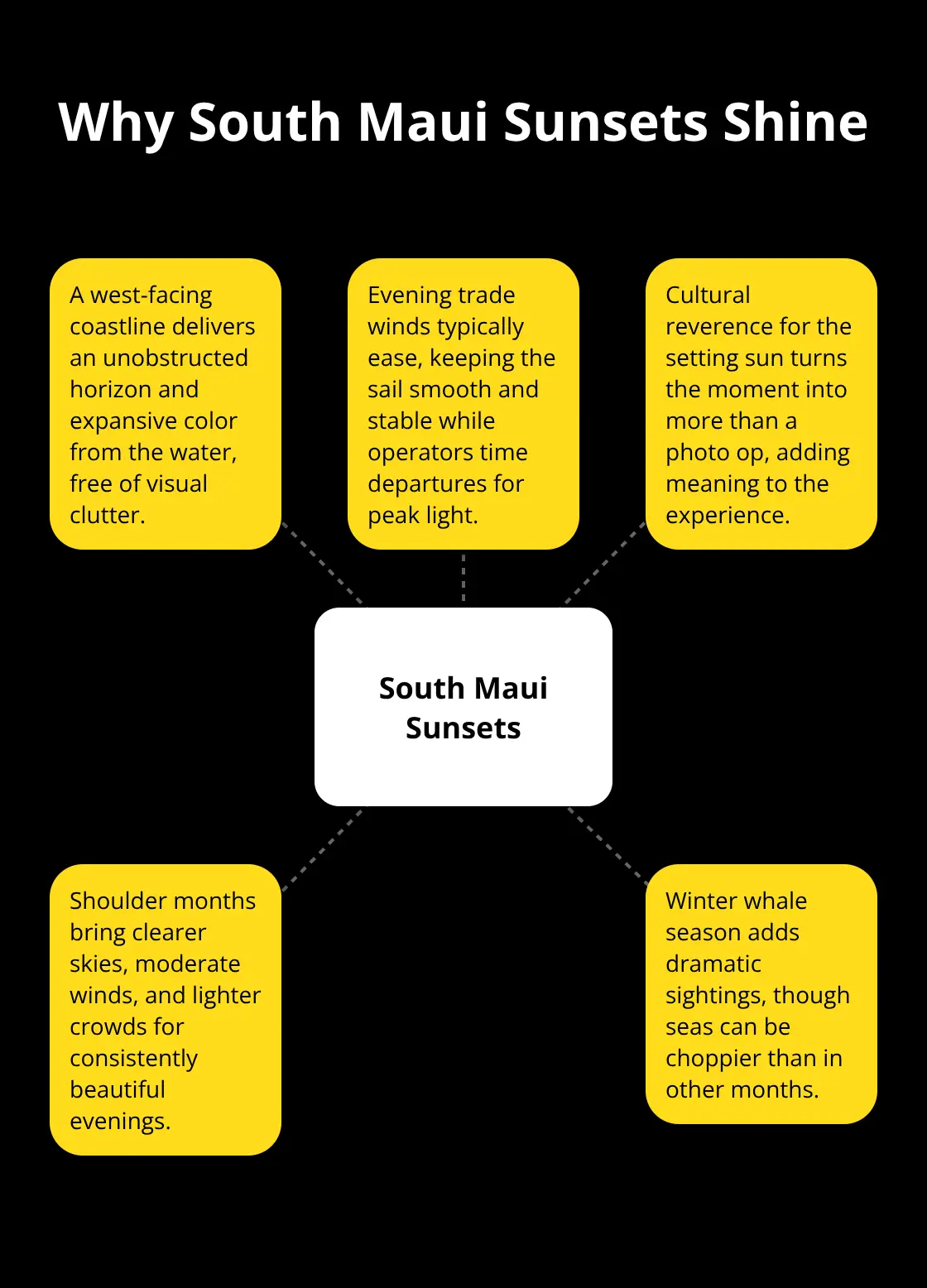
South Maui’s sunsets deliver visual impact that landlocked viewpoints simply cannot match. The island’s west-facing coastline creates an unobstructed 360-degree color display from the water, with no buildings or palm trees interrupting the horizon. When you float on the ocean, the sun descends directly into the water rather than behind distant ridgelines, which intensifies the visual experience and extends those precious final minutes of daylight. Light changes on the water transform the appearance of the water itself, amplifying the pink, orange, and purple hues across the entire sky. Most South Maui departures launch from Ma’alaea Harbor or Makena Beach, positioning you perfectly along this west-facing stretch where the sun’s final descent becomes a full-sensory event rather than a fleeting moment.
Weather Conditions That Favor Consistent Beauty
Weather patterns in South Maui favor reliable sunset conditions, particularly during shoulder months from April through May and September through October when clearer skies and moderate winds align with lower tourist crowds. Winter brings humpback whale sightings from December through mid-April, though choppier seas accompany the season. The island’s position in the Pacific creates predictable trade wind patterns that typically calm during evening hours, making the sail itself smooth and stable. Operators time departures to catch peak light, launching around 90 minutes before sunset to maximize your viewing time on the water.
Cultural Connection to the Setting Sun
The cultural significance of South Maui’s sunsets runs deep in Hawaiian tradition. West Maui holds spiritual importance as the direction of the setting sun, and witnessing this daily transition from the water connects you to centuries of island reverence for the ocean’s role in daily and spiritual life. This connection transforms your experience from a simple photo opportunity into a meaningful moment that honors the islands’ heritage.
Understanding what makes South Maui special sets the stage for knowing what you’ll actually encounter once you board a vessel and head out onto the water.
What Awaits You on the Water
Intimate Group Settings and Vessel Design
South Maui sunset tours deliver an intimate experience far removed from the crowded beach scenes you’ll find elsewhere on the island. Most operators cap group sizes at 48 to 49 passengers, creating an environment where you actually hear the crew and feel the ocean rather than fighting for deck space. The vessels themselves are purpose-built catamarans designed specifically for sunset sailing, with stable platforms that minimize motion even when swells pick up during winter months. Check-in happens 30 minutes before departure at dedicated kiosks like the Sea Maui location at Whaler’s Village, where you’ll receive parking validation good for four hours at the parking structure.
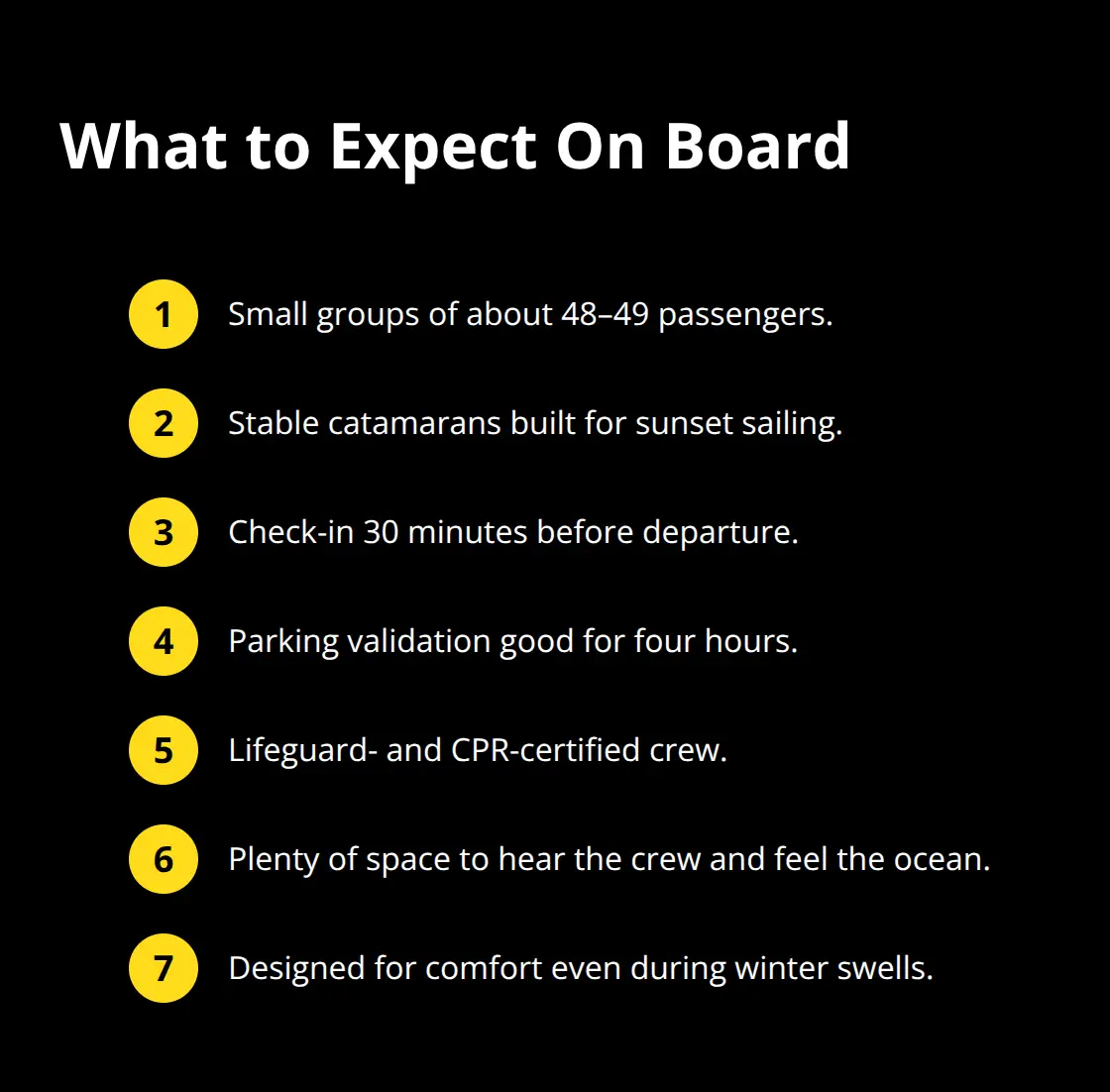
Crew members on these tours are lifeguard and CPR certified, which means safety protocols run tight without feeling intrusive or stiff.
Timing and Duration on the Water
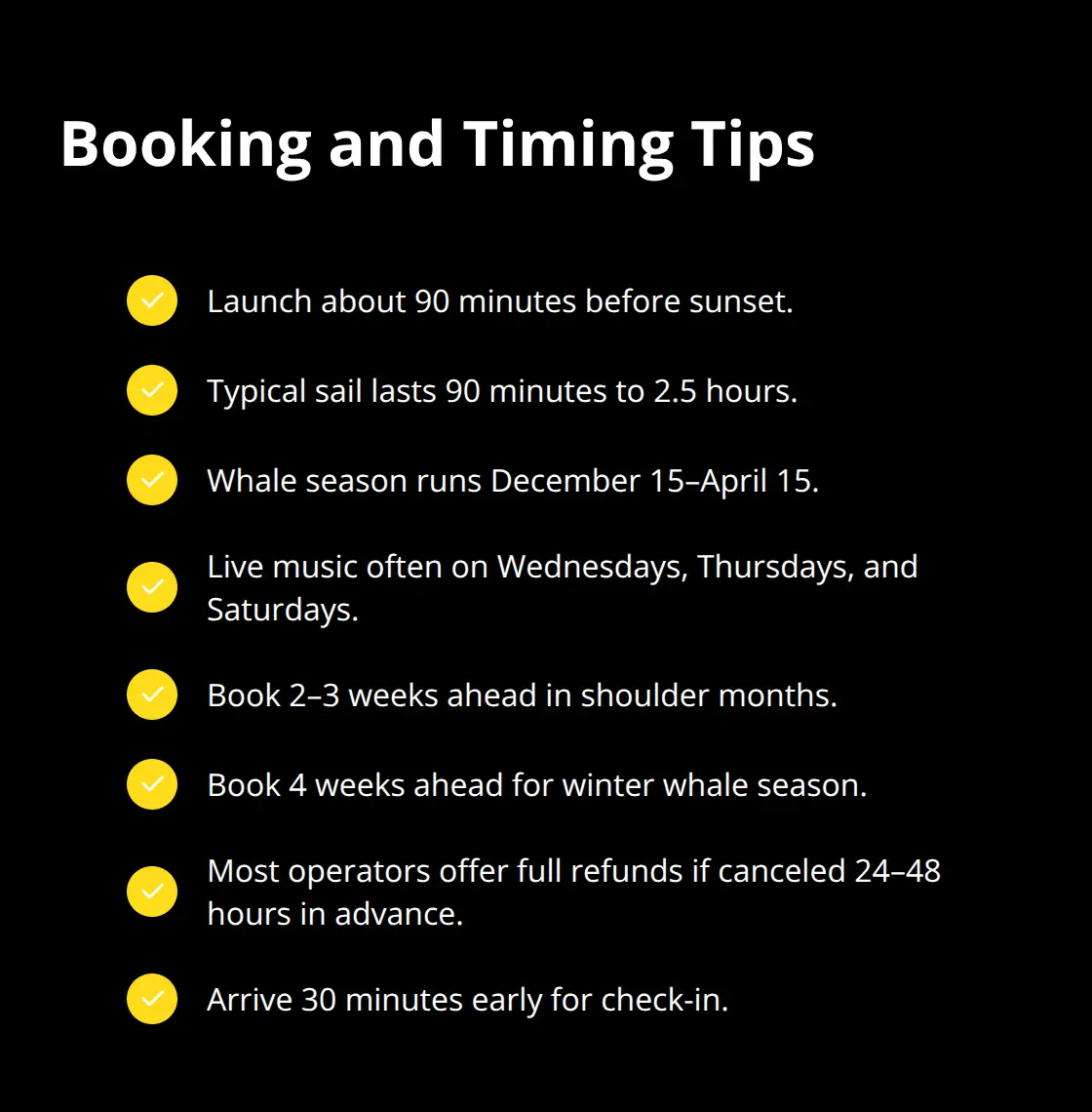
The actual sail lasts between 90 minutes and two and a half hours depending on your operator, with most departures timed to launch roughly 90 minutes before sunset so you catch the entire golden-hour progression rather than just the final moments. This timing strategy ensures you witness the full spectrum of color changes as light transforms the sky and water. Operators coordinate departures around sunset schedules, which shift throughout the year as daylight hours change across the seasons.
Marine Life and Seasonal Wildlife
Marine life encounters during evening hours differ markedly from daytime snorkel excursions because reef activity shifts as light fades. You’ll spot fish moving to evening feeding patterns and occasionally glimpse manta rays gliding through shallower waters, though marine life viewing takes a backseat to the sunset itself on dedicated sunset cruises. Seasonal whale watching runs from December 15 through April 15 when humpback whales migrate through Hawaiian waters, and winter sailings frequently deliver breaching sightings that dwarf any sunset photo in terms of pure excitement.
Food, Drinks, and Entertainment
Premium amenities on these tours consistently include open bars for guests 21 and older with valid ID, offering domestic beers, wine, and cocktails that flow throughout your time aboard. Pupus, or Hawaiian appetizers, round out the experience with items like crispy pork sliders, chicken parmesan salad, and fried chicken with unagi and spicy garlic aioli (though menus rotate daily). Live music performs on select evenings, typically Wednesdays, Thursdays, and Saturdays depending on your operator, transforming the experience from peaceful observation into something more festive.
What to Wear and Pack
Dress in lightweight, breathable clothing and avoid long pants or dresses since you’ll be exposed to ocean spray and wind. Bring a light jacket because evening temperatures drop faster on the water than you’d expect from the beach (soft-soled shoes or bare feet work best on deck). These simple preparations ensure you stay comfortable throughout your sail and can focus entirely on the colors spreading across the horizon.
How to Capture and Enjoy Your Sunset Without Stress
Camera Settings That Actually Work
Your phone’s camera will disappoint you if you rely on automatic settings, so switch to manual mode before the sun touches the horizon. Keep shutter speed around 1/250th of a second to avoid blur while maintaining detail in the sky’s color gradients. Shoot in RAW format if your device supports it because post-processing latitude matters far more than getting the exposure perfect in-camera. A slightly underexposed image with preserved sky detail beats a blown-out sunset every time.
Positioning Yourself for the Best Angle
Position yourself on the port side of the boat if it heads south from Ka’anapali or Ma’alaea, or on the starboard side for northbound routes. This placement gives you the sun’s reflection directly in your frame rather than shooting into glare. Crew members know these sight lines intimately and will point you toward the better angle without needing to ask. Arrive at check-in 30 minutes early so you claim a good vantage point before crowds settle and can actually watch the crew prepare rather than standing around anxious about missing something.
The Green Flash and Peak Color Moments
The green flash optical phenomenon happens unpredictably, so stop obsessing over capturing it and instead keep your camera ready for 30 seconds after the sun dips below the horizon when the sky’s color intensity peaks. Your actual enjoyment multiplies when you set the camera down for extended stretches, particularly during the final 15 minutes of daylight when colors shift fastest and your eyes process information faster than any lens can capture. Accept that some moments won’t be photographed because your hands will be occupied holding a drink or steadying yourself as the boat rocks slightly.
Comfort and Safety on the Water
Wear your light jacket from the start because temperature drops faster on the water than you’d predict, and shivering guests miss details. Bring a waterproof phone case if you’re serious about photography, but understand that some moments deserve your full attention instead. Winter sailings between December and April demand extra attention to wave patterns and your center of gravity since humpback whales create unpredictable surface activity, so move deliberately across the deck and hold railings when transitioning between spots. All crew members carry CPR certification and lifeguard training, which means they’ve seen every type of mishap and genuinely watch for guests who look unsteady. If you feel motion sickness building, tell someone immediately rather than white-knuckling it silently, because medication and positioning adjustments work fast.
Final Thoughts
A South Maui sunset tour delivers far more than Instagram-worthy photos or a checkbox on your travel itinerary. You invest in an experience that engages all your senses simultaneously: the warmth of fading sunlight on your skin, the taste of fresh pupus and your favorite cocktail, the sound of live music drifting across calm water, and the sight of colors you’ve never seen the sky produce before. These moments accumulate into genuine memories that outlast any photo album because they root themselves in genuine presence rather than documentation.
Booking your South Maui sunset tour takes just a few minutes once you decide which operator aligns with your priorities. Most tours operate year-round with departures from Ma’alaea Harbor or Makena Beach, and you can reserve directly through operator websites or travel platforms. Try to book two to three weeks in advance during shoulder months, or four weeks ahead if you target winter whale-watching season when availability tightens considerably, and check cancellation policies before you commit since most operators offer full refunds if you cancel at least 24 to 48 hours before departure.
The real magic emerges when you stop treating your South Maui sunset tour as content to capture and start treating it as a moment to inhabit. Your phone will eventually die and your photos will fade into camera rolls alongside thousands of others, but the sensation of floating on the Pacific while the sky transforms into shades you didn’t know existed stays with you indefinitely (waterproof phone cases help protect your device, though you’ll want to set it down frequently). That’s the experience worth prioritizing, and that’s why you should book your adventure, arrive early, position yourself thoughtfully, and then set the camera down long enough to actually feel what makes these golden hours so unforgettable.
Call 808-270-8776