
Every winter, humpback whales migrate over 3,000 miles to Maui’s warm waters, creating one of the world’s most spectacular natural events. Between January and March, you’ll witness these magnificent creatures breaching and playing just offshore-an experience that stays with you forever.
At Maui Snorkel Charters, we’ve guided thousands of visitors through unforgettable whale watching tours. This guide covers everything you need to know about timing, locations, and preparation for your perfect whale watching adventure in Maui.
When to Head to Maui for Whale Watching
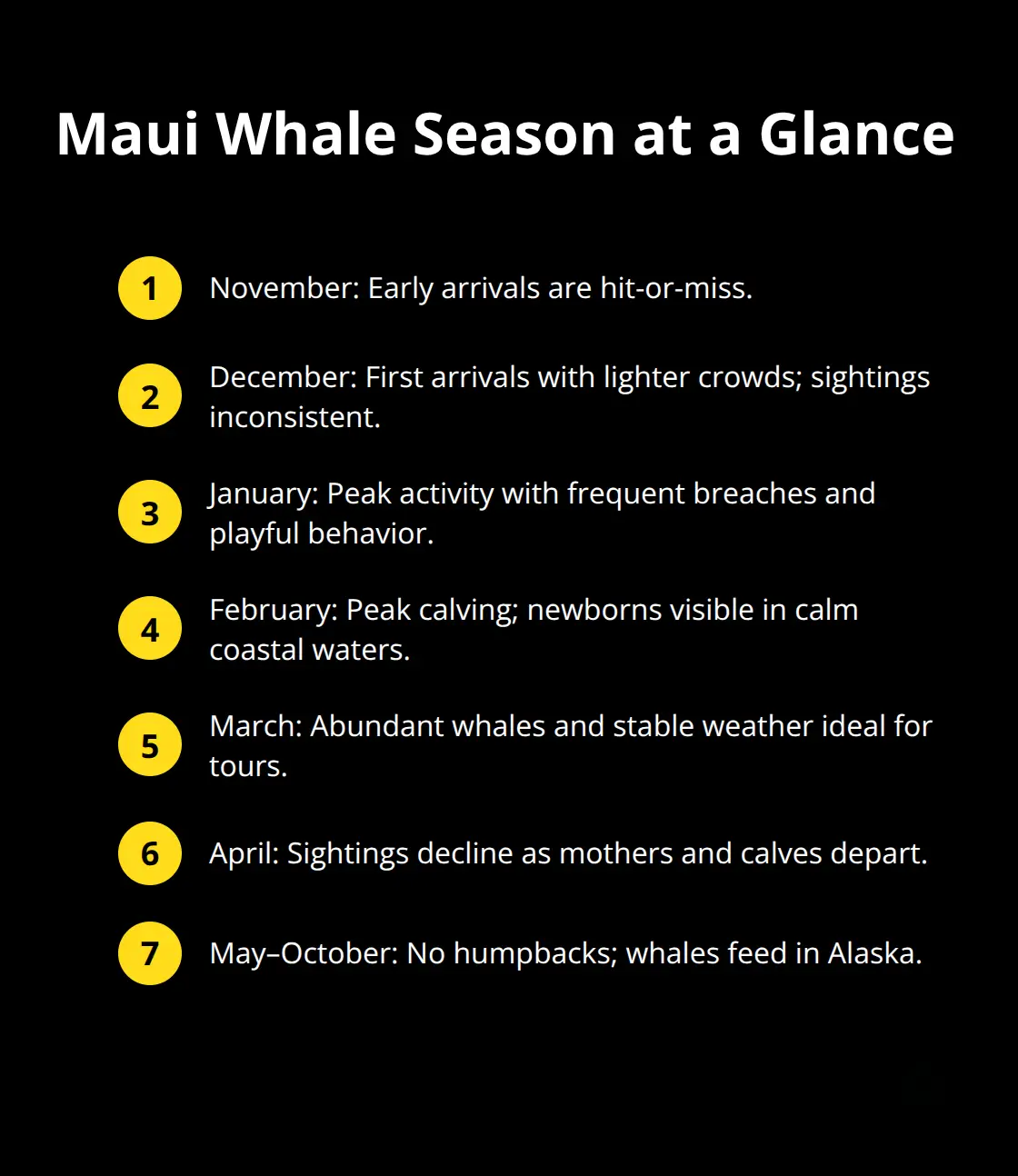
Maui hosts humpback whale visits annually between November and May, but timing matters enormously if you want to actually see them. January through March is genuinely peak season-not because whales show up sporadically, but because mothers with calves stick around the shallow Auʻau Channel between Maui, Molokaʻi, and Lānaʻi, where they teach young whales to breach and navigate. December brings the first arrivals with lower crowds, though sightings remain inconsistent. February deserves special attention: it’s peak calving season, meaning you’ll see newborns practicing their first breaches near Wailea and Kaʻanapali. April still delivers whales, but mothers and calves migrate back to Alaska, so sightings drop sharply after mid-month. November is honestly hit-or-miss with early arrivals, while May through October essentially has no humpbacks-the whales feed in Alaskan waters instead.
Water temperature stays around 78 degrees Fahrenheit during peak season, which feels warm enough for comfortable snorkeling and whale watching without a wetsuit, though the ocean surface can look glassy in early mornings when visibility peaks.
Peak Months for Whale Activity
January is the sweet spot for photographers and first-timers because breaches, tail slaps, and spy hops happen regularly when whales are active and playful. March ranks as the whale-watching gold standard according to experienced operators-plenty of whales, stable weather, and the ability to combine tours with other Maui activities without rushing. The Hawaiian Islands Humpback Whale National Marine Sanctuary notes that calves are born after late January, so if you want to see babies, try February through mid-April. February specifically offers peak calving season, with mothers and newborns practicing their first leaps in calm coastal waters.
Optimal Viewing Times and Conditions
Visibility works best between 7 and 10 AM when ocean conditions are calmest and the sun won’t create glare on the water. Afternoon viewing from 3 to 6 PM remains productive, especially near sunset vantage points, because whale activity often renews as water temperatures shift slightly. Wind and swell conditions change daily, which is why tour operators monitor ocean forecasts constantly and adjust routes to find the calmest, most productive waters-sometimes that means heading toward Molokini Crater on rough days instead of fighting chop in the Auʻau Channel. The best conditions combine calm seas, clear skies, and whales that are active and close to shore.
Where to Spot Whales Around Maui
The Auʻau Channel: Maui’s Prime Whale Corridor
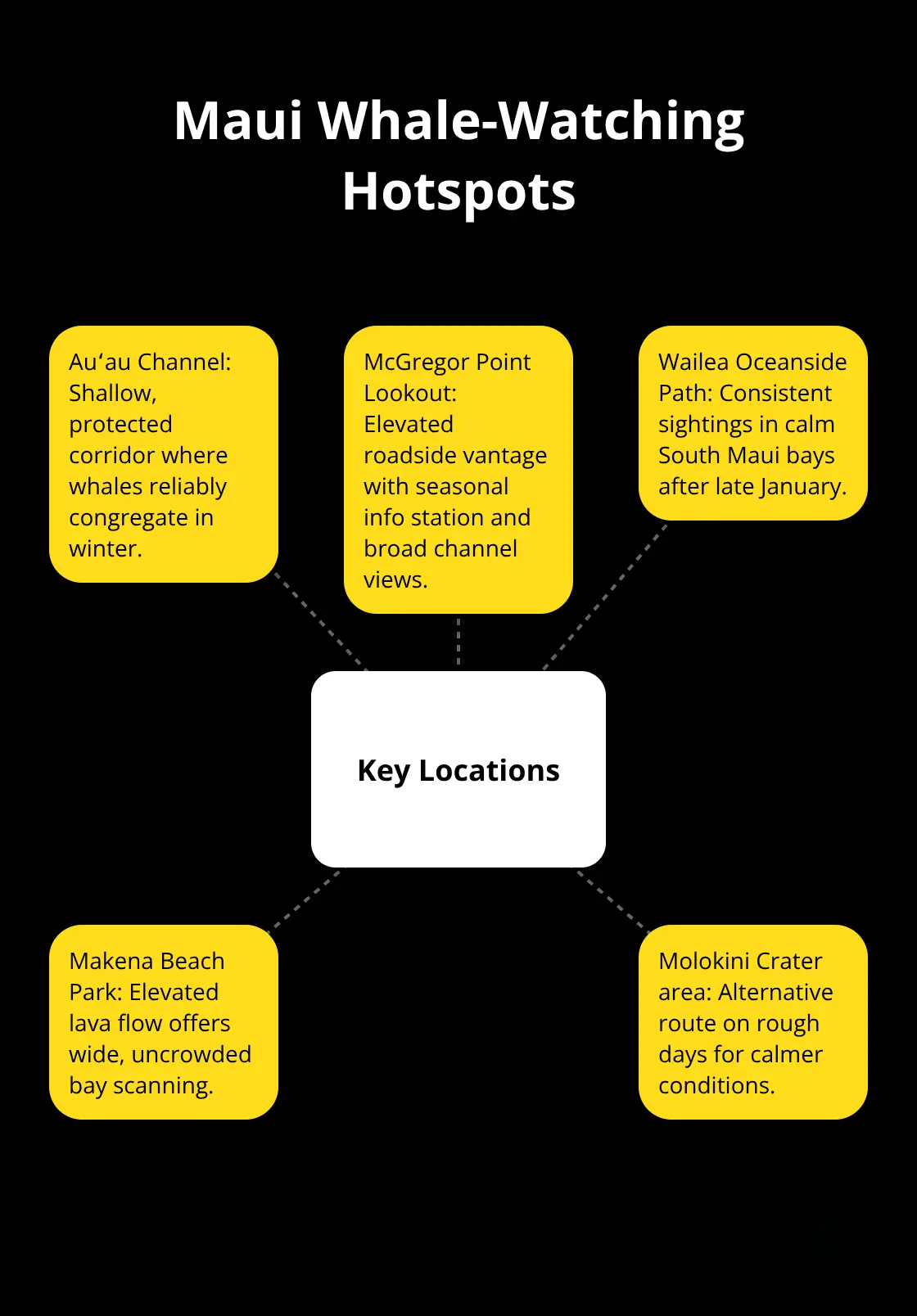
The Auʻau Channel between Maui, Molokaʻi, and Lānaʻi is where whales congregate during winter months, making it the primary corridor for sightings. The shallow basin and calm conditions create a natural gathering zone where whales stay predictable and visible. Mothers and calves favor the protected waters here to nurse and teach young whales essential skills like breaching. McGregor Point Lookout sits directly above this corridor on the Honoapiilani Highway between Lahaina and Maalaea, offering free land-based viewing where the Pacific Whale Foundation staffs an information station from December 1 through May 15.
Land-Based Viewing Spots
Position yourself at McGregor Point with the sun at your back between 7 and 10 AM when glare disappears and whale spouts become visible from considerable distances. South Maui whale watching hotspots like Wailea Oceanside Path and Makena Beach Park provide consistent sightings because calves practice breaching in these calm bays after late January. The lava flow between Little and Big Beach at Makena offers an elevated vantage point where you can scan the entire bay without crowds. Afternoon viewing from 3 to 6 PM along Wailea produces excellent results, especially when golden-hour light makes whale breaches more dramatic and easier to photograph.
Boat-Based Tours and Vessel Types
Boat-based tours from Lahaina and Maalaea harbors deliver substantially closer encounters than shore viewing because captains use updated sighting information and actively position vessels to locate whale pods. Hawaii law requires all boats to maintain a 100-yard minimum distance from whales, though whales often approach vessels voluntarily, creating the most memorable moments. Smaller, faster vessels like Zodiacs and eco-rafts maximize flexibility to follow active whale pods and avoid crowded areas where larger catamarans congregate. The speed advantage means your captain can relocate quickly when whales move, increasing your odds of multiple sightings during a single tour. Larger vessels offer smoother rides and onboard bathrooms, but they move slower and sometimes miss fast-moving pods that smaller boats can pursue.
Choosing Your Departure Point and Route
Tours from Lahaina typically explore the western Auʻau Channel, while Maalaea-based operators often head toward Molokini Crater, where conditions shift daily and captains adjust routes accordingly. Combination tours that pair whale watching with snorkeling at Turtle Town or Molokini Crater work well during peak season because morning ocean conditions suit both activities. Dedicated whale-watching tours yield more sightings if that’s your primary goal, though you’ll sacrifice the snorkeling component. Captains monitor ocean forecasts constantly and adjust routes to find the calmest, most productive waters-sometimes that means heading toward Molokini Crater on rough days instead of fighting chop in the Auʻau Channel. The best choice depends on whether you want multiple activities in one outing or maximum whale encounters.
What to Bring and How to Prepare for Your Whale Watch
Dress for Shifting Ocean Conditions
Ocean conditions shift constantly, and your comfort depends entirely on what you bring. The Auʻau Channel stays relatively calm during peak season, but wind and swell can change within hours, so layering your clothing matters far more than choosing one perfect outfit. Wear lightweight, quick-dry clothing rather than cotton because cotton absorbs seawater and holds moisture against your skin, making you cold even when air temperatures feel warm. A light windbreaker or rash guard protects you from morning ocean breezes that drop temperatures noticeably, especially when you sit still watching for whale spouts.
Sun protection is non-negotiable: apply reef-safe sunscreen before boarding and reapply every two hours, since water reflects UV rays and amplifies burn risk. A wide-brimmed hat and polarized sunglasses reduce glare while you scan for whale activity, and a small towel handles the salt spray that coats your face and equipment constantly.
Combat Seasickness Before It Starts
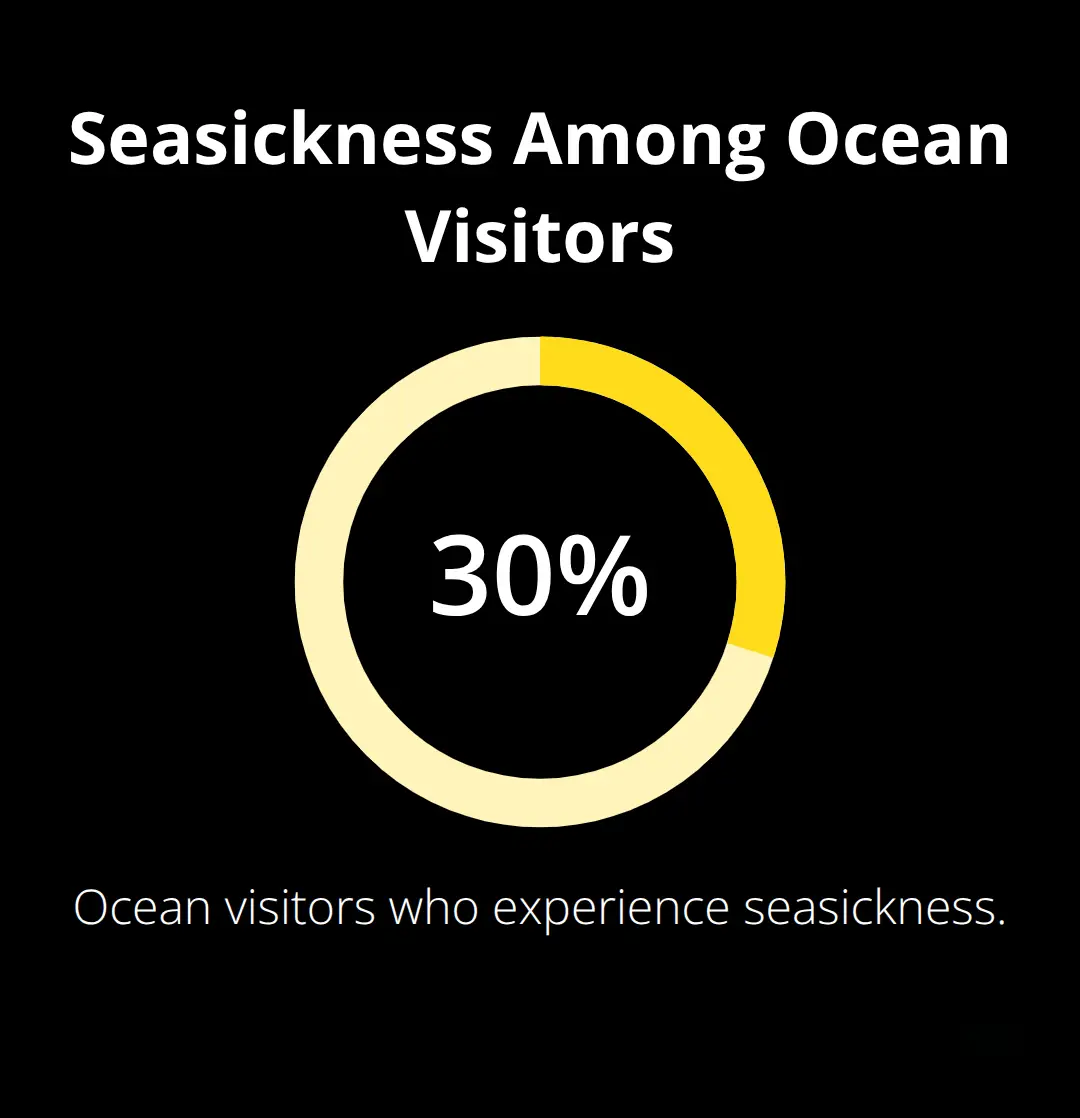
Seasickness affects roughly 30 percent of ocean visitors, so preparation prevents misery. Take ginger supplements or prescription motion sickness medication at least 30 minutes before departure if you’re prone to nausea. Focus your eyes on the horizon rather than the boat’s movement, eat light meals before touring, and avoid alcohol the night before because dehydration intensifies seasickness symptoms.
Smaller vessels like eco-rafts can feel choppier than larger catamarans, so request a bigger boat if you have a sensitive stomach. Afternoon tours work better for nausea-prone visitors because seas typically calm down after morning wind.
Capture Whale Moments With the Right Gear
A smartphone camera works adequately for distant whales, but a zoom lens between 70mm and 200mm gives you flexibility to photograph active whales without constantly reframing. A polarizing filter cuts water glare and enhances whale detail in your shots, and extra memory cards matter because you’ll take hundreds of photos before capturing one perfect breach image.
Stabilize your camera against the boat’s railing or use a small tripod with a ball head mount to reduce motion blur during rough seas. Position yourself on the boat’s side where captains predict whale activity and keep your camera ready rather than fumbling with settings when action happens. Morning light from 7 to 10 AM produces the sharpest images because the sun sits lower and creates definition on whale bodies without harsh shadows.
Accept That Some Moments Resist Photography
Whales surface every 10 to 15 minutes on average, so your best moments will sometimes happen too quickly to photograph. Those memories matter more than the shots you miss, and the experience of watching a whale breach in person surpasses any image you could capture.
Final Thoughts
Maui’s whale watching season offers something genuinely rare: consistent, close encounters with one of Earth’s most intelligent marine mammals during their annual migration. The shallow protected waters, predictable whale behavior, and accessible viewing options from both land and boat make Maui stand apart from other whale watching destinations worldwide. You’re not gambling on whether you’ll see whales here-you’re choosing between how many you’ll witness and which viewing method suits your comfort level best.
Your perfect whale watch adventure on Maui comes down to three decisions. First, pick your timing: January through March guarantees the highest activity levels, with February offering peak calving season if seeing newborn whales matters to you. Second, decide between land-based viewing for flexibility and cost savings or boat tours for closer encounters and higher sighting odds. Third, prepare your body and gear so seasickness, sun exposure, and uncomfortable clothing don’t distract from the experience.
We at Maui Snorkel Charters operate Pacific Humpback Whale watches during winter season aboard our custom 40-foot vessel, combining whale watching with the same small-group expertise and attention to detail that makes our snorkel tours exceptional. Our fast boat reaches prime whale habitat quickly, and our guides share genuine knowledge about whale behavior and Hawaiian marine conservation. Book your whale watching tour with us and experience the water with operators who understand these waters intimately and prioritize your safety and experience equally.
Call 808-270-8776