
Every winter, humpback whales migrate over 3,000 miles to Maui’s warm waters, creating one of the most spectacular natural events in Hawaii. At Maui Snorkel Charters, we’ve watched thousands of visitors experience the magic of these gentle giants up close.
The peak season from January through March offers your best chance to see whales breaching and playing in their natural habitat. This guide walks you through the timing, locations, and practical tips to make your whale watching adventure unforgettable.
When to Plan Your Whale Watching Trip
January Through March: Your Best Window
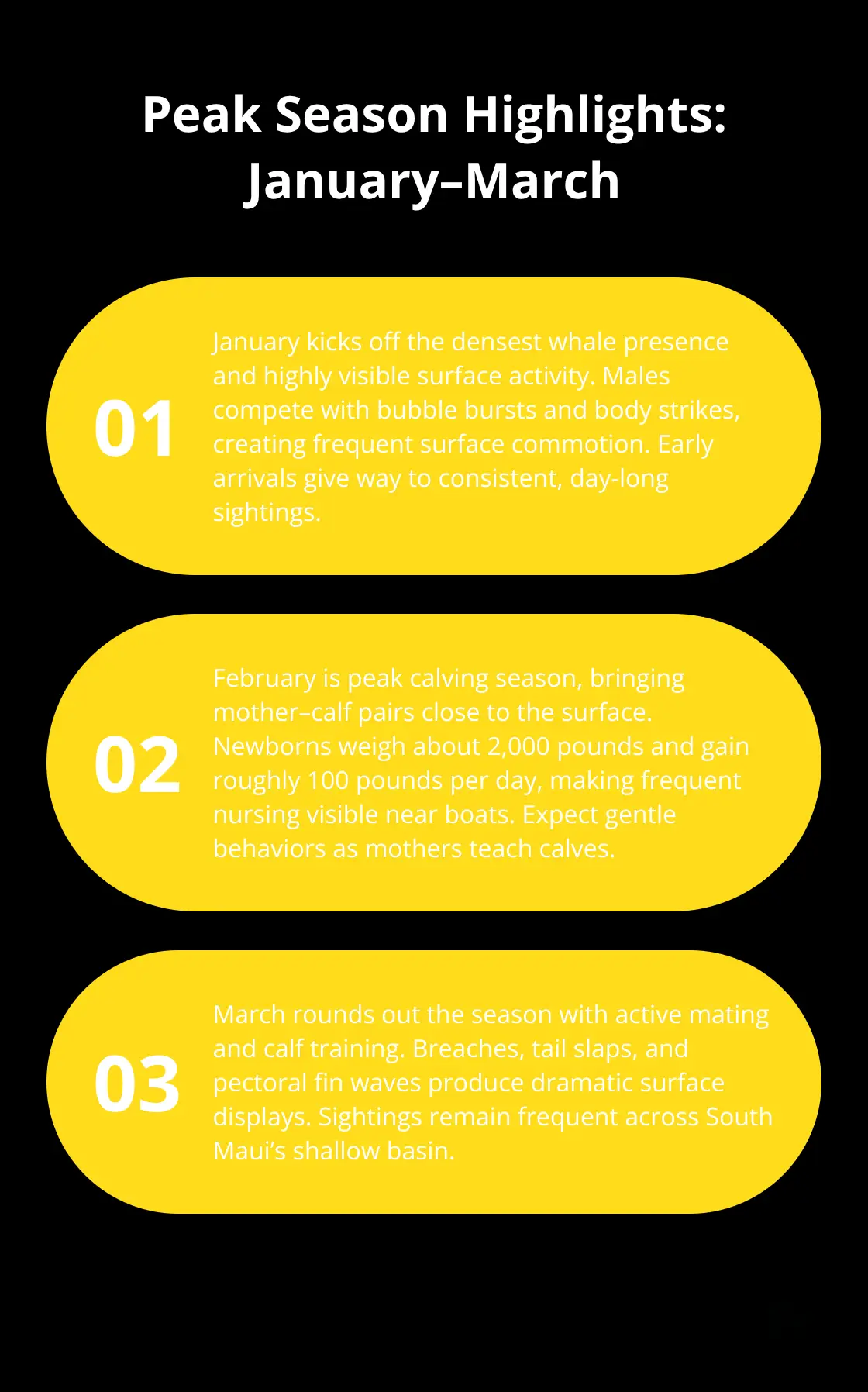
January through March stands as the absolute best window for whale watching in Maui, and there’s no debating this. According to NOAA, some humpback whales migrate from Alaska to Hawaiߵi during the 2024 season, with the densest concentration landing in Maui’s waters during these three months. January through March sees peak whale density, making it the period when your odds of multiple sightings skyrocket. February follows as the peak calving season, meaning you’ll witness mothers with newborn calves that weigh around 2,000 pounds at birth and gain roughly 100 pounds daily on their mother’s fatty milk. March rounds out the trinity with whales actively mating, giving birth, and teaching calves to breach-behaviors that create the most dramatic surface displays.
Skip November and December if you’re hoping for consistent action; early arrivals trickle in during these months, sightings remain sporadic, and crowds haven’t yet descended on popular viewing spots.
Water Conditions Work in Your Favor
Water conditions during peak season work heavily in your favor. Maui’s shallow, protected basin concentrates humpbacks in predictable areas, and the warm water temperatures keep whales lingering longer near the surface where you can actually see them. Whale behavior shifts noticeably from January onward: males compete intensely with chasing, bubble bursts, and body strikes that create visible surface commotion, while females nurse calves and prepare them for the 3,000 mile journey back to Alaska.
Timing Your Departure for Peak Activity
Early mornings between 7 and 10 AM deliver calm seas and excellent visibility, making this the window when tour operators position vessels for the closest encounters. Late afternoon viewing from 3 to 6 PM offers magical golden-hour lighting and often renewed whale activity as the day cools. Midday viewing works too, though glare reduces water visibility-head to higher-elevation vantage points like McGregor Point if you choose this window. The conditions you’ll experience during these months set the stage for what makes the next section so important: knowing exactly where to position yourself for the most reliable sightings.
Where to Watch Whales and Which Tours Deliver
Prime Whale Watching Locations
South Maui waters between Kihei and Wailea concentrate humpbacks for solid reasons. The shallow basin and calm conditions create a natural gathering zone where whales stay predictable and visible. Molokini Crater sits just offshore, and while famous for snorkeling, the surrounding waters funnel whale traffic during peak season. The rocky lava flows and deeper channels near Makena Beach Park, particularly around Puʻu Olaʻi, place you directly in migration corridors where whales surface regularly.
McGregor Point Lookout between Lahaina and Maalaea operates a free NOAA information station from December through May. Stop there to grab real-time sighting updates before you commit to a tour. If you watch from shore along Highway 30 from Māʻalaea to Lahaina, pull over safely and scan the water for blows-those tall plumes of vapor that signal a whale surfacing. Afternoon viewing from this coastal stretch often catches renewed activity as temperatures cool, and the golden-hour light makes whale breaches unmistakable.
Land-based viewing costs nothing, but you’ll miss the underwater sounds and closer encounters that water-based operators provide.
Small-Group Tours Beat Large Vessels
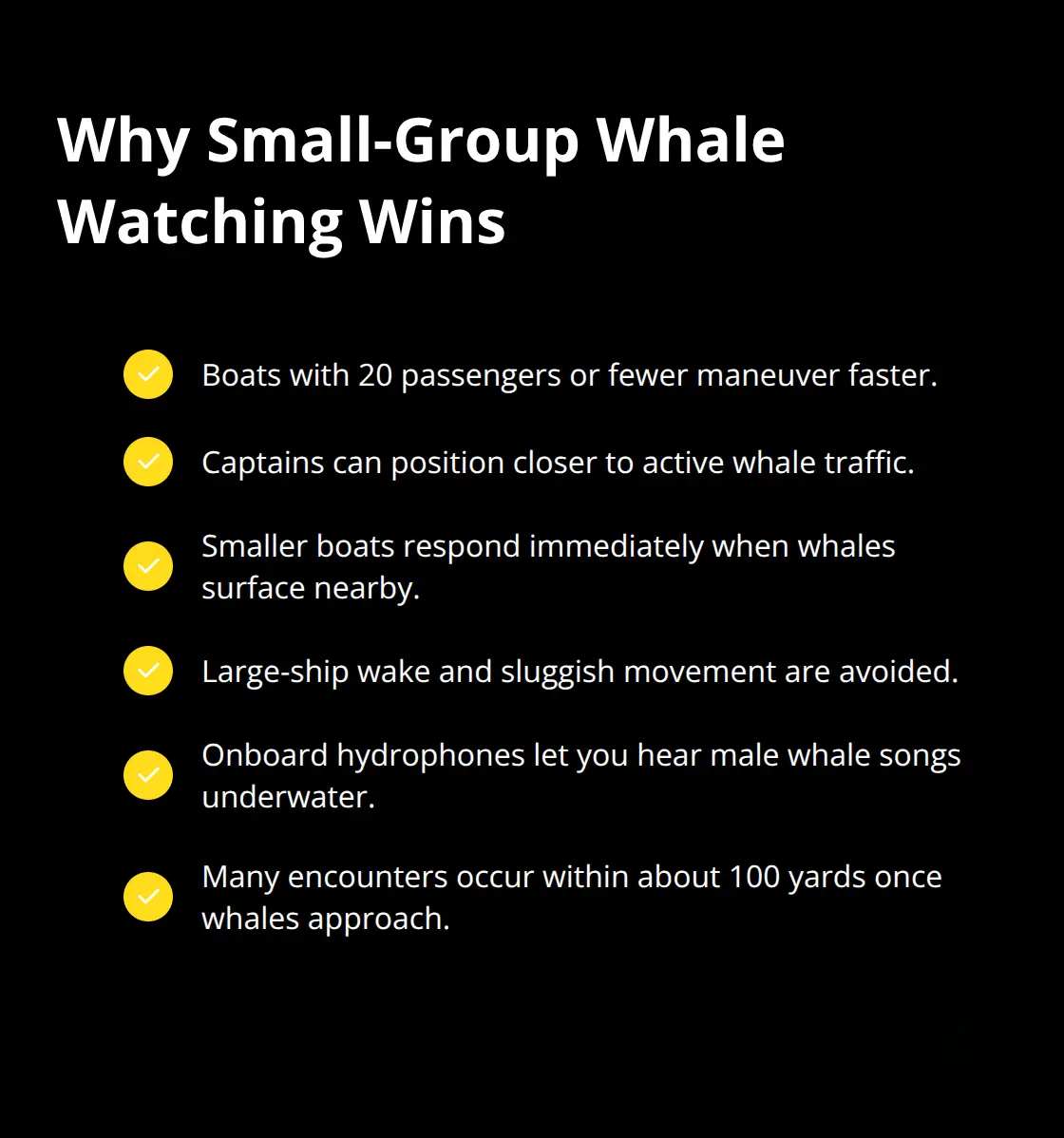
Small-group tours outperform large vessels by a significant margin. Boats carrying 20 passengers or fewer maneuver faster, position closer to whale traffic, and let captains respond immediately when whales surface nearby. Large commercial vessels move sluggishly, create more wake disturbance, and position you farther from the action.
Tour captains on smaller boats use onboard hydrophones so you hear male whales singing underwater-a haunting, otherworldly experience impossible on larger ships. Expect 3 to 4 hours on the water, with most encounters happening within 100 yards of the vessel once whales approach. Professional crews know where whales congregate daily and adjust routes based on real-time sightings.
What Happens During Your Tour
Some tours combine whale watching with snorkeling near Molokini, letting you transition seamlessly from surface observation to underwater reef exploration. Bring binoculars even on boat tours; they reveal tail flukes and dorsal fin patterns used to identify individual whales. Tours departing early morning catch calmer seas and the most active whale behavior before midday glare sets in.
We at Maui Snorkel Charters offer Pacific Humpback Whale watches in the winter season, using our custom 40-foot vessel for small-group access to South Maui’s prime whale zones. Your choice of tour operator shapes whether you experience whales as distant silhouettes or as the magnificent creatures they truly are-and that difference matters when you’re planning a trip specifically to witness them.
How to Spot Whales and Stay Safe Doing It
Timing Your Viewing for Maximum Success
Early morning departures between 7 and 10 AM offer the calmest seas and the sharpest visibility-this window matters most if you want reliable sightings. The water surface sits glassy during these hours, making whale blows visible from much greater distances, and tour operators position vessels aggressively when conditions favor spotting. Late afternoon viewing from 3 to 6 PM ranks as your second-best option because whales often resume surface activity as temperatures cool, and the golden-hour light makes breaches and tail slaps unmistakable even from farther away. Avoid midday viewing between 11 AM and 2 PM unless you’re willing to climb to higher-elevation vantage points like McGregor Point, where glare won’t wash out the water visibility that you need to track whale movement.
Finding Whales in the Water
Focus on finding the whale blow first-that tall plume of vapor shoots into the air and travels farther than you’d expect. Watch that spot for 10 to 15 minutes because whales stay submerged between breaths, and your patience pays off when a tail flukes or a pectoral fin slaps the surface. Bring quality binoculars even on boat tours; they reveal the unique tail fluke patterns and dorsal fin markings that researchers use to identify individual whales, transforming a generic sighting into a personal encounter with a specific animal.
Packing the Right Gear
Pack sunscreen with at least 30 SPF because the Maui sun reflects intensely off the water and burns faster than you anticipate. A polarized hat reduces glare and protects your eyes during hours of scanning, and lightweight layers work better than heavy jackets since morning chill gives way to afternoon warmth. Try to keep your camera ready without letting it dominate your attention-you’ll miss surface behaviors while focused on your viewfinder.
Following Federal Whale Protection Laws
Respecting whale space isn’t optional-it’s federal law. Boats must maintain 100 yards from whales, and if a whale approaches closer, the vessel stops and waits for it to leave. This regulation exists because whale-boat collisions cause serious injury, and Maui’s Nui Basin implemented seasonal protections from December 15 to April 15 that prohibit jet skis and parasailing specifically to reduce collision risk.
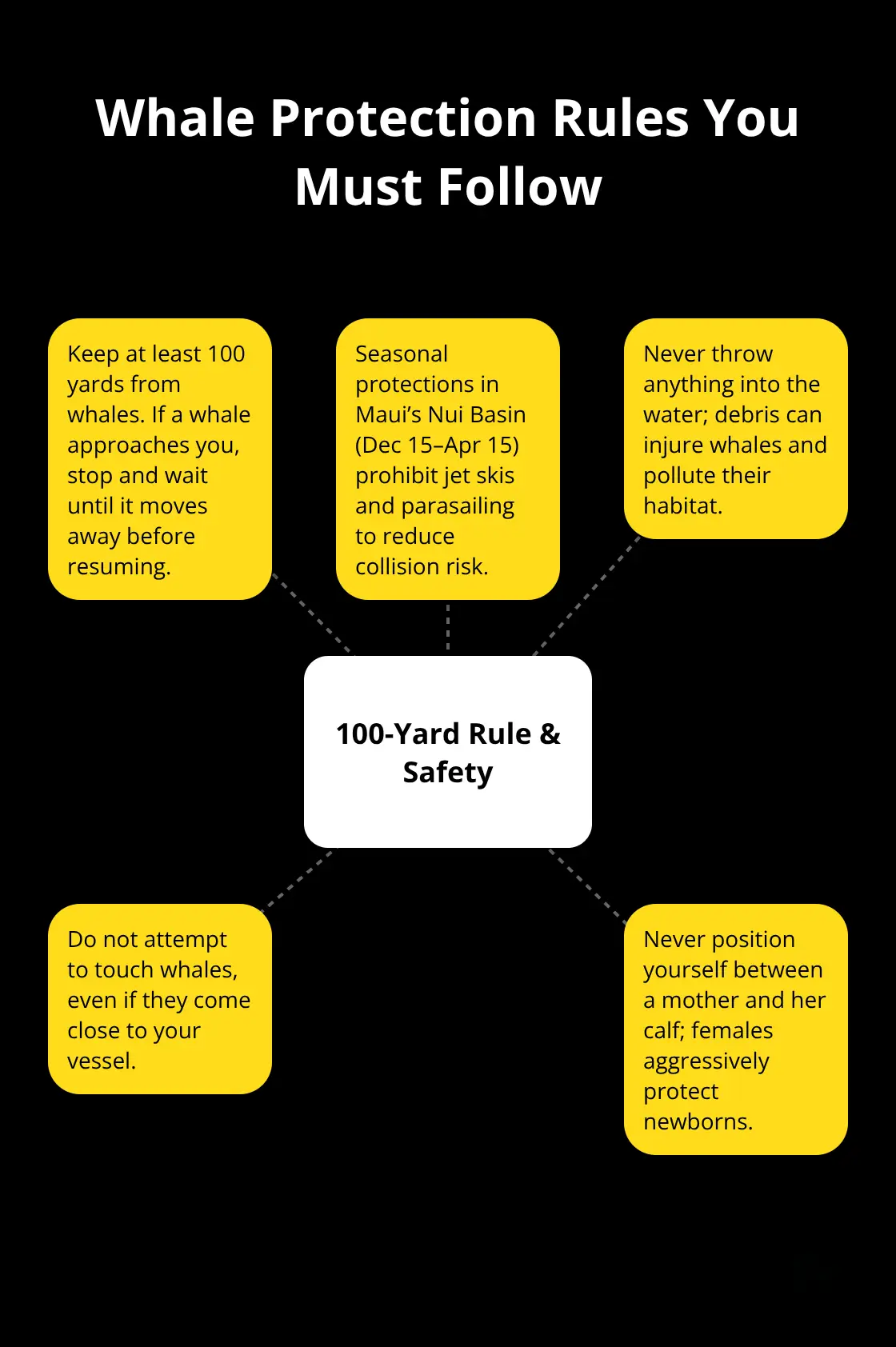
Never throw anything into the water, never attempt to touch whales if they approach your vessel, and never position yourself between a mother and her calf-females aggressively protect newborns.
Shore Viewing Safety and Professional Tours
If you’re watching from shore along Highway 30, pull completely off the road before scanning the water; distracted driving causes accidents that endanger both you and other visitors. Small-group tours with professional captains trained in whale behavior create safer experiences than solo shore viewing, because experienced crews understand how whales respond to vessel movement and adjust positioning to keep everyone secure while maximizing encounter quality.
Final Thoughts
Maui Hawaii whale watching stands apart because the island’s shallow, protected basin concentrates roughly 11,000 North Pacific humpbacks into predictable zones during winter months, making close encounters genuinely achievable rather than a matter of luck. The Central North Pacific stock has rebounded from just 1,400 whales in the 1960s to over 11,000 today-a conservation success that means you witness a species brought back from the brink of extinction. January through March delivers peak density, but Maui’s geography truly matters: warm water, excellent visibility, and varied ocean depths create conditions where whales linger near the surface and behave actively.
Planning your winter trip requires booking early and selecting small-group operators who position vessels strategically in South Maui’s prime zones. Early morning departures between 7 and 10 AM offer the calmest seas and sharpest visibility, while late afternoon viewing provides golden-hour lighting that makes surface behaviors unmistakable. Pack sunscreen, binoculars, and polarized sunglasses, then commit to respecting the 100-yard distance rule that protects whales from collision injury.
We at Maui Snorkel Charters operate small-group Pacific Humpback Whale watches during the winter season aboard our custom 40-foot vessel, positioning you directly in South Maui’s migration corridors where whales surface regularly. Our experienced crew uses onboard hydrophones so you hear male whale songs underwater, transforming a surface sighting into a multisensory encounter. Book your winter whale watch with us and experience why Maui remains the world’s premier destination for humpback encounters.
Call 808-270-8776