
Every winter, humpback whales migrate thousands of miles to Maui’s warm waters, creating one of Hawaii’s most spectacular natural events. If you’re planning whale watching trips in Maui, January through March is when you’ll have the best chance to see these magnificent creatures up close.
At Maui Snorkel Charters, we’ve guided countless visitors through unforgettable encounters with these gentle giants. This guide covers everything you need to know to make your whale watching adventure safe, comfortable, and truly memorable.
Best Time to Book Your Whale Watching Trip
January through March represents the absolute prime window for whale watching in Maui, and understanding why matters for your planning. Whale scientists estimate that about 6,000 to 11,000 humpbacks make the trip to Hawai’i each year between November and April, but the population peaks dramatically in January and February when the largest concentration of whales inhabit the Auʻau Channel between Maui, Molokaʻi, and Lānaʻi. This timing means your odds of witnessing breaches, tail slaps, and close encounters reach their highest point during these two months. The Hawaiian Islands Humpback Whale National Marine Sanctuary, which has protected this habitat since 1992, experiences the most whale activity during this period because water temperature and food availability create ideal breeding and calving conditions. If your schedule allows flexibility, choose January or February over December or March. December arrivals occur earlier than peak season, and April sees many whales already departed. Water temperatures in Maui hover around 74–76 degrees Fahrenheit during winter months-cool enough for whales migrating from Alaska yet warm enough to support newborn calves and nursing mothers.
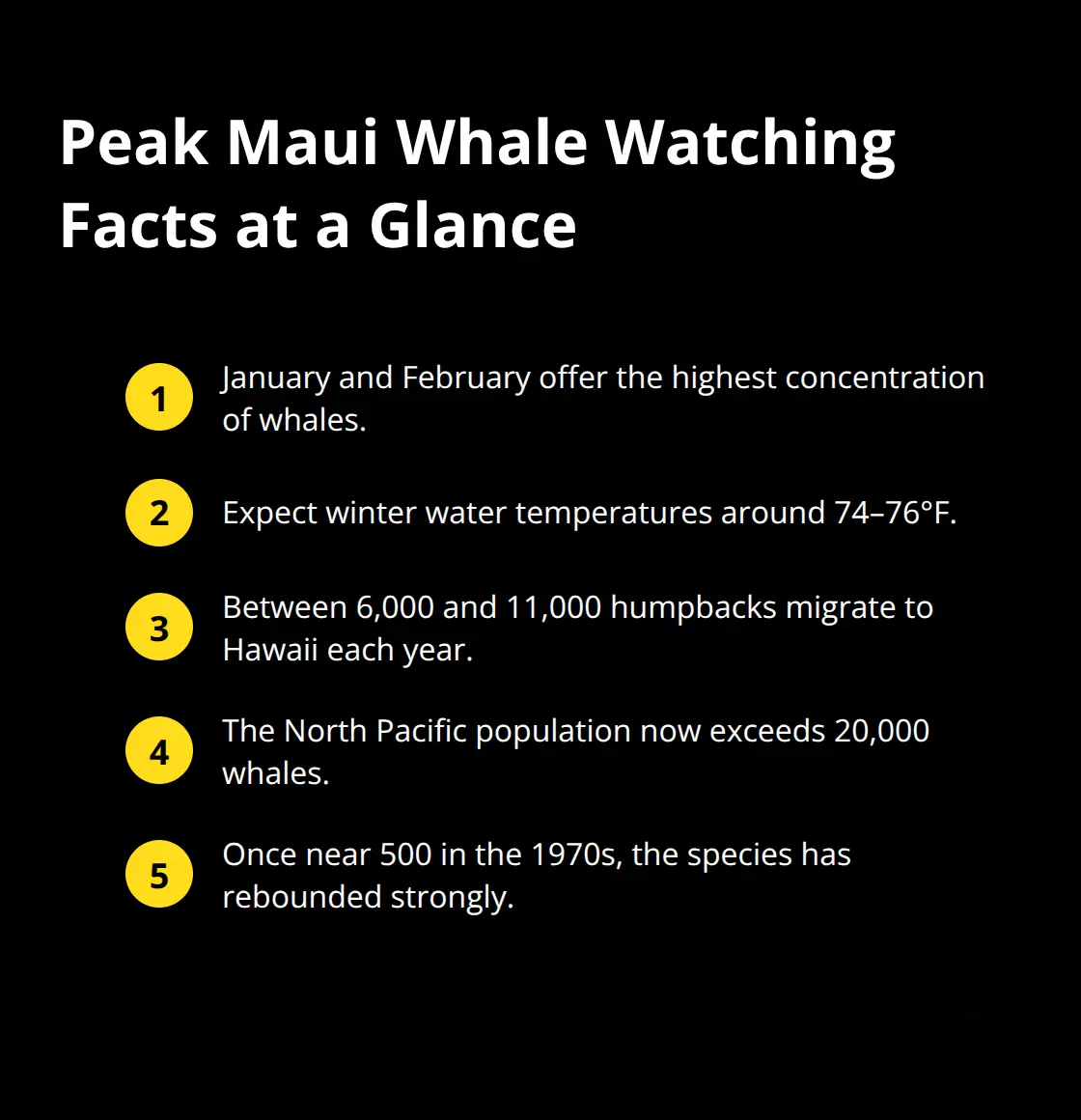
The North Pacific humpback population now exceeds 20,000 whales after recovering from near extinction in the 1970s (when only about 500 remained), so you witness one of conservation’s greatest success stories.
Early Morning Tours Offer Calmer Seas
Morning departures provide smoother water conditions and better visibility than afternoon trips. Afternoon seas turn rougher, which affects both your comfort and the captain’s ability to position the boat for optimal whale encounters. Tours leave from Lahaina’s Mala Ramp or Kaanapali Beach typically between 7 and 9 AM, and these early slots fill fastest during peak season. The calmer morning seas mean you spend less time gripping the railings and more time actually watching the whales. Plan to arrive 15–20 minutes before departure, especially in January and February when parking around harbor areas becomes competitive.
Peak Season Fills Up Weeks in Advance
Operators like Trilogy Excursions dedicate roughly half of their daily trips to whale watching during peak season, carrying over 20,000 passengers on whale-watching trips annually. This popularity means tours book solid weeks in advance during January and February. If you visit Maui in winter, secure your whale watching reservation the moment you finalize your travel dates. Late bookings in peak season often result in afternoon slots with rougher conditions or trips with larger crowds. Weather and sea conditions greatly influence sightings regardless of the season, so even in January or February you might encounter a day without whale encounters (though your probability remains far higher than any other time of year).
Why Small-Group Tours Stand Out
Large boats carrying 60 to 100 passengers create crowded viewing decks and limit your ability to move around freely. Smaller tours offer a completely different experience-you actually see the whales instead of just the backs of other tourists’ heads. These intimate groups allow captains to respond quickly to whale movements and position the vessel for better encounters. You’ll also hear the naturalist’s commentary without shouting over crowds, and you’ll have genuine space to photograph the whales without elbows in your frame.
Now that you understand when to book, the next step involves knowing exactly what happens once you step aboard and what behaviors you’ll actually witness during your time on the water.
What Happens Once You’re Aboard
The moment your boat leaves the harbor, the real show begins, and knowing what to expect transforms a pleasant trip into an unforgettable experience. Humpback whales display predictable behaviors that skilled captains use to position your vessel for the best views. Whales launch their entire bodies out of the water during breaches, a sight that occurs multiple times per trip during peak season. Tail slaps happen when whales forcefully hit their flukes against the surface, creating thunderous cracks audible from hundreds of yards away. Spyhopping allows whales to poke their heads vertically out of the water to look around, giving you direct eye contact with these curious creatures. Most encounters involve mother-and-calf pairs, especially after late January when calves are born.
Distance Rules Protect Whales and Enhance Your Experience
A responsible captain will never approach closer than 100 yards to a whale, and if a whale swims toward your boat within that zone, regulations require the captain to stay in place and let the whale depart first. This isn’t a limitation-whales often come closer on their own, and when they do, you witness something truly extraordinary. Operators like Trilogy Excursions enhance the experience with onboard hydrophones that let you hear male whales singing underwater in real time, a haunting sound that creates an emotional connection most land-based viewing never matches. The Hawaiian Islands Humpback Whale National Marine Sanctuary enforces these distance rules strictly to protect nursing mothers and calves, so expect your captain to follow them precisely.
Comfort Choices Shape Your Whale Watching Experience
Comfort matters significantly because whale watching involves hours on open water with sun, wind, and spray. Larger catamaran-style boats provide bathrooms, shade, snacks, and drinks-genuine necessities for a full-day experience. Smaller Zodiac-style rafts deliver closer water-level encounters but offer rougher rides and minimal amenities, a trade-off worth considering if you’re prone to seasickness. Dress in layers because the sun feels intense on the water while ocean spray keeps you cool, and what seems warm on shore becomes chilly on the boat.
Preparation Techniques That Actually Work
Bring high-SPF sunscreen and reapply every two hours, as reflection off the water intensifies UV exposure dramatically. Position yourself on whichever side of the boat the captain indicates for whale activity rather than claiming a spot and staying put. Captains predict whale movements based on water conditions and previous sightings, so following their guidance puts you exactly where the action happens. If your tour includes snorkeling stops, bring a seasickness remedy beforehand because even calm-water whale watching can affect sensitive stomachs (ginger supplements, acupressure bands, or prescription patches all work well for different people).
Small-Group Tours Deliver Superior Encounters
Large boats carrying 60 to 100 passengers create crowded viewing decks and limit your ability to move around freely. Smaller tours offer a completely different experience-you actually see the whales instead of just the backs of other tourists’ heads. These intimate groups allow captains to respond quickly to whale movements and position the vessel for better encounters. You’ll also hear the naturalist’s commentary without shouting over crowds, and you’ll have genuine space to photograph the whales without elbows in your frame. We at Maui Snorkel Charters offer Pacific Humpback Whale watches during the winter season with the small-group approach that makes these encounters truly memorable rather than just checking a box on your vacation list.
Now that you understand what happens on the water and how to position yourself for success, the final piece involves specific tactics that transform good whale watching into the kind of experience you’ll talk about for years.
How to Capture Whale Watching Moments That Matter
Whale watching success hinges on three practical decisions made before you board the boat: your optical equipment, your clothing layers, and your positioning strategy once you’re on the water. Most visitors bring smartphones expecting to capture breaching whales, then end up with blurry distant images that barely show what they witnessed in person. Binoculars with at least 10x magnification transform your experience because they let you see whale details from 100 yards away-the eye of a spyhopping whale, the barnacles on a fluke, the spray from a blowhole. Full-sized marine binoculars with 10×50 or 12×50 specifications outperform compact travel models significantly. For cameras, a telephoto lens of at least 200mm makes the difference between whale-shaped blurs and photographs you’ll actually want to share. Position yourself physically closer to the whale-watching side of the boat as the captain directs rather than relying on smartphone zoom, which destroys image quality. Salt spray coats optics constantly, so a microfiber lens cloth prevents scratching better than your shirt sleeve ever will.
Dress in Layers to Stay Comfortable on Open Water
The sun on Maui’s water reflects intensely off the surface, so sunscreen with SPF 50 or higher applied every two hours becomes non-negotiable, not optional. A wide-brimmed hat with a chin strap protects your face and stays secured in wind that would steal an unsecured hat in seconds. Layer with a moisture-wicking base layer, a lightweight long-sleeve shirt for sun protection, and a windbreaker jacket that you can remove if conditions warm up. Ocean spray keeps you cooler than land-based sun exposure feels, so what seems warm at the harbor becomes cold 20 minutes offshore. Synthetic materials dry faster and retain warmth better than cotton, which holds moisture and makes you colder. Deck shoes or water sandals with grip soles prevent slipping on wet surfaces, and flip-flops can wash overboard or cause you to lose footing.
Position Yourself Where the Captain Indicates
Move to the side of the boat the captain indicates for whale activity rather than claiming a spot early and defending it. Whale movements follow predictable patterns based on water temperature, depth changes, and previous sightings, so your captain positions the boat strategically. Standing near the bow offers unobstructed views but exposes you to more spray, while the stern provides slightly better shelter. Reposition yourself without hesitation when the captain suggests movement because whale encounters last minutes, not hours, and moving 10 feet can mean the difference between a clear view and a blocked one.
Final Thoughts
Whale watching trips in Maui connect you directly to one of nature’s most remarkable migrations and a conservation success story that rivals few others. Humpback whales recovered from near extinction in the 1970s when only 500 remained, and today over 20,000 migrate to Hawaiian waters annually. When you book a winter tour, you participate in an experience that supports local operators, marine research, and ongoing habitat protection through the Hawaiian Islands Humpback Whale National Marine Sanctuary.
Responsible viewing practices protect nursing mothers and newborn calves during their most vulnerable months. Maintaining the 100-yard distance rule, following your captain’s positioning guidance, and selecting operators committed to ethical encounters ensures these whales return safely to Alaskan feeding grounds each spring. Your choices as a visitor directly influence whether whale watching remains sustainable for future generations.
We at Maui Snorkel Charters offer Pacific Humpback Whale watches during winter season with the small-group approach that prioritizes genuine encounters over crowded decks (our family-owned operation in Kihei focuses on the kind of personalized experience where you actually see the whales rather than just the backs of other tourists). Book your whale watching adventure with us and experience why January through March transforms Maui into the whale watching capital of Hawaii.
Call 808-270-8776