
Maui offers some of the world’s most stunning underwater landscapes, making it a premier destination for snorkeling enthusiasts. Whether you’re seeking vibrant coral reefs, encounters with Hawaiian green sea turtles, or crystal-clear waters teeming with tropical fish, good snorkeling on Maui delivers unforgettable experiences.
This guide walks you through the island’s best snorkeling spots, what marine life you’ll encounter, and how to select the perfect tour for your adventure. Discover why Maui’s waters should be on every snorkeler’s bucket list.
Where to Snorkel on Maui
Molokini Crater: Unmatched Visibility and Marine Diversity
Molokini Crater dominates Maui’s snorkeling scene for one reason: visibility that routinely exceeds 100 feet. This crescent-shaped volcanic caldera sits roughly three miles offshore and functions as a Marine Life Conservation District, protecting over 250 fish species in a nursery environment where coral thrives and larger pelagics patrol the deeper edges. The crater’s protected waters deliver calmer conditions than many shore-based sites, and the boat ride from Maalaea or the Ritz-Carlton area takes roughly 45 minutes depending on your operator. Most visitors spend two to three hours in the water across two separate reef zones, with the back wall offering deeper exploration for intermediate snorkelers and the inner bowl providing shallower, fish-dense reefs perfect for beginners.
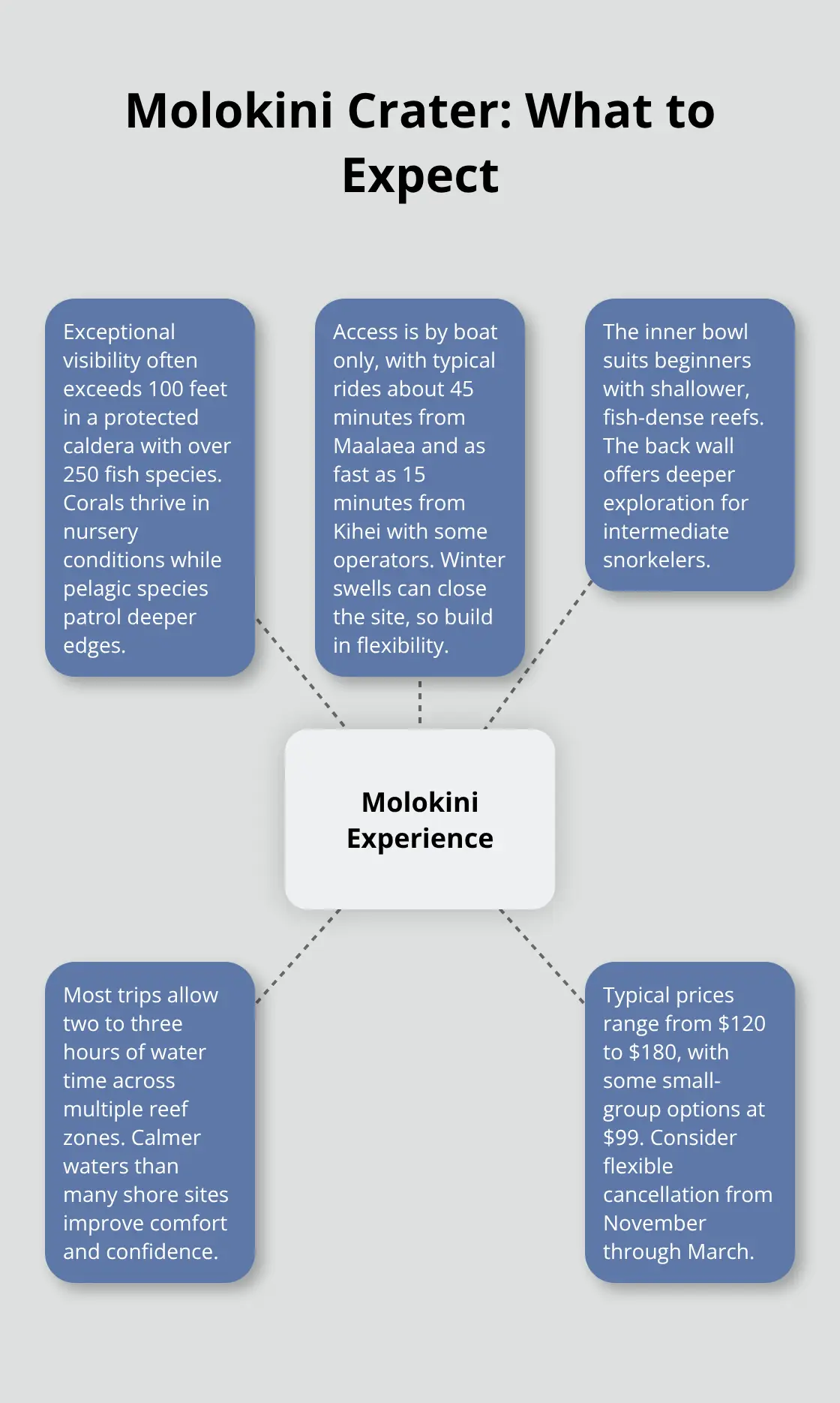
Established tour operators charge between $120 and $180 per person, though Maui Snorkel Charters reaches the crater in just 15 minutes from Kihei at $99 per person, making it the fastest access on the island. The trade-off is real: you absolutely need a boat tour to reach Molokini, and weather closures occur frequently during winter swells, so book flexible cancellation policies if you visit between November and March.
Turtle Town: Shore-Based Encounters with Hawaiian Green Sea Turtles
Turtle Town in South Maui delivers what its name promises without the offshore boat requirement. This shallow-water reef system lies within 50 yards of the beach and hosts Hawaiian green sea turtles in the area, with sightings occurring within minutes of entering the water on most days. The area spans roughly two reef zones accessible from Wailea and Makena beaches, and calm morning conditions between 8am and 11am offer the clearest visibility and most predictable turtle encounters. You can snorkel independently or join a guided tour that includes breakfast, snacks, and professional photography services. The shallow depths make Turtle Town ideal for families and nervous snorkelers who want confidence in the water without traveling offshore.
Honolua Bay: A Protected Marine Sanctuary with Dramatic Reef Walls
Honolua Bay on West Maui ranks as the island’s most thriving protected marine sanctuary, featuring steep coral walls on both sides of a narrow bay that create dramatic reef topography and attract schools of surgeonfish, parrotfish, and occasionally larger jacks. Entry at Honolua requires you to time your descent carefully during wave breaks, and winter swells frequently close the bay from November through March, so check conditions via the Snorkel Report before driving the 15 minutes north of Kapalua. The bay’s unique geography concentrates marine life in a compact area, rewarding snorkelers with dense fish populations and vibrant coral formations that rival offshore destinations. All three destinations demand respect for living coral and sea turtles-touching turtles carries federal fines up to $15,000, and standing on coral destroys fragile ecosystems that took decades to establish. Understanding these rules and choosing the right site for your skill level sets the foundation for a safe, rewarding experience in Maui’s waters.
What You’ll See and When to Go
Coral Formations Across Maui’s Snorkeling Sites
Maui’s underwater environment shifts dramatically depending on where you snorkel and what time of year you visit. Coral formations vary drastically across the island: Molokini Crater features steep wall structures with branching corals that create dense fish habitat, while shallow bays like Kapalua host soft corals and sand patches where turtles graze. The back wall at Molokini drops to 80 feet and attracts larger pelagic species, but intermediate snorkelers should stick to the inner bowl where depths stay under 40 feet. Shore-based sites like Turtle Town and Honolua Bay showcase lava rock formations interspersed with coral heads, creating natural channels where fish congregate. Visibility at these locations ranges from 40 to 80 feet on calm days but drops to 15 feet after heavy rain, so check conditions before committing to a beach.
Fish Species and Sea Turtle Encounters
The fish species you encounter remain consistent year-round across Maui’s reefs. Surgeonfish dominate reef edges, parrotfish crunch coral audibly while feeding, moorish idols dart between rock crevices, and trumpetfish hide motionless waiting for prey. Hawaiian green sea turtles appear at most locations, but Turtle Town and Maluaka Beach deliver the highest encounter rates within minutes of entry. It is illegal to touch, harass, feed, or injure them, with violations punishable by fines and imprisonment, so observe from at least six feet away and never chase or block their path.
Seasonal Conditions and Water Temperature
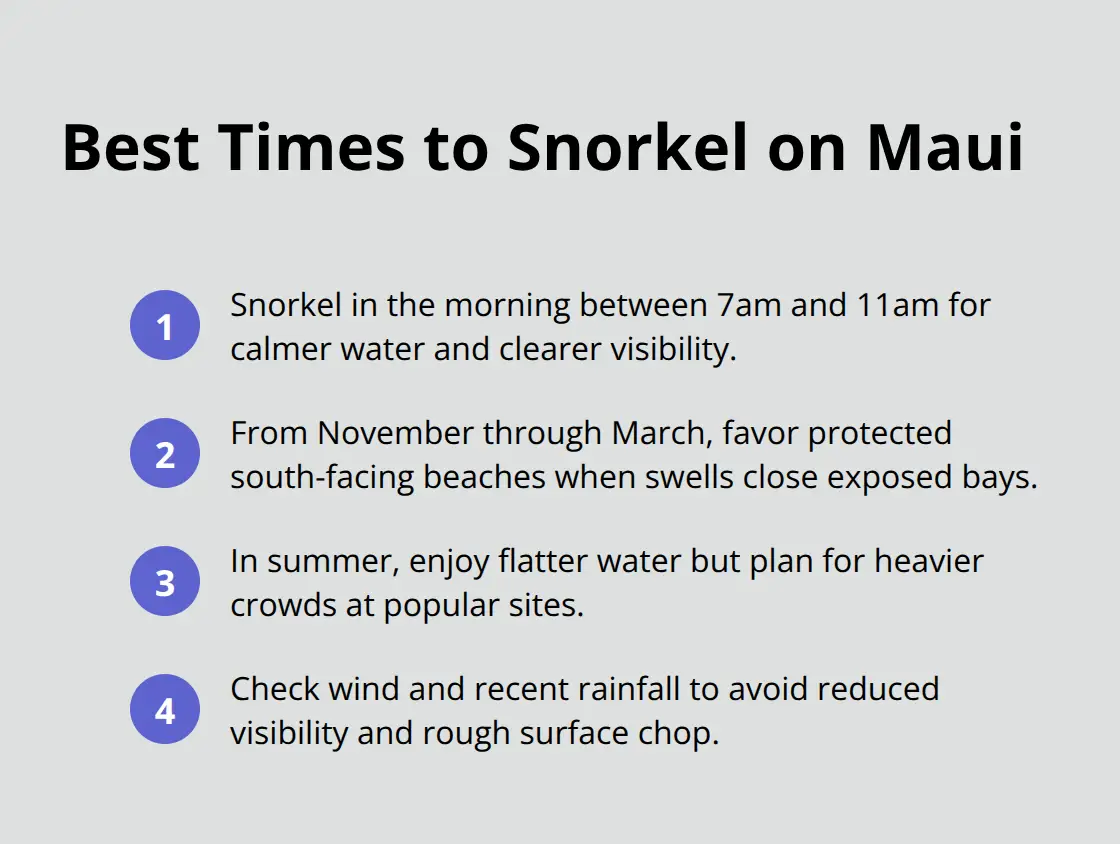
Timing matters more than most snorkelers realize. Morning sessions between 7am and 11am deliver superior visibility and calmer conditions because winds typically pick up by afternoon, churning surface water and reducing clarity to 20 feet or less. Winter months from November through March bring powerful swells that close exposed bays like Honolua entirely, forcing snorkelers toward protected south-facing beaches where Turtle Town and Kahekili Beach remain accessible. Summer offers the flattest water but also attracts the most tourists, so expect crowded conditions at popular sites.
Water temperature stays warm year-round at 78 to 85 degrees Fahrenheit during summer months, eliminating the need for wetsuits unless you’re sensitive to cold.
Optimal Timing for Peak Visibility
The prime window runs May through September when trade winds diminish and offshore visibility peaks at 100-plus feet. Tour operators adjust daily routes based on current conditions rather than following fixed itineraries, which means you access the calmest, clearest water available that specific day. This flexibility beats rigid tour schedules that force you into suboptimal locations regardless of swell direction or wind patterns. Understanding these seasonal patterns and water conditions allows you to select the ideal snorkeling date and location for your skill level and preferences.
Selecting the Right Tour Operator for Your Skill Level
Small-Group Tours versus Large Operators
Maui’s snorkeling tour market splits into two distinct categories, and your choice determines everything from safety protocols to actual time spent underwater. Large operators run 40 to 60 passengers per boat and prioritize efficiency and volume, moving quickly between sites with minimal personalization and crowded water conditions that frustrate serious snorkelers. Small-group tours cap at 15 to 20 passengers and allow guides to assess individual comfort levels, adjust pacing to match your abilities, and position you directly over the best reef sections rather than herding you toward whatever spot fits the schedule. A small-group operator reaches Molokini in just 15 minutes from Kihei compared to the 45-minute journey from Maalaea that larger operators require. This speed advantage means more time actually snorkeling instead of sitting on a boat, and flexible daily routing based on conditions ensures you access whichever reef is calmest that specific morning rather than following a rigid itinerary.
Pricing and What’s Included
Tour pricing reveals the quality gap immediately. Expect $120 to $180 per person from established larger operators, while smaller charters start at $99 and include gear, breakfast, snacks, and professional photography services that larger boats charge extra for or skip entirely. Equipment quality separates mediocre experiences from exceptional ones, and renting from dedicated snorkel shops beats grabbing gear from inflated beach kiosks that charge $100 per week for damaged equipment.
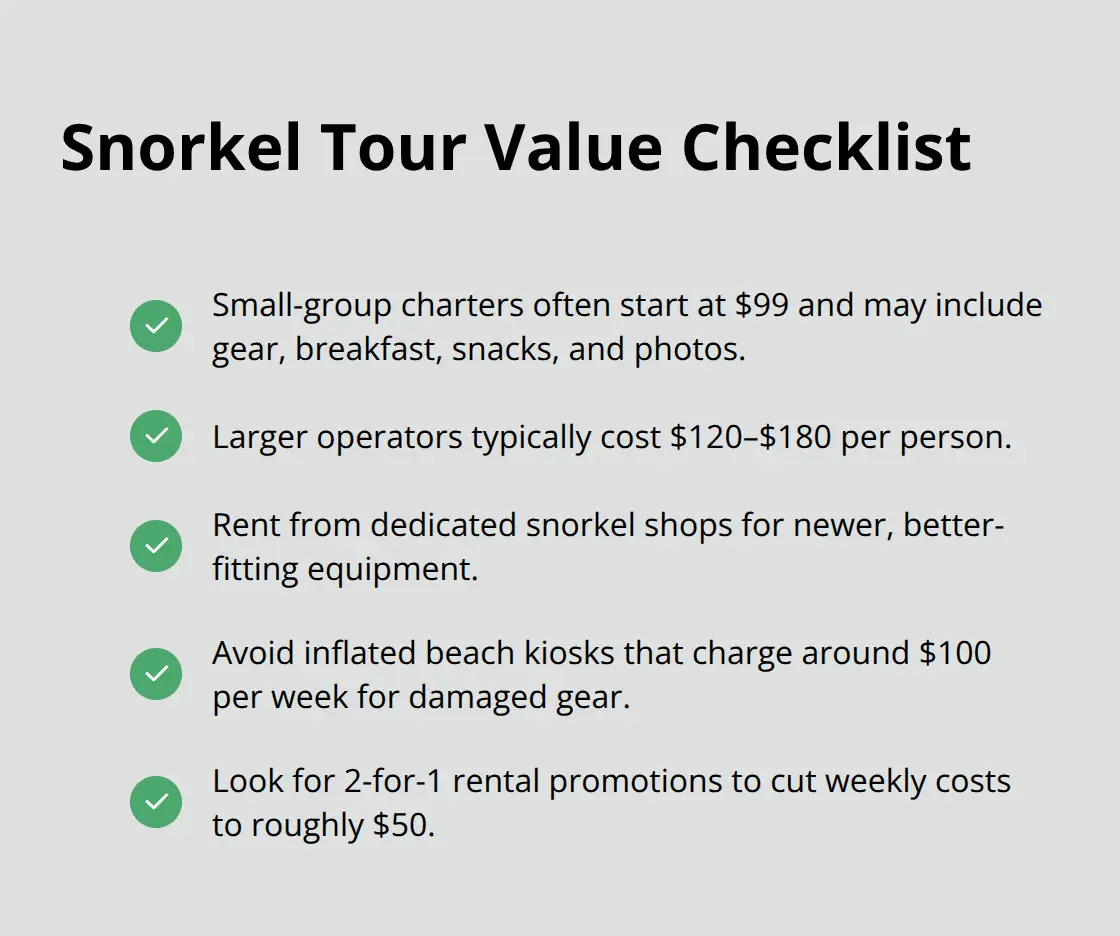
The Snorkel Store operates two Maui locations in Lahaina and Kihei with daily hours from 8am to 5pm, stocking newer gear models and offering 2-for-1 rental promotions that reduce weekly costs to roughly $50 compared to $100 at beach vendors.
Equipment Fit and Comfort
Bring your own mask if you own one that fits properly, since smile-induced seal breaks occur constantly with ill-fitting rentals and cost you hours of water seeping into your snorkel. A proper seal prevents frustration and maximizes your underwater time. Newer gear models available at dedicated shops provide better comfort and performance than older equipment sitting in beach kiosks for months.
Safety Standards and Environmental Responsibility
Safety standards matter most on boat tours, and reputable operators maintain current lifeguard certifications, carry rescue equipment, enforce buddy systems, and position crew members in the water watching snorkelers rather than steering from the helm. Ask prospective tour operators directly about staff training, equipment inspection schedules, and their specific response protocols for distressed snorkelers before booking. Tours emphasizing responsible wildlife viewing through programs like NOAA’s Dolphin SMART guidelines indicate operators prioritizing environmental protection and long-term reef health over extracting maximum tourists daily. Operators who follow these standards demonstrate a commitment to both your safety and the preservation of Maui’s marine ecosystems for future visitors.
Final Thoughts
Maui’s snorkeling opportunities deliver unmatched access to pristine underwater ecosystems without requiring advanced diving certifications or extensive travel logistics. Whether you choose the dramatic visibility of Molokini Crater, the reliable turtle encounters at Turtle Town, or the protected reefs of Honolua Bay, good snorkeling on Maui rewards both beginners and experienced snorkelers with consistent marine life encounters and healthy coral formations. The island’s warm water year-round, shallow entry points at most locations, and abundance of reputable tour operators eliminate common barriers that discourage snorkeling elsewhere.
Planning your snorkeling adventure starts with matching your skill level to the right location and season. Beginners benefit from shore-based sites with calm morning conditions and depths under 30 feet, while intermediate snorkelers gain confidence tackling offshore destinations like Molokini where visibility exceeds 100 feet. Investing in properly-fitted gear from dedicated snorkel shops rather than beach kiosks transforms your comfort and enjoyment, and bringing your own mask eliminates seal-break frustrations that plague rental equipment.
Making the most of your experience requires respecting Maui’s marine environment and following established safety protocols. Never touch sea turtles or coral, snorkel with a buddy, observe conditions for 15 minutes before entering the water, and time your entries and exits with wave breaks to avoid injury. Contact Maui Snorkel Charters today to book a small-group tour that matches your skill level and delivers personalized attention based on daily conditions.