
Maui’s warm waters are home to spinner dolphins and bottlenose dolphins year-round, making it one of Hawaii’s best spots for marine wildlife viewing. At Maui Snorkel Charters, we’ve guided thousands of visitors through unforgettable maui dolphin encounters that respect these intelligent creatures while giving you memories that last.
Whether you’re a first-time snorkeler or an experienced ocean explorer, this guide walks you through everything you need to know about dolphin tours on Maui.
Why Maui’s Warm Waters Keep Dolphins Here Year-Round
Spinner dolphins and bottlenose dolphins inhabit Maui’s waters every single day of the year, not just during specific seasons. The warm Pacific currents around the islands maintain temperatures between 76 and 81 degrees Fahrenheit, creating ideal conditions for these marine mammals to hunt, rest, and raise their young. Unlike humpback whales that migrate seasonally, dolphins have no reason to leave because the food supply and habitat remain consistent throughout all twelve months. This means your chances of seeing dolphins don’t depend on picking the perfect time of year-they depend on picking the right tour operator and staying flexible with weather conditions.
Morning Tours Deliver the Best Sighting Odds
Early morning dolphin encounters, typically departing between 6:30 and 8:00 AM, offer substantially better sighting odds than afternoon trips. Dolphins become most active during dawn and dusk when they hunt for food, and the ocean conditions remain calmer before afternoon winds kick up. Most tour operators report spinner dolphin sighting rates around 70 to 80 percent on morning departures, compared to significantly lower odds later in the day. The water visibility also peaks in early morning before sun glare and surface chop reduce clarity. If you want the highest probability of seeing dolphins up close, try an early departure and bring seasickness medication if you’re prone to motion-the calmer morning seas make the ride more comfortable anyway.
Water Clarity Shifts with Seasonal Swells
Maui’s visibility depends more on daily swell patterns than on time of year, though winter months from November through March bring larger ocean swells that reduce underwater clarity. Summer months typically offer cleaner water for snorkeling, with visibility ranging from 60 to 100 feet on optimal days. However, winter doesn’t eliminate dolphin encounters-it just means your tour captain needs to select protected leeward sites rather than exposed windward reefs. Water temperature remains warm enough year-round that most visitors only need a light rash guard for sun protection, not a full wetsuit.
Tour Operators Adjust Routes for Real Conditions
The best tour operators adjust their routes daily based on actual conditions rather than sticking to a fixed itinerary. This flexibility means you get the best possible experience whether you’re visiting in January or July. Your captain reads the ocean each morning and chooses snorkel sites and dolphin-search areas that match what the water offers that day, not what a predetermined schedule demands.
What Happens During Your Dolphin Tour
Spinner Dolphins Rule Maui’s Waters
Spinner dolphins dominate Maui’s waters and are the species you’ll encounter on guided tours, though bottlenose dolphins occasionally appear in the same areas. Spinner dolphins earned their name from their acrobatic behavior-they leap and rotate their bodies out of the water, especially during dawn hours when they’re most active. Adult spinners typically measure 6 to 7 feet long and travel in pods ranging from 10 to 50 individuals, though larger superpods of several hundred can form temporarily. When you spot a pod, you won’t see just one or two dolphins; the entire group moves together, creating a spectacular display. Bottlenose dolphins, slightly larger at 8 to 10 feet, appear less frequently but share similar habitats. Understanding which species you’re watching helps you appreciate their behavior-spinners are acrobatic and playful, while bottlenose dolphins tend to be more deliberate and curious about boats. Learn more about dolphin species found in Hawaii to deepen your knowledge before your tour.
Tour Captains Protect Dolphins While You Watch
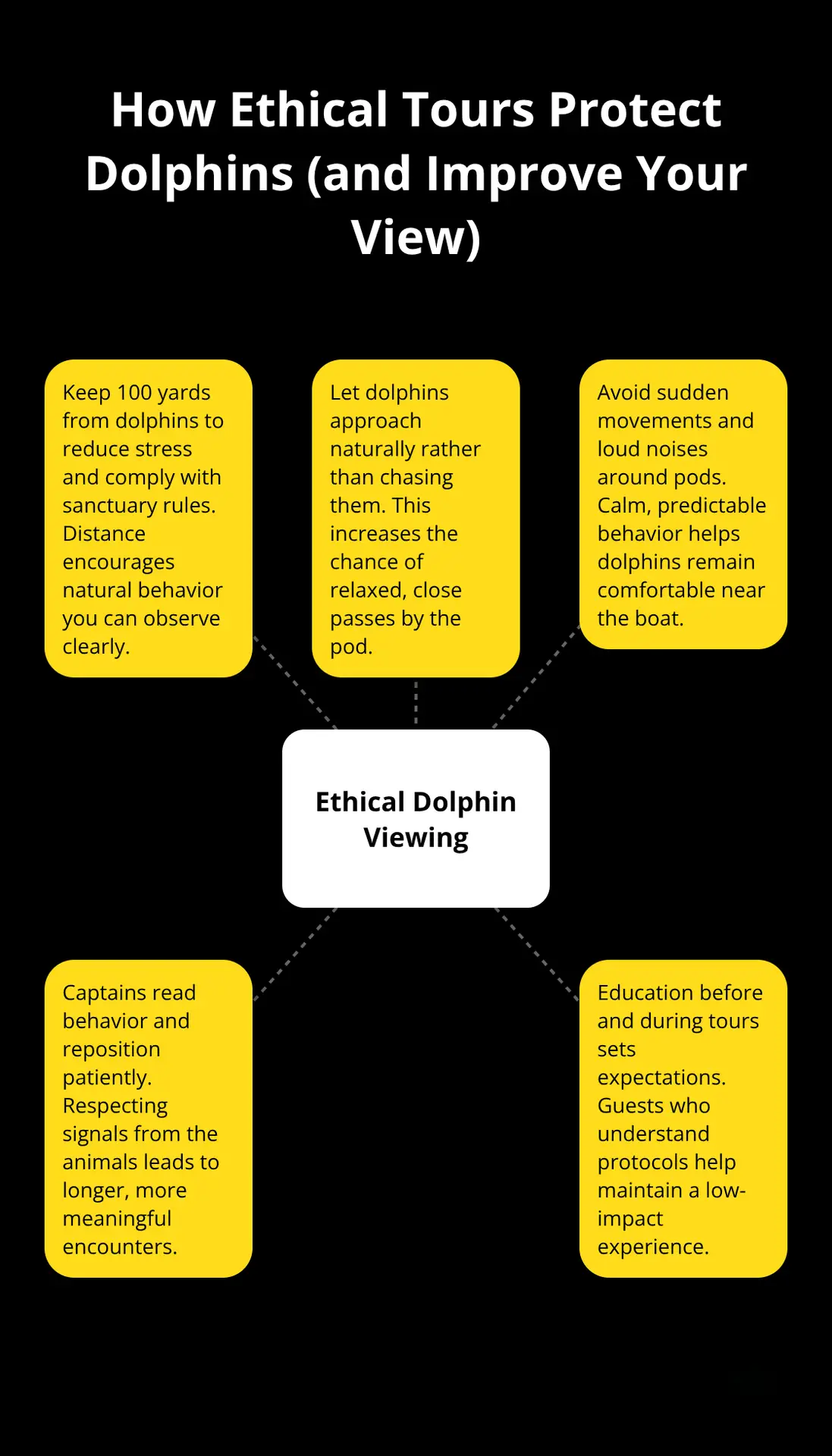
Tour captains follow strict protocols to protect dolphins while you get the best viewing experience. The Hawaiian Islands Humpback Whale National Marine Sanctuary establishes specific rules: boats must maintain at least 100 yards distance from dolphins and avoid sudden movements or loud noises that could startle the pods. Your captain will position the boat to let dolphins approach naturally rather than chase them, which keeps stress on the animals minimal and actually increases your odds of close encounters since relaxed dolphins are more likely to interact with vessels. This approach works because dolphins respond to calm, patient observation far better than to aggressive pursuit.
Safety Procedures Keep Everyone Secure
Safety procedures on tour boats include designated seating away from railings, clear instructions about staying seated during movement, and crew members who watch for sudden weather changes. Most reputable operators limit groups to 18 to 20 people maximum, which prevents overcrowding and ensures everyone gets unobstructed views. Before departure, crews conduct brief orientation sessions covering what to do if someone feels seasick, where emergency equipment is located, and how to move safely on a moving boat. The entire experience balances your safety with the dolphins’ wellbeing-respecting marine life isn’t just ethical, it’s what makes the tour genuinely memorable rather than chaotic.
What You’ll Actually See and Experience
The moment your boat reaches dolphin habitat, your crew scans the water for pod activity and positions you for optimal viewing angles. Spinner dolphins often leap multiple times in succession, sometimes spinning three or four rotations before splashing back into the water. You’ll hear their clicks and whistles underwater if you’re snorkeling, and you’ll watch them hunt, rest, and interact with each other in their natural rhythm. Bottlenose dolphins, when they appear, move with deliberate purpose and often investigate boats with obvious curiosity. Your captain reads the dolphins’ behavior and adjusts the boat’s position accordingly-if a pod seems stressed or moves away, the captain respects that boundary and searches for another group. This flexibility means your experience depends on real animal behavior, not on a scripted performance.
Choosing a Tour Operator Matters More Than You Think
The quality of your dolphin encounter depends almost entirely on your tour operator’s experience and commitment to ethical practices. Operators who chase dolphins, ignore distance regulations, or overcrowd boats deliver poor sightings and contribute to animal stress. Operators who respect marine life protocols, limit passenger numbers, and employ experienced captains consistently deliver closer, more meaningful encounters because relaxed dolphins behave naturally. When you book your tour, ask potential operators about their group size limits, their captain’s experience, and how they handle situations where dolphins move away from the boat. The answers you get will tell you whether you’re choosing a tour that prioritizes your experience or one that prioritizes quick profits. Small group dolphin encounters departing early in the morning offer the best conditions for observing dolphins during their most active feeding periods.
Planning Your Maui Dolphin Adventure
Booking a dolphin tour requires more strategy than selecting the cheapest option or the first operator you find online. Group size makes the biggest difference in your experience, and smaller boats deliver superior encounters. Tours with 18 to 20 passengers maximum let everyone get unobstructed views and prevent the chaos that comes with larger commercial vessels cramming 50 or more people onto a single boat. When you contact tour operators, ask directly about their maximum capacity and whether they enforce that limit consistently. Some operators claim small-group experiences but actually overbook regularly. Request the actual passenger count from their last three trips, not just their stated maximum.
Timing Your Departure for Better Sightings
Tours departing early, between 6:30 and 8:00 AM, cost the same as afternoon departures but deliver substantially higher dolphin sighting odds because dolphins hunt most actively at dawn. Most tour operators report spinner dolphin sighting rates 70 to 80 percent on morning departures, compared to significantly lower odds later in the day. The water visibility also peaks in early morning before sun glare and surface chop reduce clarity. If you want the highest probability of seeing dolphins up close, try an early departure and bring seasickness medication if you’re prone to motion-the calmer morning seas make the ride more comfortable anyway.
What to Pack for Actual Comfort and Safety
Bring reef-safe sunscreen with SPF 30 or higher, applied liberally before departure and reapplied after water contact, since reef-damaging sunscreen chemicals harm the marine ecosystem you came to experience. Skip spray sunscreen entirely because it doesn’t adhere properly on boats and disperses into the ocean where it damages coral. Wear a rash guard or lightweight long-sleeve shirt to minimize sunburn and reduce your need for excessive sunscreen applications. Bring a wide-brimmed hat and polarized sunglasses to reduce glare off the water, which actually helps you spot dolphins from greater distances. Pack a light towel and a change of clothes since you’ll be wet and exposed to sun for two to four hours depending on tour length.
Bring seasickness medication before departure if you’re prone to motion sickness, because once you’re on the water it’s too late. Most tours include light snacks and beverages, but bring extra water and electrolyte drinks since sun exposure dehydrates you faster than you realize. Avoid glass bottles because they’re prohibited on boats for safety reasons, and BYOB policies typically allow canned beverages or plastic bottles only. Wear water shoes with good grip because boat decks get slippery when wet, and secure footing matters when the boat rocks.
Understanding Pricing and Booking Strategy
Prices typically range from $88 to $169 per adult depending on tour length and inclusions, with children’s rates 10 to 15 percent lower. Tours lasting two hours cost less than 4.5-hour experiences that combine dolphin searching with snorkel stops at reef sites. Winter months occasionally see higher prices during peak holiday travel periods, but booking two to three weeks in advance usually secures better rates than last-minute reservations. Book directly with tour operators rather than through third-party booking sites because direct bookings often include special perks like free photos or complimentary beverages that online aggregators can’t offer.
Most operators require 30-minute early arrival for check-in and safety briefings, so plan to arrive at the dock 45 minutes before departure to account for parking and navigation. Cancellation policies vary significantly, so read the fine print carefully. Some operators offer full refunds up to 24 hours before departure, while others issue credits only or charge substantial cancellation fees. Tours depart from Lahaina’s Mala Boat Ramp on Maui’s west side, which sits roughly 45 minutes to one hour from Kihei and South Maui resort areas, so factor in drive time when planning your morning departure.
Final Thoughts
Maui dolphin encounters create genuine wildlife moments that photos and videos cannot capture. Spinner dolphins leap at dawn, pods move together in their natural rhythm, and their clicks resonate underwater-these experiences stay with you long after you return home. You witness real animals behaving naturally in their habitat, which makes the experience so powerful and unforgettable.
Guided tours outperform solo attempts because experienced captains know where dolphins congregate, read their behavior accurately, and position your boat for optimal views without stressing the animals. They follow marine protection regulations consistently, which means you get closer encounters since relaxed dolphins interact more openly with vessels. We at Maui Snorkel Charters limit groups to maximize your viewing experience and choose our routes daily based on actual conditions rather than fixed itineraries, so you receive the personal, up-close encounters that transform ocean time into something truly memorable.
Contact us to book your Maui dolphin encounter and ask about early morning departures, group size, and current conditions. Visit our guided tours to reserve your spot, or call us directly to discuss what awaits you on the water. The dolphins are here year-round, and we’ll help you experience them the right way.
Call 808-270-8776