
Maui’s crystal-clear waters and vibrant coral reefs make it a premier snorkeling destination. However, snorkeling Maui conditions vary significantly throughout the year, affecting visibility, water temperature, and wave activity.
Understanding these seasonal patterns helps you choose the ideal time and location for your underwater adventure. This guide covers everything you need to know to plan a safe and memorable snorkeling experience.
When to Snorkel Maui
Winter Conditions Demand Strategic Planning
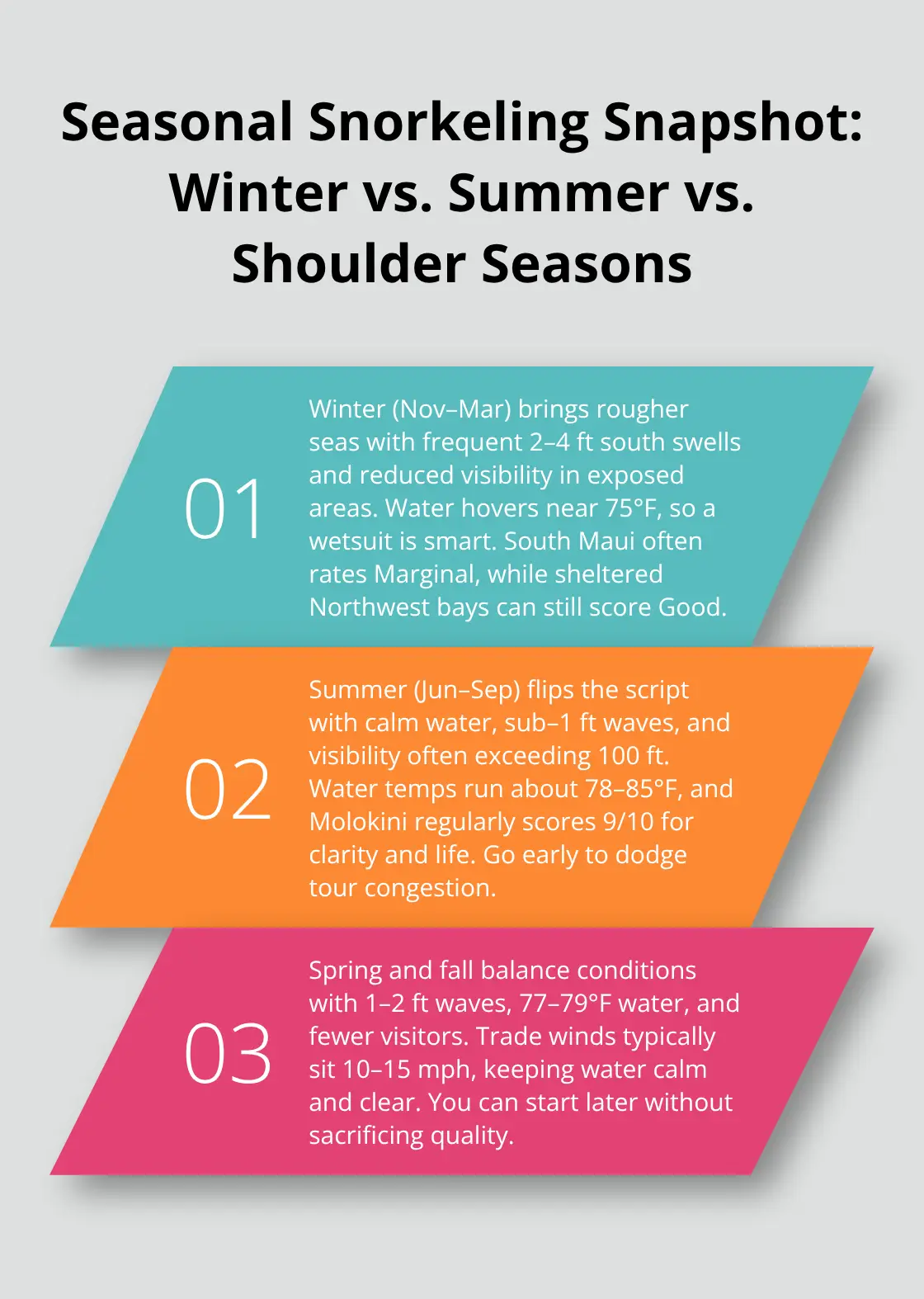
Maui’s snorkeling conditions shift dramatically across seasons, and timing your visit directly impacts what you’ll see underwater. Winter months from November through March bring the island’s roughest seas, with south swells pushing 2–4 feet regularly and reducing visibility in exposed areas like Makena and Ahihi Bay. Water temperatures drop to around 75°F, making a wetsuit essential rather than optional. The Maui Snorkel Report consistently rates South Maui locations as Marginal during winter, while Northwest Maui bays like Kapalua and Honolua maintain Good ratings due to their sheltered positioning. If you visit during winter, check the daily snorkel report around 7:30 AM HST before you head out, as conditions can shift within hours.
Summer Brings Peak Clarity and Crowds
Summer months from June through September deliver the opposite scenario: calm, clear water with wave heights typically under 1 foot in sheltered bays and visibility exceeding 100 feet. Water temperatures in Maui during the summer months are typically around 78-85°F, making it warm and suitable for swimming and snorkeling. Molokini Crater shines brightest during this season, with ratings consistently hitting 9 out of 10 for reef clarity and marine life diversity.
However, summer crowds peak during this window, meaning you should snorkel between 8:00 AM and 11:30 AM to avoid tour boat congestion and maximize your underwater time.
Spring and Fall Offer the Ideal Balance
Spring and fall represent the goldilocks seasons, offering moderate wave heights of 1–2 feet, water temperatures between 77–79°F, and significantly fewer visitors than summer peaks. April through May and September through October deliver the best balance for most snorkelers: conditions stable enough for beginners yet interesting enough for experienced reef explorers. East winds typically stay between 10–15 mph during these shoulder seasons, creating the calm, clear water that makes snorkeling effortless. The practical advantage here is flexibility-you can snorkel later in the morning without sacrificing quality, and afternoon winds won’t degrade your session as aggressively as they do in winter.
Timing Your Entry and Exit
Skip dusk and dawn sessions entirely regardless of season, as shark activity increases during low-light hours. You should finish snorkeling by 1:00 PM across all seasons, since afternoon winds consistently degrade water clarity and wave action worsens the later you stay in the water. Small-group tour operators adjust their routes daily based on current conditions, meaning they can pivot to whichever location offers the best visibility that particular day rather than force you to a predetermined spot. This flexibility transforms your snorkeling experience from a rigid itinerary into an adaptive adventure that responds to what the ocean actually offers on your visit.
Where to Snorkel Today on Maui
Molokini Crater: The Gold Standard for Clarity
Molokini Crater earns a consistent 9 out of 10 rating from the Maui Snorkel Report because its protected crater walls shield the reef from open-ocean swells and wind-driven chop. The crater sits roughly 3 miles offshore and requires a boat to reach, which eliminates the sediment that shore-entry locations stir up. Water clarity at Molokini regularly exceeds 100 feet during summer months, and the reef structure creates distinct zones where different species congregate-parrotfish school in shallow areas while jacks patrol deeper channels. The trade-off is straightforward: you need a boat operator, and the 15-minute run from Kihei means an early morning departure to maximize your bottom time before afternoon winds build.
Northwest Maui Bays: Immediate Shore Access
Kapalua Bay and Honolua deliver ratings between 8.0 and 8.5 Good, with 0–1 foot waves and easterly winds holding at 10–15 mph throughout the morning window. These sheltered bays allow you to snorkel immediately from shore, eliminating the need for a boat and letting you enter the water whenever conditions suit you rather than following a tour schedule. The practical advantage here is control-you set your own timing and can adjust your session based on real-time observations of water clarity and wave action.
South Maui Options: Reliable Backup Locations
Turtle Town on South Maui’s Turtle Coast ranks as a reliable second option when North Shore swells spike, offering guaranteed sea turtle encounters in shallow reefs accessible by boat in under 30 minutes from Kihei. The Maui Snorkel Report rates South Maui locations between 5.5 and 7.0 depending on the day, meaning visibility drops to 40–60 feet and wave action reaches 1–3 feet-workable but noticeably hazier than Northwest spots.
Choosing Your Spot: A Daily Strategy
Check the daily ratings at 7:30 AM HST to make your decision. If Northwest Maui shows ratings above 8.0 with clear water noted, drive there and snorkel from shore between 9:00 AM and 11:00 AM when winds remain light. If Northwest conditions dip below 8.0 or rain clouds the water near stream mouths, book a boat tour to Molokini or Turtle Town.
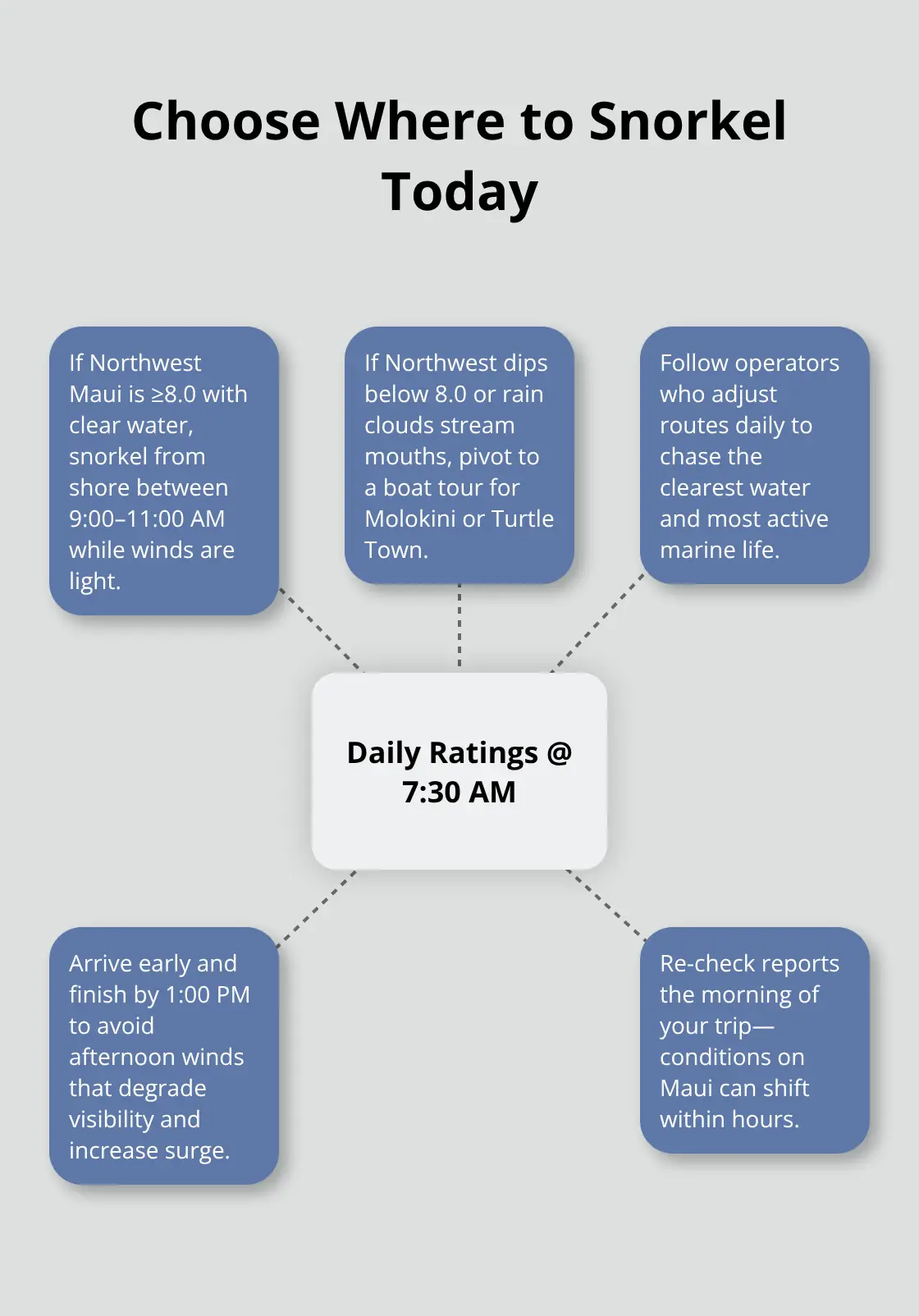
Tour operators adjust routes daily to chase the clearest water and most active marine life on that particular day, transforming your snorkeling experience from a rigid itinerary into an adaptive adventure that responds to what the ocean actually offers on your visit. Your next step involves understanding how to prepare your gear and body for the conditions you’ll encounter.
How to Plan Your Snorkeling Trip Based on Current Conditions
Check Reports and Forecasts Before You Commit
Start your planning 24 hours before departure and pull the Maui Snorkel Report, which publishes around 7:30 AM HST each morning and assigns ratings from 0–10 to every major snorkeling beach on the island. This report combines live webcams, local wind data, wave measurements, and on-the-ground observations to tell you exactly where visibility peaks that day and where conditions have deteriorated. Cross-reference the report ratings with Sailflow, an hourly wind and wave forecast tool that shows you precise gusts, wave heights, wave periods, and cloud cover in 30-minute increments throughout your planned snorkeling window.
Interpret Wind Direction and Water Clarity
If the Maui Snorkel Report rates Northwest Maui at 8.0 or higher with clear water noted and Sailflow shows easterly winds holding at 10–15 mph through 11:00 AM, you have a high-confidence shore snorkeling day. Conversely, if South Maui shows ratings below 6.5 with hazy water and wave heights climbing toward 3 feet, that location becomes a backup option only. Wind direction matters more than wind speed on Maui: east winds calm the Northwest bays by pushing water away from shore, while south and west winds destroy visibility in those same spots by stirring sediment.
Choose Operators Who Adjust Routes Daily
Never book a fixed itinerary in advance; instead, commit to an operator who guarantees daily route adjustments based on real-time conditions rather than a pre-set destination. Tour operators adjust routes daily to chase the clearest water and most active marine life, meaning a Molokini Crater tour might pivot to Turtle Town if overnight swells spike the crater’s surge, or a South Maui departure might shift north if morning reports show exceptional clarity at Honolua Bay.
Pack Smart Gear for Tropical Sun and Water
Pack a rash guard and reef-safe sunscreen rated SPF 50 minimum, since Maui’s equatorial sun reflects off the water and burns exposed skin in under 90 minutes even during winter months. Bring a lightweight wetsuit for winter visits, as water temperatures drop to 75°F and extended snorkeling causes core temperature loss despite the tropical location. Rent snorkel sets locally rather than fly with gear, since airlines charge $50–75 per checked bag and rental shops offer competitive pricing with multi-set discounts (50 percent off when you rent two or more sets).

Arrive Early and Finish by 1:00 PM
Arrive at your operator’s departure point by 7:00 AM to catch the morning light window when visibility peaks and before afternoon winds degrade conditions, then finish snorkeling by 1:00 PM without exception. This hard stop prevents you from fighting worsening surge, reduced visibility, and stronger currents that intensify as the day progresses and trade winds accelerate.
Final Thoughts
Mastering Maui snorkeling conditions transforms your underwater adventure from a gamble into a calculated experience where you consistently find clear water, calm seas, and thriving reef ecosystems. The daily Maui Snorkel Report and hourly wind forecasts eliminate guesswork by showing you exactly where conditions peak on any given day, allowing you to chase optimal visibility rather than hoping a predetermined location cooperates. Your success depends entirely on checking these resources before committing to a departure time and location.
Small-group tour operators who adjust routes daily based on real-time conditions offer the flexibility that independent shore snorkeling cannot match. When overnight swells spike Molokini Crater’s surge or rain clouds the water near stream mouths in Northwest Maui, these operators pivot instantly to whichever location delivers the clearest water and most active marine life that morning. This adaptive approach means you spend your time underwater exploring vibrant reefs instead of fighting poor visibility or dangerous surge.
Book your adventure with an operator who understands that Maui snorkeling conditions reward preparation and flexibility while punishing rigid itineraries and late departures. Arrive early, finish by 1:00 PM, and respect the ocean’s daily moods to maximize your experience. Your operator’s willingness to adjust plans demonstrates their commitment to your satisfaction rather than their profit margin.