
Every winter, humpback whales migrate to Hawaiian waters, and Maui becomes one of the best spots to witness these magnificent creatures up close. From January through March, thousands of whales arrive in our warm waters, creating unforgettable moments for visitors.
At Maui Snorkel Charters, we’ve guided countless travelers through whale watching tours in Maui, and we know exactly what makes the experience special. Whether you’re a first-time visitor or a seasoned ocean explorer, this guide will help you plan an incredible whale watching adventure.
When to Book Your Whale Watch in Maui
Peak Season Delivers the Best Whale Activity
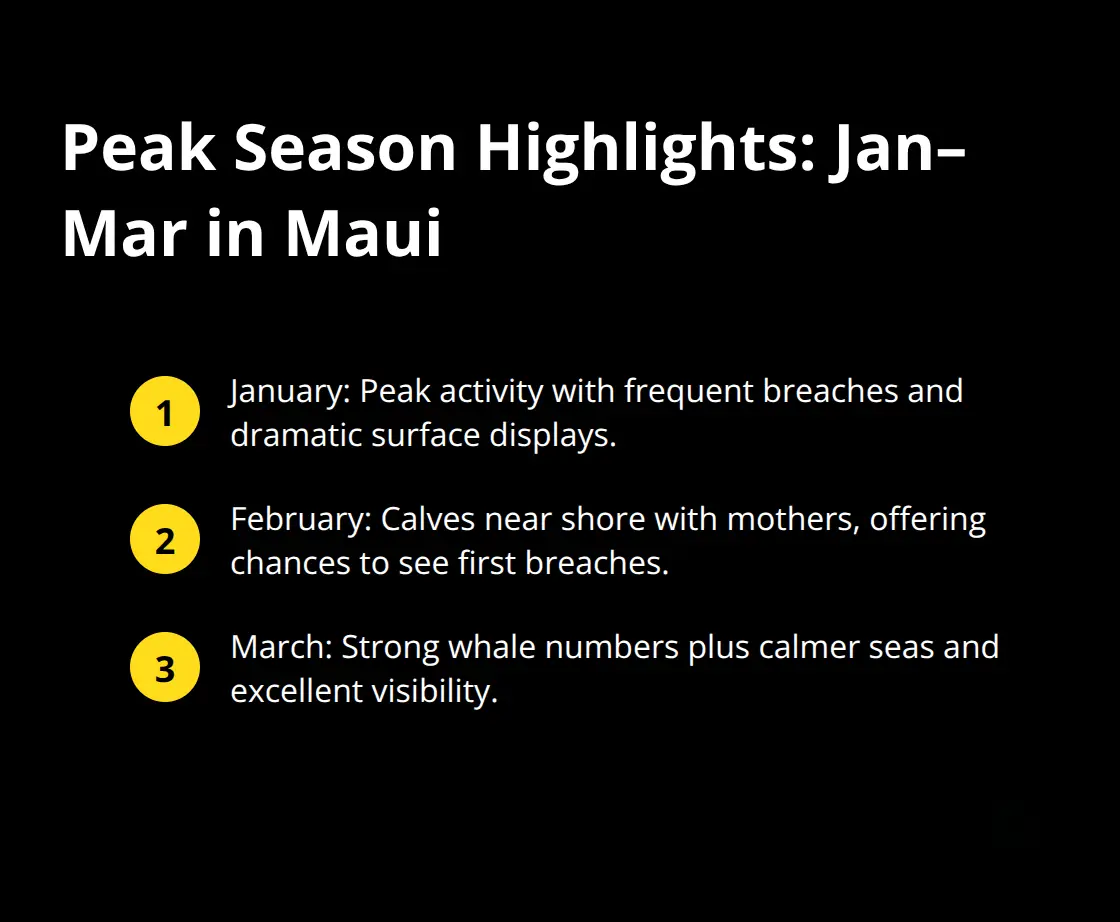
January through March represents the absolute best window for whale watching in Maui, and this isn’t a suggestion-it’s where the numbers speak clearly. Over 26,000 humpback whales migrate to Hawaiian waters, and the majority congregate in Maui’s Auʻau Channel during these three months. January specifically brings peak whale activity with breaching, tail slapping, and spy-hopping behavior that creates the most dramatic encounters. February shifts focus to calves, as mothers with newborns stay close to shore for protection and nursing, giving you genuine chances to witness baby whales practicing their first breaches. March remains the strongest overall month for both dense whale populations and favorable weather conditions that combine calm seas with excellent visibility.
Optimal Conditions for Your Tour
Water temperatures hover around 74-76°F during peak season, which actually works in your favor-these cooler waters trigger the most active whale behavior and keep visibility sharp underwater if you combine whale watching with snorkeling. Early morning departures between 7 and 10 AM deliver the calmest seas and softest light for photography, though afternoon trips from 3 to 6 PM offer magical golden hour lighting if you accept slightly choppier conditions. The window closes faster than most travelers expect. April marks the beginning of migration back to Alaska, with sightings dropping significantly by mid-month and becoming unreliable by early May.
Advance Booking Secures Your Spot
Waiting until late March or April means you gamble with availability and whale presence simultaneously. Reputable operators fill their schedules quickly, and smaller boats with intimate experiences sell out fastest. You should book your tour at least 2-4 weeks in advance during January through March if you want your preferred dates and vessel type. Weather patterns shift noticeably after March, bringing stronger trade winds and rougher seas that reduce both whale activity and tour comfort.
Timing Your Maui Visit for Success
If you’re flexible with your Maui travel dates, shift your visit to land between mid-January and mid-March to secure the highest probability of seeing whales, the calmest ocean conditions, and the best availability across all tour operators. We at Maui Snorkel Charters offer Pacific Humpback Whale watches during the winter season with small-group experiences that maximize your connection to these animals. Once you’ve locked in your travel dates and booked your whale watch, understanding what actually happens on the water-from the types of whales you’ll encounter to the safety protocols that protect both you and the animals-becomes your next priority.
What Happens on Your Whale Watching Tour
The Whales You’ll Encounter and Their Behaviors
Humpback whales dominate Maui’s winter season, and they display the most dramatic behaviors during peak months. These whales breach, tail slap, and spy hop-actions where they launch their bodies partially or fully out of the water, slap their tails against the surface, or poke their heads up to look around. January brings the most active males competing for females, creating aggressive chasing sequences you’ll witness from the boat. February shifts to mothers with calves, and watching a baby whale breach for the first time beside its mother becomes genuinely unforgettable. The Hawaiian Islands Humpback Whale National Marine Sanctuary reports that calves are typically born after late January, increasing calf sightings from February through April.
On the water, whales surface every 10 to 15 minutes, so watch for their blows or spouts first-that misty spray tells you exactly where to look. Larger boats like catamarans provide stability and onboard amenities, while smaller vessels get you closer to the action with water-level perspectives that make every whale moment feel immediate and personal.
Safety Rules Protect Whales and Your Experience
Hawaii law requires boats to maintain a 100-yard distance from whales at all times, and captains position strategically along whale movement patterns to maximize close encounters while staying legal. This isn’t just regulation-it protects the whales from stress and keeps your experience safe and genuine. Never lean over railings or make sudden movements when whales approach, and absolutely never attempt to touch or feed them. For photography, zoom lenses work better than getting physically closer anyway.
Capturing Stunning Whale Photos
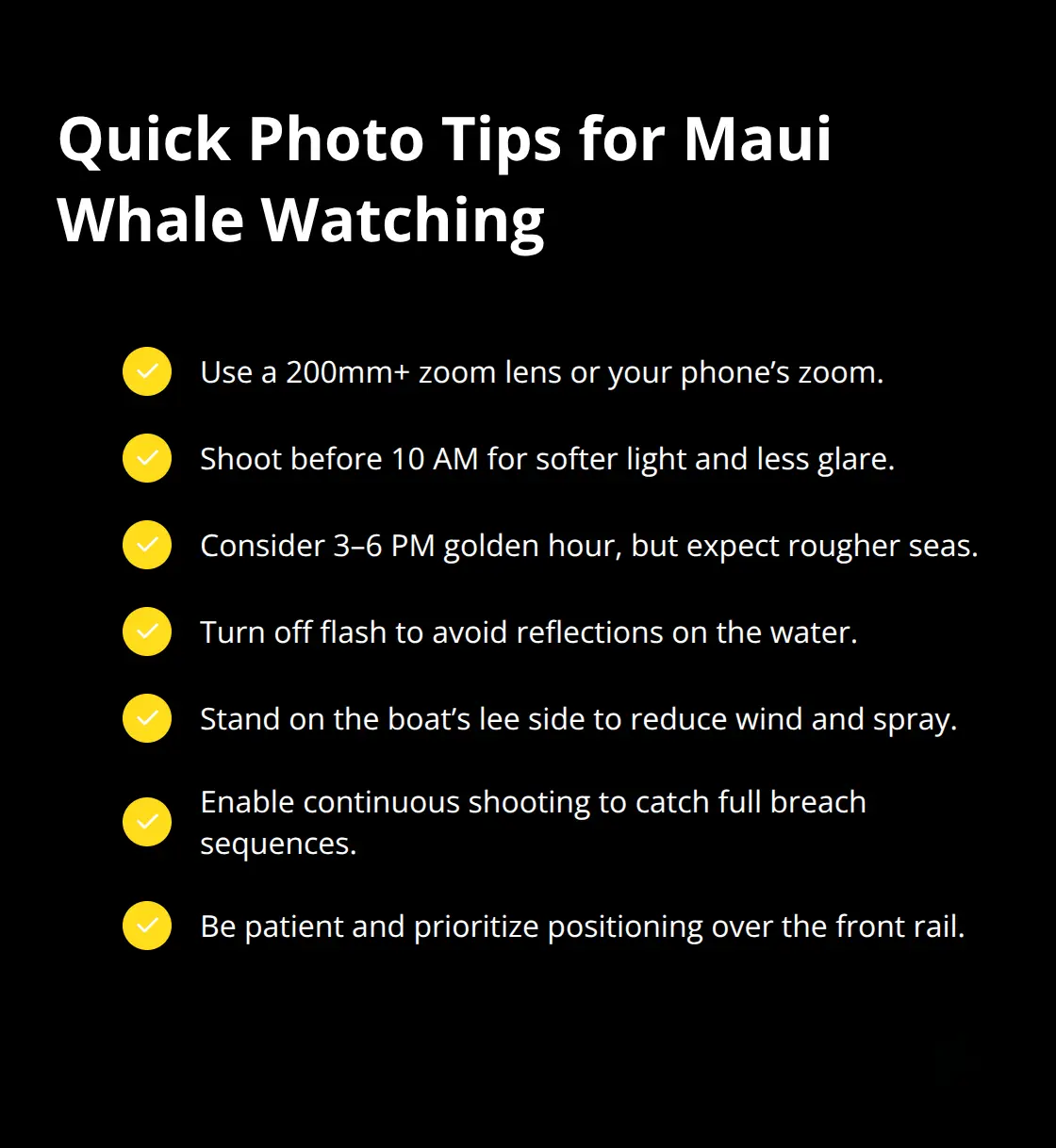
Bring a camera with at least 200mm zoom capability, or use your phone’s zoom if that’s what you have, and shoot in early morning light before 10 AM when the sun sits lower and colors stay rich without harsh glare. Afternoon golden hour from 3 to 6 PM also delivers stunning warm light, though you’ll battle rougher seas. Skip the flash entirely-it reflects off the water and ruins your shots.
Position yourself on the boat’s lee side (away from wind and spray) for steadier framing, and keep your camera settings on continuous shooting mode to capture breaching sequences where the money shot often happens in the second or third frame. The best photos come from patience and positioning, not from fighting crowds for the front rail.
Once you understand what to expect on the water and how to capture those moments, selecting the right operator becomes your final decision before heading out.
Choosing the Right Whale Watching Operator
Boat Size Shapes Your Experience
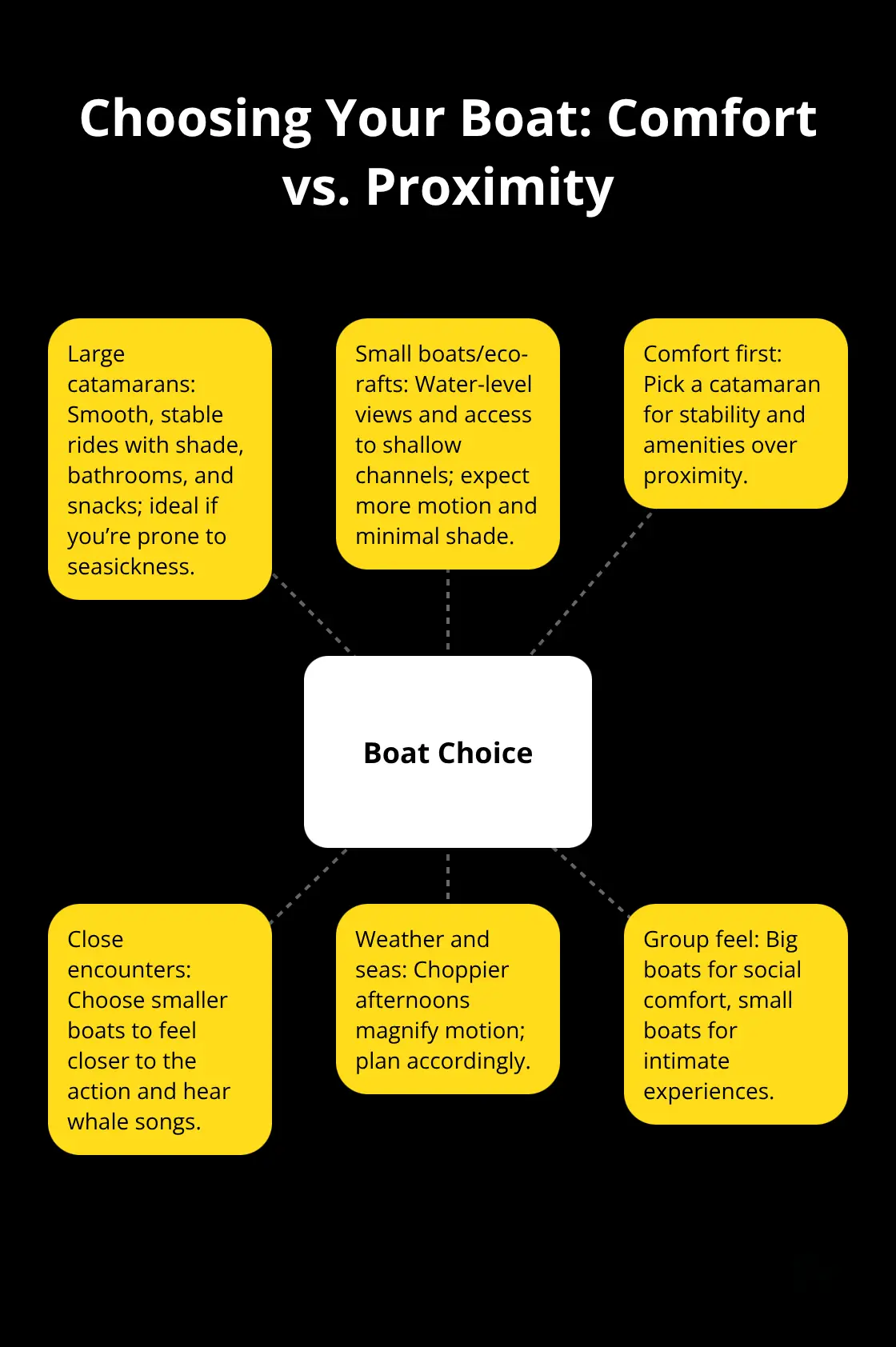
Boat size determines your entire experience, and the choice hinges on what you actually value during three hours on the ocean. Larger catamarans like those operated by Trilogy seat 100+ passengers and deliver smooth rides with bathrooms, snack bars, and shade structures that matter when afternoon sun beats down. These vessels excel at stability, which means fewer seasick passengers and steadier photography platforms. Smaller outboard boats and eco-rafts carry 20-40 people maximum, position you at water level for dramatic whale encounters, and access shallow channels that bigger boats cannot navigate. The tradeoff is real: smaller boats bounce more in choppy seas, offer minimal shade, and provide fewer onboard amenities. Your decision should depend on whether you prioritize comfort and amenities or proximity and exclusivity. If rough seas make you queasy, choose a catamaran. If you want to hear whale songs through the hull and feel spray on your face, accept the smaller boat’s choppier ride.
Captain Experience Separates Great Tours from Mediocre Ones
Crew experience separates mediocre tours from unforgettable ones, and this matters more than most travelers realize. Captains with 10+ years on Maui waters read ocean conditions, whale behavior, and seasonal patterns that newer operators miss entirely. Ask directly: How long has your captain worked these waters? Operators who understand local waters can adjust routes based on real-time whale activity and demonstrate professional narration and responsible wildlife conduct. Crews trained in marine biology offer genuine interpretation of humpback migration, breeding behavior, and conservation rather than generic commentary. Check recent traveler reviews on reputable platforms specifically for captain professionalism, safety practices, and whether the crew respects distance laws rather than pushing the 100-yard boundary for dramatic shots.
Onboard Amenities and Special Features
Onboard amenities vary dramatically between operators. Some provide Hawaiian coffee and breakfast items, while others charge extra for water and snacks. A few operators offer hydrophone-equipped boats where you hear actual whale songs underwater, transforming the experience from visual to multisensory. These additions (hydrophones, quality food, shade coverage) elevate your comfort and connection to the whales significantly. Compare what each operator includes in their base price versus what costs extra before you book.
Final Thoughts
Maui’s Auʻau Channel hosts approximately 12,000 humpback whales each winter, making whale watching tours in Maui genuinely one of Hawaii’s premier wildlife experiences. The combination of shallow, protected waters, consistent whale presence from January through March, and multiple operator options means you’re not gambling on whether you’ll see whales-you’re choosing how you want to experience them. Larger catamarans deliver comfort and stability, while smaller boats offer intimacy and water-level drama.
Making the most of your whale watching adventure comes down to three practical decisions: book during peak season between mid-January and mid-March, choose an operator whose boat size and crew experience match what you actually value, and arrive early morning when seas run calmest and light works best for photography. Bring binoculars and a zoom lens if you have one, and arrive with realistic expectations since whale behavior varies daily based on ocean conditions and animal movement patterns. Some days deliver breaching sequences that feel orchestrated for your camera, while other days you’ll spot distant blows and tail flukes-both count as genuine whale watching moments.
We at Maui Snorkel Charters offer Pacific Humpback Whale watches during the winter season with small-group experiences designed for genuine connection to these animals. Book your whale watching tour with us and pair it with our snorkel adventures to Molokini Crater or Turtle Town for a complete ocean experience that showcases Maui’s marine life beyond just whales.
Call 808-270-8776