
Humpback whales migrate to Hawaiian waters every winter, and whale watching on Maui offers some of the most reliable sightings in the world. Between January and March, thousands of these magnificent creatures fill our channels, creating unforgettable moments for visitors.
At Maui Snorkel Charters, we’ve spent years perfecting the art of connecting people with these incredible animals. Whether you’re a first-time observer or a seasoned wildlife enthusiast, this guide will help you plan an amazing experience.
When to Plan Your Whale Watching Trip
January through March stands as the absolute best window for whale watching on Maui, and there’s no debating this timing. Around 12,000 humpback whales migrate from Alaska to Hawaiian waters each year, with the densest concentrations arriving during these three months. The University of Hawaiʻi’s decade of aerial survey data, compiled by Dr. Joe Mobley and the Hawaiian Islands Humpback Whale National Marine Sanctuary, confirms that January through March delivers peak whale presence across Maui’s Auʻau Channel. Early arrivals start appearing in November, but sightings remain inconsistent until December builds momentum. Late March marks when whales begin their northbound migration back to Alaska, so waiting until April significantly reduces your odds.
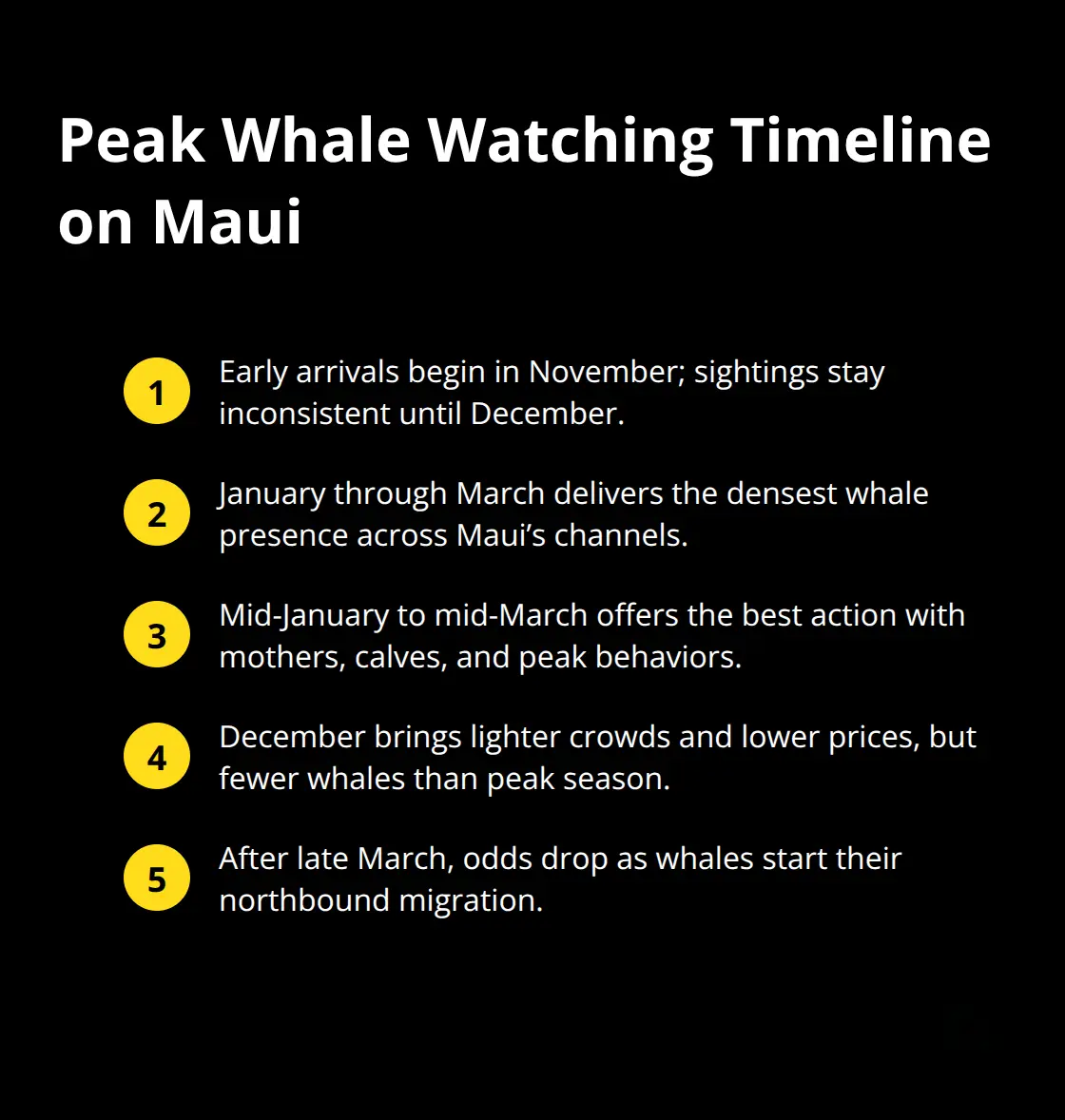
If you’re flexible with travel dates, try mid-January through mid-March when mothers and calves are most active and whale behaviors like breaching and tail slapping peak. December offers quieter crowds and lower prices if you’re budget-conscious, but accept that you’ll see fewer whales than peak season delivers.
Why Morning Tours Win
Early morning departures between 7 and 10 AM consistently outperform afternoon trips on Maui’s waters. Calm seas during early hours improve visibility of whale blows and surface activity, while softer light makes spotting easier without the midday glare. Ocean conditions shift dramatically after noon, so morning tours maximize your sighting chances. Water temperature matters too-humpbacks prefer the warm, shallow channels between Maui and neighboring islands (the Auʻau Channel), and morning conditions preserve these optimal viewing zones before afternoon winds churn the surface. Afternoon tours work if morning slots fill up, particularly during golden hour from 3 to 6 PM when light quality improves again, but statistically morning trips deliver higher success rates.
Book Your Tour in Advance
Plan your tour the night before rather than hoping for last-minute availability, as peak season books quickly and morning slots fill fastest. We at Maui Snorkel Charters offer Pacific Humpback Whale watches during the winter season, and our small-group approach means spots vanish fast when conditions look favorable. Flexibility helps too-if your preferred morning time sells out, afternoon options still provide solid whale encounters, especially when weather cooperates. The key difference between a memorable trip and a disappointing one often comes down to preparation and timing rather than luck alone.
Where to Find Whales on Maui
The Auʻau Channel: Whale Highway
The Auʻau Channel between Maui, Molokaʻi, and Lānaʻi concentrates the majority of humpback whales during winter season, and this geography gives you a massive advantage. Each winter, humpback whales migrate more than 3,000 miles from northern feeding grounds to breed in Maui Nui. The Hawaiian Islands Humpback Whale National Marine Sanctuary’s aerial survey data pinpoints exactly where whales congregate, and the western and southern coastlines consistently deliver the highest sighting rates. West Maui waters near Lahaina pull large populations because humpbacks migrate along predictable pathways through these warm, shallow channels where mothers teach calves and breeding activity peaks.
Strategic Harbor Departures
Tours departing from Lahaina and Maalaea harbors position you directly in these migration corridors, meaning you’re not guessing where whales will be-you’re intercepting them on their established routes. The Molokini Crater area offers additional advantages because the deeper waters surrounding the crater attract whales moving between channels, and the expanded coastal views give captains multiple sighting opportunities as they navigate. Morning tours from these harbors reach optimal whale zones within 15 to 30 minutes, maximizing your time observing instead of traveling.
Small-Group Advantages Over Large Vessels
Smaller boats outperform larger commercial vessels because flexibility allows captains to chase favorable conditions and position themselves where whales actively move that day. A maximum of 20 people means you won’t compete with 100 other passengers for viewing space when a whale breaches nearby. Smaller boats get closer to whales while staying within the legal 100-yard approach distance that Hawaii enforces, and captains position near likely whale pathways rather than anchoring in one spot and hoping whales swim past. This approach consistently delivers personalized encounters where you can hear whale vocalizations and observe behaviors like tail slaps and spy hops without the chaos of mega-tour operations.
We at Maui Snorkel Charters operate our custom 40-foot vessel with this small-group philosophy in mind, offering Pacific Humpback Whale watches during the winter season. The difference between watching whales from a crowded catamaran and experiencing them from a small-group charter fundamentally changes what you’ll see and remember from your trip-and it’s what makes the next section on actual whale behaviors so exciting.
What You’ll Actually See on a Whale Watching Tour
Signature Whale Behaviors
Humpback whales perform predictable behaviors during winter season, and knowing what to watch for transforms a casual boat ride into an unforgettable wildlife experience. Breaching happens when a whale launches its body nearly completely out of the water-a behavior researchers believe signals dominance or courtship interest. Tail slaps occur when whales lift their flukes and smack the surface with tremendous force, creating explosions of water visible from a quarter-mile away. Spy hopping appears as a whale’s head rising vertically out of the water to look around, lasting only seconds but providing direct eye contact that stays with you long after your tour ends. Surface breathing happens constantly as whales exhale through blowholes, creating distinctive plumes of vapor that captains use to locate whales from distance.
Underwater Soundscapes
Whale vocalizations underwater tell another story entirely. Some tours offer hydrophones that let you hear the complex songs humpbacks produce, a haunting acoustic experience that photos cannot capture. These underwater soundscapes reveal communication patterns and emotional depth that surface observations miss entirely. The combination of visual behaviors and acoustic encounters creates a multisensory experience that transforms how you understand these animals.
Positioning for Success
Morning departures give you the calm water conditions where every movement becomes visible, and captains position themselves to witness these behaviors rather than hoping they happen randomly. Most visitors spend the first breach or tail slap fumbling with cameras, so expect to miss the first dramatic moment while your eyes adjust and your hands find the right settings. The second and third breaches offer better opportunities to capture images once you settle into the rhythm of watching.
Camera Settings and Techniques
Photography from a moving boat requires accepting that most shots fail, so bring a camera with fast autofocus and a telephoto lens of at least 200mm, or use your smartphone’s zoom if you’re willing to accept lower quality. Position yourself on the side of the boat where morning sun lights your subject rather than backlighting it, and shoot continuously rather than waiting for the perfect moment because whales move unpredictably. Polarized sunglasses cut glare and let you spot whale blows before other passengers, giving you a competitive advantage for prime viewing spots along the rail.
Essential Gear and Comfort Items
Dress in layers because ocean winds cool you rapidly despite tropical temperatures, and high-SPF sunscreen matters more than you think since sun reflects intensely off water and causes severe burns even on cloudy days. Bring a light waterproof jacket for spray when whales surface nearby, seasickness medication if you’re prone to motion sickness, and plenty of water because dehydration happens faster at sea than on land. These practical preparations separate comfortable, memorable trips from uncomfortable ones where physical discomfort overshadows the whale encounters.
Final Thoughts
Maui stands apart as one of the world’s premier whale watching destinations, and the numbers prove it. Around 12,000 humpback whales migrate through Hawaiian waters annually, with the densest concentrations filling Maui’s channels during winter months. The combination of warm, shallow waters, predictable migration routes, and reliable sighting rates makes whale watching on Maui fundamentally different from other destinations where you might wait hours without seeing anything.
January through March delivers peak whale presence when mothers, calves, and breeding males create the dramatic behaviors that transform casual observers into lifelong whale enthusiasts. Early morning departures give you calm seas and optimal visibility, while small-group charters position you for personalized encounters rather than crowded experiences where you compete for viewing space with hundreds of other passengers. Planning ahead separates successful trips from disappointing ones-book your tour the night before, pack layers and high-SPF sunscreen, and bring a camera with decent zoom capability if you want to capture breaching and tail slaps.
We at Maui Snorkel Charters offer Pacific Humpback Whale watches during the winter season aboard our custom 40-foot vessel with a maximum of 20 passengers. This small-group approach means you’ll experience whales from a boat designed for flexibility and positioning rather than anchored in one spot. Book your whale watching adventure with us and experience why Maui’s waters create memories that outlast your vacation by years.
Call 808-270-8776