
Every winter, humpback whales migrate over 3,000 miles to Maui’s warm waters, creating one of the world’s most spectacular natural events. At Maui Snorkel Charters, we’ve spent years perfecting the art of connecting visitors with these magnificent creatures in their natural habitat.
Whether you’re a first-time whale watcher or a seasoned ocean enthusiast, our whale watching tours in Maui offer unforgettable encounters you won’t find anywhere else. This guide walks you through everything you need to know to make the most of your experience.
What to Expect During Whale Season
Whale season in Maui runs from November through April, but your timing matters significantly for sighting probability. January through March deliver the highest chances of spotting humpback whales, with as many as 26,000 humpbacks found in the North Pacific during their annual migration. December offers solid sightings but less consistency, while November and early April see noticeably fewer encounters. Ocean temperatures and Alaska prey availability shift these timelines slightly year to year, so flexibility helps. The Auʻau Channel off Maui’s western shores concentrates the majority of whale activity, where they commonly breach, tail slap, and surface-breathe.
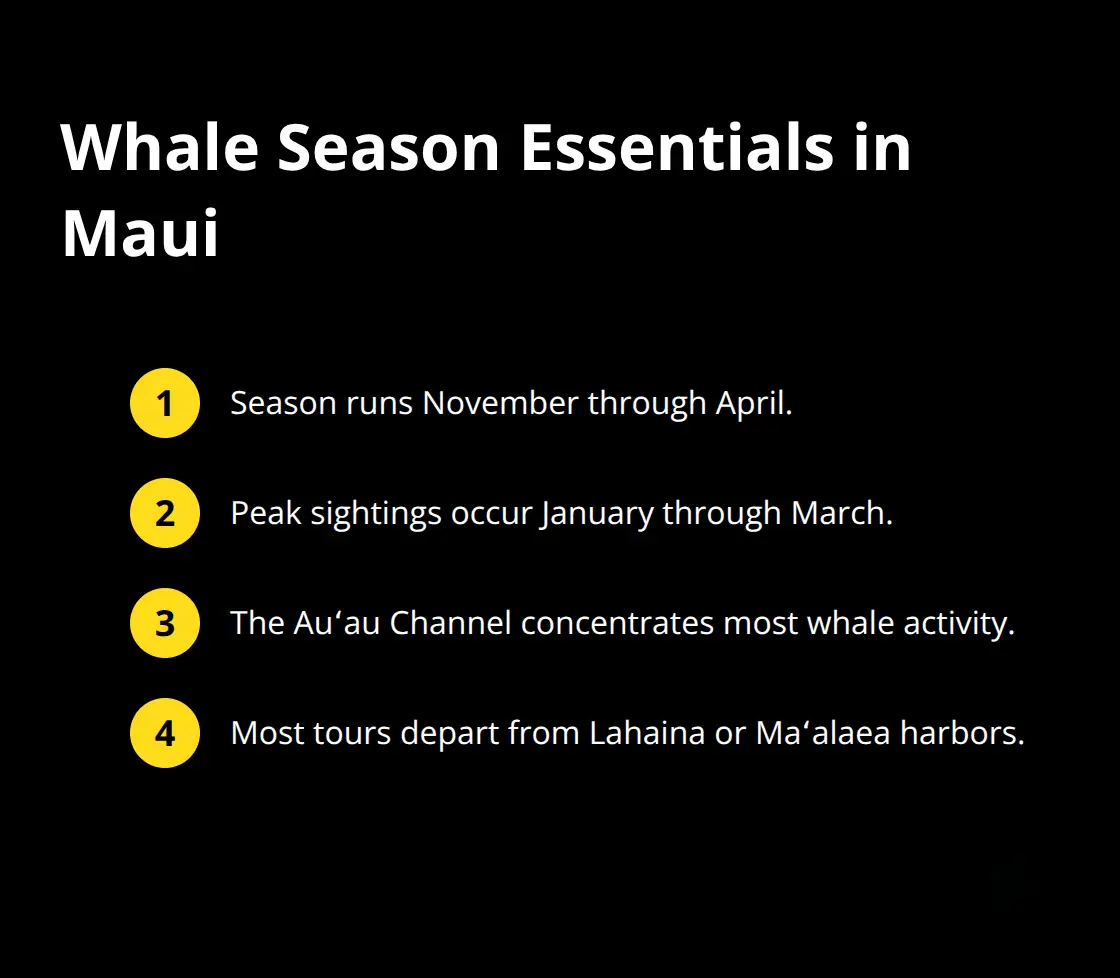
Most tours depart from Lahaina or Maʻalaea harbors, positioning you directly in prime viewing territory.
Peak Sighting Times and Whale Behavior
Humpback whales dominate Maui’s winter waters, with mature adults weighing between 50,000 to 80,000 pounds. You’ll witness breaching, tail slapping, and surface-breathing behaviors that create dramatic photo opportunities. Many tours include hydrophones so you can listen to male whale songs underwater during the voyage, adding a sensory dimension shore-based viewing cannot match. The Auʻau Channel views also showcase Molokai, Lānaʻi, Molokini Crater, and the 10,000-foot Haleakalā from the water, creating stunning context for your whale encounters.
Vessel Types and What They Offer
Vessel size shapes what you experience: larger boats provide bathrooms, refreshments, and stability for seasickness-prone visitors, while smaller eco-rafts offer intimate, eye-level encounters but rougher rides. Tours run throughout the day, offering flexible scheduling that fits your vacation rhythm. Small-group operators like Maui Snorkel Charters offer Pacific Humpback Whale watches in the winter season, combining personalized service with direct whale encounters.
How Professional Tours Operate
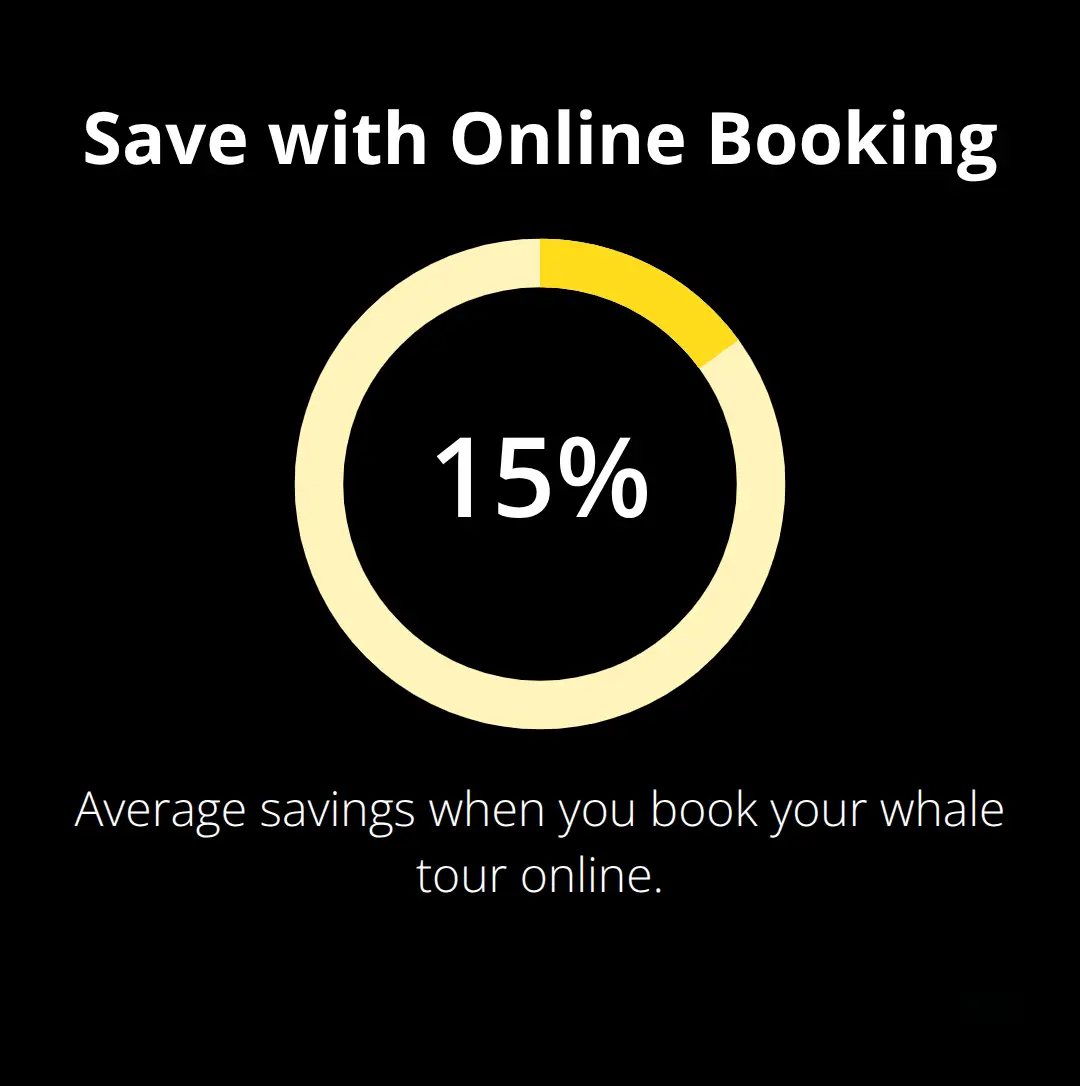
A typical Maui whale watching experience lasts 1.5 to 2 hours, with prices starting around $90 for standard tours. Professional captains position vessels near likely whale pathways based on real-time sightings, dramatically increasing your encounter odds compared to random searching. Federal law requires boats to stay at least 100 yards from whales, though whales often approach closer if curious. Certified marine naturalists aboard share current research findings and whale biology rather than generic commentary. Tours departing from Lahaina check in at the Dive Maui Shop on Front Street, with convenient parking options nearby. Booking online typically saves 15 percent on tour costs, making advance reservations both smarter and cheaper. Some operators combine whale watching with snorkeling opportunities for dolphins or turtles, maximizing your marine wildlife exposure in a single outing.
Why Small-Group Tours Beat Crowded Whale Watching
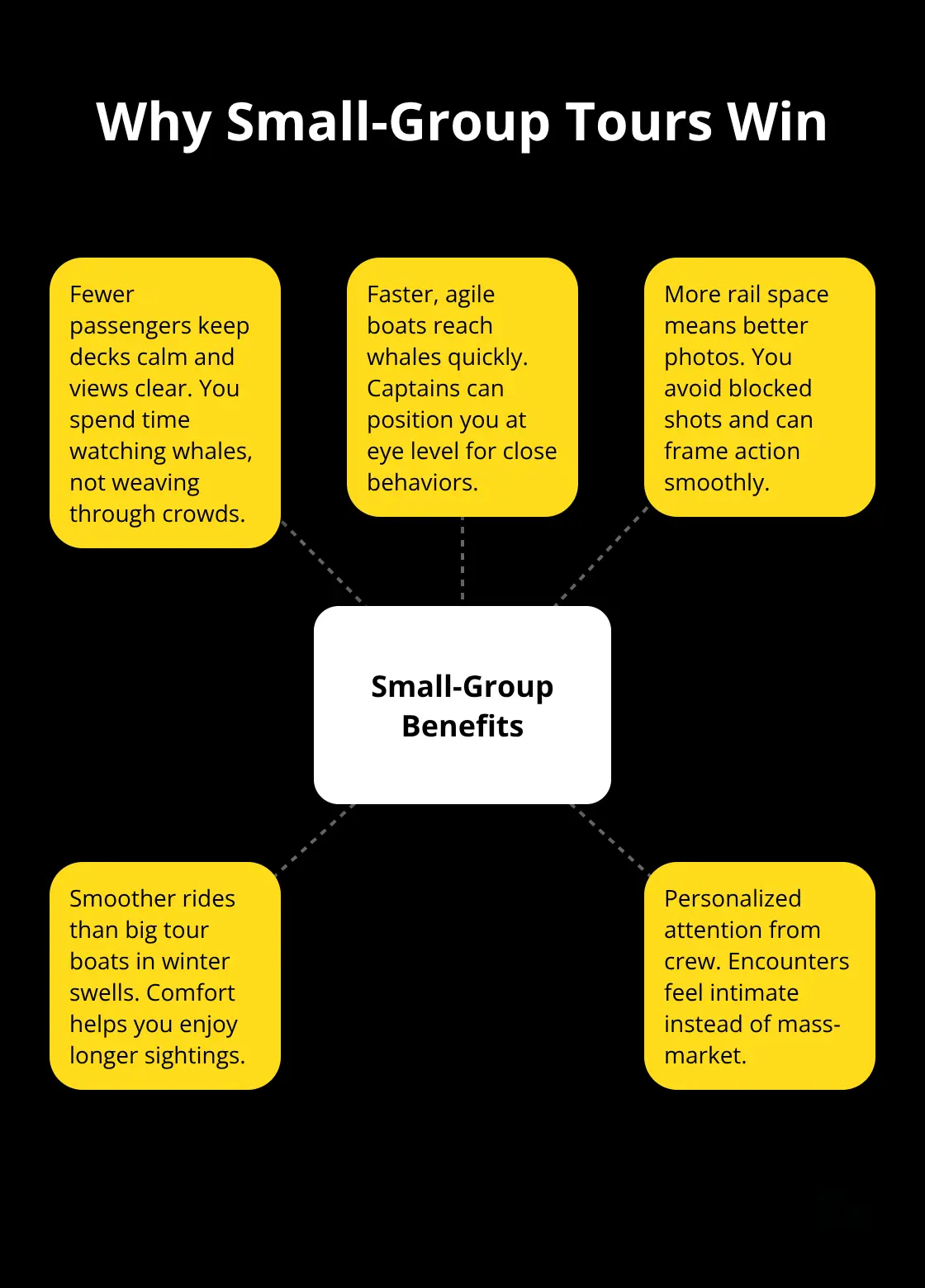
Larger commercial whale watching vessels pack 100+ passengers onto a single boat, which fundamentally changes what you experience on the water. Small-group operators keep groups to a maximum of 6-12 people because crowded decks create chaos when whales surface. With fewer people competing for railing space, you actually see the animals instead of photographing the back of someone’s head. Smaller vessels move faster to reach whales quickly, cut through rough water more smoothly than massive tour boats, and position you at eye level with the water where humpbacks breach and tail slap.
How Small Boats Adapt to Whale Movement
The captain on a small boat knows every passenger by name and adjusts the route mid-tour if whales move, rather than following a predetermined path like larger operators must do. You’ll hear the whale songs through the hydrophone system without 50 other people shouting over the audio. When a calf surfaces nearby (calves are born after late January), your small group gets an unobstructed view instead of fighting for position with 200 tourists. Professional captains spend their entire season learning exact whale migration patterns and underwater topography, positioning boats where whales naturally congregate rather than randomly searching the Auʻau Channel.
Engine Noise and Whale Behavior
Federal law requires staying 100 yards from whales, but whales frequently approach closer out of curiosity. Smaller boats create less engine noise and wake that spook them away, increasing your odds of close encounters. The captain can pause the boat longer near active whales without pressure to keep moving and hit the next scheduled stop, giving you genuine time to watch behavior instead of rushing through encounters.
Photography Without the Crowds
Photography matters significantly here: with only 6-12 people aboard, you capture breaching sequences and tail slaps without strangers photobombing every shot. The uncluttered deck means you position yourself for the best angles and hold your camera steady without jostling for space. Each moment becomes yours to document rather than a scramble among dozens of photographers.
Comfort During Winter Swells
Seasickness affects ocean visitors, and smaller boats rock less violently than massive ferries, especially in the rougher winter swells that sometimes accompany peak whale season. Tours last 1.5 to 2 hours at prices around $90, which matches larger boats, but you’re paying for quality encounters rather than volume seating. These advantages position you perfectly for the practical preparation steps that transform a good whale watch into an exceptional one.
How to Prepare and What to Bring on Your Whale Watch
Layer your clothing because ocean conditions shift rapidly on Maui’s water, and you’ll want to shed or add clothing as the sun moves across the sky. A lightweight rain jacket protects you since winter swells occasionally bring spray across smaller vessels, and your comfort directly affects how much you enjoy the experience. Sunscreen matters more than most visitors expect-the sun reflects intensely off the water, and you’re exposed for 1.5 to 2 hours without shade on most tours. Apply it 15 minutes before boarding and reapply after an hour on the water. Wear water shoes or reef sandals that stay attached to your feet, as decks get wet and slippery when whales surface nearby and crew members rinse equipment. Bring a reusable water bottle because dehydration happens quickly at sea, and most operators provide water stations aboard. A lightweight sweater works better than a heavy jacket since boat cabins offer minimal insulation, and you’ll appreciate easy layering when temperatures drop. Arrive 15 minutes early for check-in at the Dive Maui Shop on Front Street in Lahaina so you’re not rushed before departure.
Binoculars and Camera Settings Matter More Than Gear Quality
Invest in binoculars rather than expensive camera equipment because spotting whales first requires seeing them at distance, and many distant blows become obvious only through magnification. Binoculars in the 7×50 range work perfectly for ocean use without being bulky. Set your camera to continuous shooting mode before boarding because breaching sequences happen in seconds, and you’ll miss the moment if you fumble with settings. Shutter speed should stay at 1/1000th of a second minimum to freeze motion when whales breach, and ISO between 400-800 handles the bright water reflection without creating grainy images. Position yourself on the windward side of the boat where you face incoming whales rather than shooting into the sun. Federal law requires vessels maintain 100 yards from whales, but whales approach closer voluntarily, so patience yields better shots than chasing movement.
Respect Marine Wildlife Viewing Guidelines
Respect Marine Wildlife Viewing Guidelines by keeping engine noise minimal and never blocking a whale’s path, because responsible behavior keeps whales curious rather than defensive. Tours operate throughout the day, so try morning departures if you prefer softer light and calmer seas, or afternoon slots if you sleep late during vacation. Booking online saves 15 percent on costs while guaranteeing your spot during peak season when tours fill weeks in advance.
Final Thoughts
Maui’s whale watching season transforms the island into a marine wildlife destination unlike anywhere else on Earth. From November through April, humpback whales arrive in staggering numbers-an estimated 12,000 whales pass through Maui’s waters annually, with peak activity concentrated from January through March. These magnificent creatures travel over 3,000 miles from Alaska to give birth and nurse calves in warm tropical waters, creating encounters that stay with you long after you return home.
Winter offers the perfect time to experience whale watching tours in Maui because the whales are here, water conditions support reliable sightings, and the season aligns with when most visitors escape colder climates. You’ll witness breaching, tail slapping, and surface-breathing behaviors that photographers dream about capturing. The Auʻau Channel off Maui’s western shores concentrates whale activity, and professional operators position boats where these animals naturally congregate rather than randomly searching open water.
Small-group whale watching experiences deliver what larger commercial boats cannot: personalized attention, flexibility to follow whale movement, unobstructed photo opportunities, and genuine comfort during your time on the water. Tours typically run 1.5 to 2 hours at prices around $90, with online booking saving you 15 percent while guaranteeing your spot during peak season. Book your whale watching adventure with us and experience why winter in Maui belongs on every ocean lover’s bucket list.
Call 808-270-8776